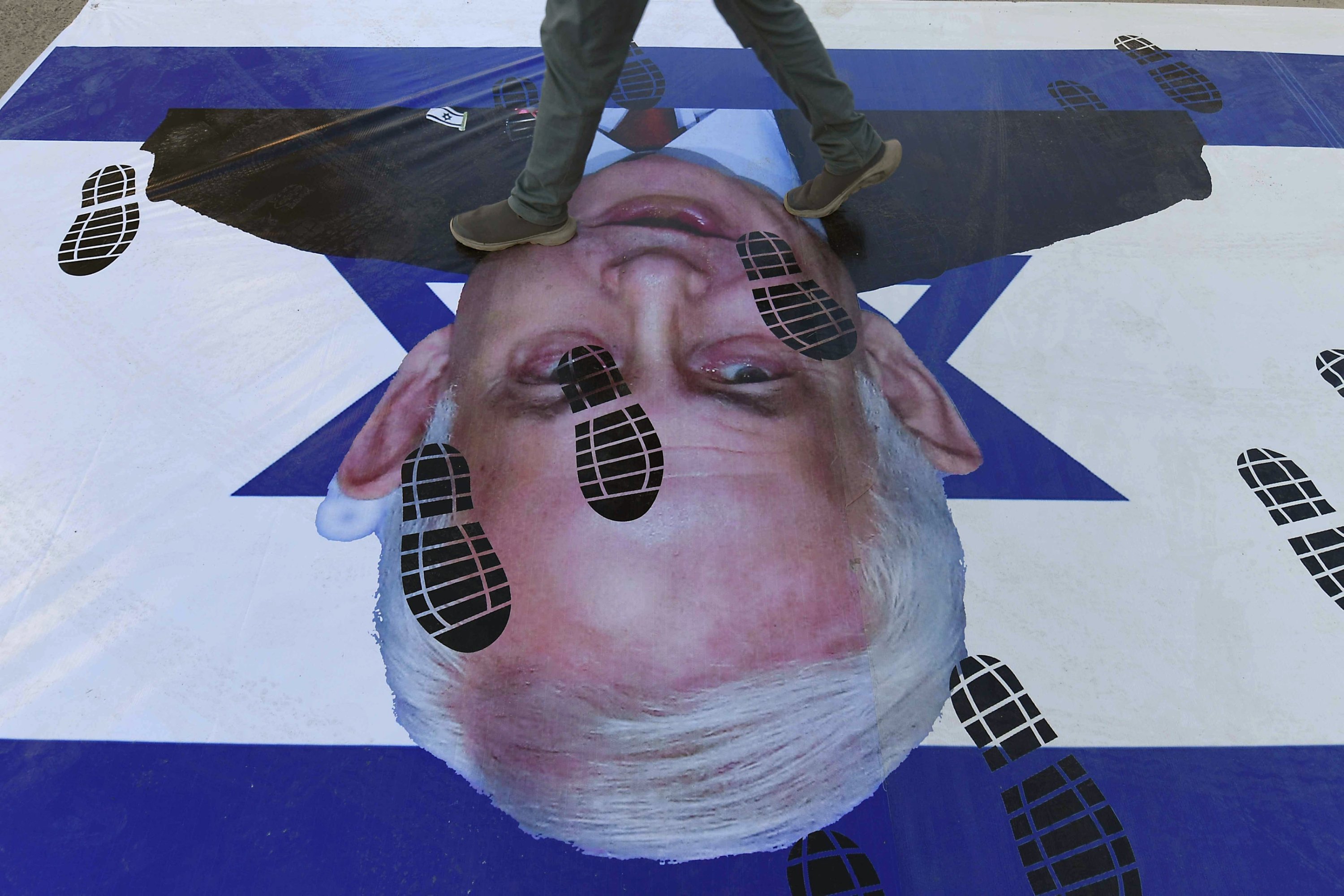
Born in Tel Aviv in 1949, Benjamin Netanyahu spent his youth in the United States and served as a special forces officer in the Israeli army during the Yom Kippur War. His career began in the 1970s as a diplomat at the United Nations and gained momentum when he entered politics in the ranks of the Likud Party. He came to power in 1996, becoming Israel's youngest prime minister to date. After losing the 1999 elections, Netanyahu returned to power in 2009 following many years in opposition, and subsequently became Israel's longest-serving prime minister, with some interruptions. He maintained uninterrupted power between 2009 and 2021 and, after a brief hiatus, served a total of six terms as prime minister with the new coalition government he formed in 2022.
In keeping with the Likud tradition, he has adhered to a nationalist and security-focused ideological line. Despite announcing for the first time in a 2009 speech at Bar-Ilan University that he conditionally accepted a Palestinian state under international pressure, he took no steps toward a “two-state solution” and did not shy away from stating before the 2015 elections, “There will be no Palestinian state during my term!”
Netanyahu was also the first Israeli prime minister to face an investigation while in office. In 2019, indictments were prepared against him on charges of bribery, fraud and abuse of office in three separate investigations known publicly as Files 4000, 2000 and 1000. He described these allegations, which have been on the world agenda for years, as a “witch hunt” orchestrated by the media and left-wing politics against him.
While this investigation was ongoing, in 2023, the coalition led by Netanyahu, described as “Israel's most extreme right-wing government,” embarked on a judicial reform that would weaken the current system. This initiative, which sparked intense protests in Israel, was met with backlash from the United States and European countries. Former U.S. President Joe Biden did not invite Netanyahu to the U.S. for a long time, and the White House described the initial approval of the judicial reform measures in the Knesset as an “unfortunate development.” Similarly, EU countries conveyed messages emphasizing the need to preserve checks and balances in Israel. These political steps taken by Netanyahu regarding his own future have created a certain tension with countries considered allies and friends of Israel.
Netanyahu, who has become a key player in one of the biggest crises between the judiciary and the government in domestic politics, has also been at the center of international reactions due to his stance on Palestine. From the first day he took office, he has prioritized Israel's security concerns and taken a violent stance on the Palestinian issue. The occupation of Palestinian territories, the expansion of illegal Jewish settlements, and the continuation of military operations by increasing the blockade on Gaza have become the permanent agenda of the Netanyahu administration.
All the inhumane practices in Gaza since 2009, Operation Cast Lead, Operation Pillar of Defense, Operation Protective Edge, the 2021 attacks, and the systematic genocide that took place after Oct. 7, 2023, were the result of Netanyahu's policy of “depopulating” Palestinian territories.
It is particularly noteworthy that during a press conference on Oct. 28, 2023, he quoted from the Torah, saying, “Do not forget what the Amalekites did to you! We remember, and we are fighting.” In Jewish sacred texts, the word "Amalek" refers to the greatest enemy group, whose members, young and old, women and children, were ordered to be exterminated, and whose name was to be wiped from the face of the earth, even their animals to be killed.
In a letter he wrote to Israeli soldiers participating in the attacks, he also drew significant criticism by including the Torah phrase, “Remember what the Amalekites did to you on the way after you left Egypt.” His use of these Torah passages in his statements showed that he was creating a new form of enemy based on a community that had been erased from history and also foreshadowed a major genocide in Gaza.
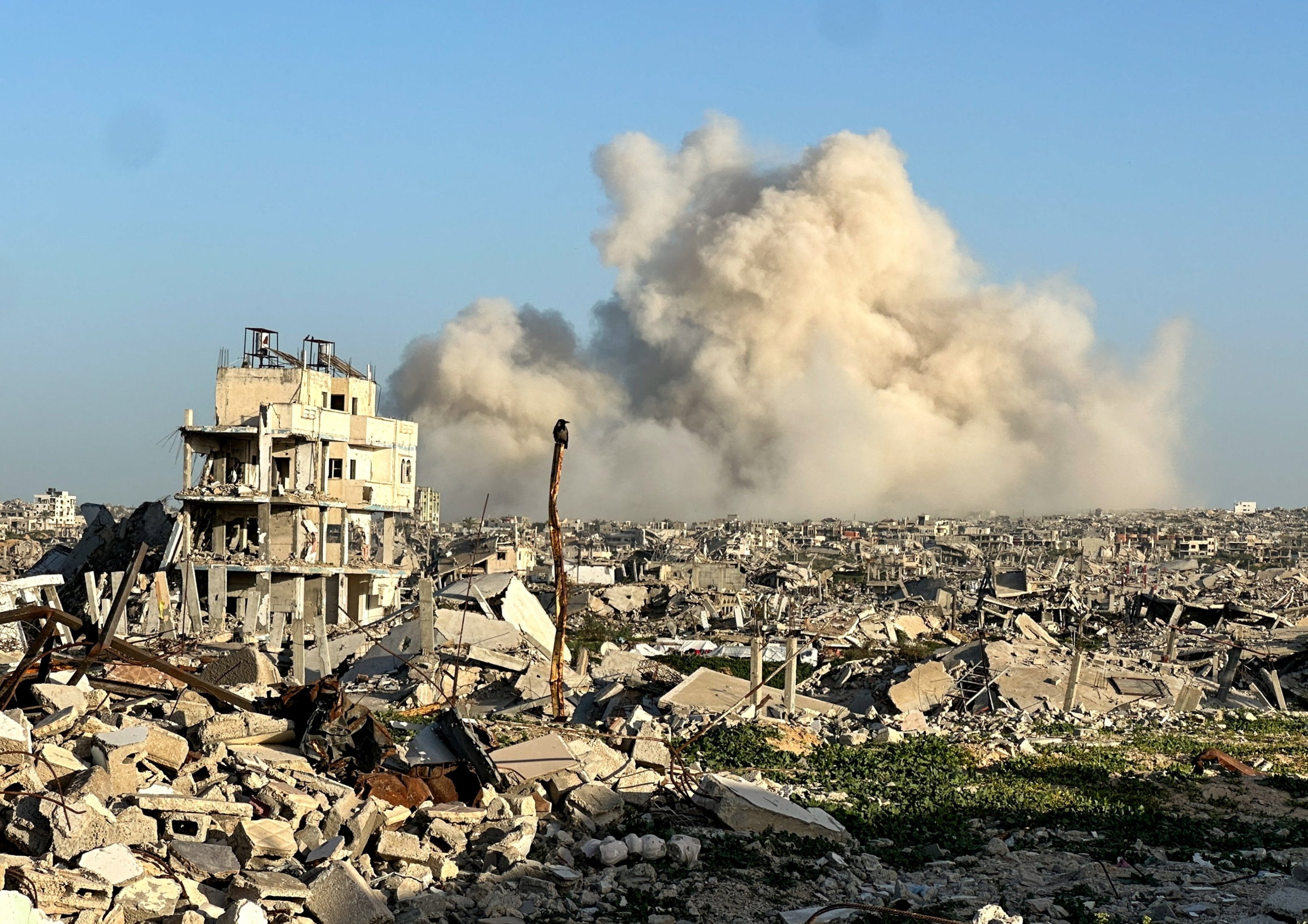
At the end of this process, over 75,000 Gazans, the vast majority of whom were civilians, lost their lives, and more than 171,000 were injured. Netanyahu thus became the subject of International Criminal Court investigations for committing war crimes and crimes against humanity. He followed the steps of former prime ministers of Israel, David Ben-Gurion, who was responsible for the 1948 Nakba, and Ariel Sharon, who was associated with the 1982 Sabra and Shatila Massacres, in committing war crimes, ethnic cleansing and systematic extermination policies.
Netanyahu's multilayered harassment and attacks on Palestinian territories have not been limited to Gaza, but have also extended to East Jerusalem and the West Bank. During his terms as prime minister, raids were carried out on the Al-Aqsa Mosque Complex, and significant financial support was officially provided to institutions such as the Temple Institute, which seeks to rebuild the Temple Mount.
Furthermore, serious support has been provided to organizations such as Regavim, which was established to monitor Palestinian structures in Area C of the West Bank and the Negev and to take legal action to demolish them on various grounds. Since the 2010s, hundreds of new illegal settlements have been established in East Jerusalem and the West Bank, and hundreds of thousands of new homes have been built.

Netanyahu's political career, marked by tension and conflict, has led to an uneven relationship with the West. The Iran Nuclear Deal (JCPOA) signed during the former U.S. President Barack Obama's administration, steps taken on the Palestinian issue, and Netanyahu's speech bypassing Obama in the U.S. Congress in 2015 are a few examples illustrating the course of relations during this period. During President Donald Trump's first term, the U.S. recognition of Jerusalem as the capital of Israel, the Golan Heights decision, and the unilateral withdrawal from the Iran Nuclear Deal were touted as Netanyahu's personal victories. During the Biden era, Netanyahu's appointment of far-right and radical figures to his Cabinet, illegal settlement policies, steps taken toward judicial reform, and inhumane actions in Gaza have generated serious reactions in Washington.
Although Netanyahu frequently emphasized cooperation and close relations during Trump's second term, Trump and American diplomats did not hesitate to issue various warnings and reactions to Netanyahu on different issues, such as Türkiye's sensitivities, developments in Syria, the West Bank issue, and the future of Gaza. In fact, despite the announcement that Netanyahu would attend the Sharm el-Sheikh Peace Summit at Trump's request, this was reversed as a result of Türkiye's reactions.
One of the important issues Netanyahu kept on the agenda was the Abraham Accords, which were an attempt to normalize Israel's relations with Gulf countries and establish regional cooperation. These agreements covered the normalization of diplomatic relations, cooperation on military, intelligence and defense issues, and mutual investment commitments worth billions of dollars in areas such as energy, technology, health and tourism.
Netanyahu signed the agreements in question at the White House on Sept. 15, 2020, with United Arab Emirates (UAE) Foreign Minister Abdullah bin Zayed and Bahraini Foreign Minister Abdullatif Al Zayani. In the ongoing process, steps toward normalization have been taken with Morocco and Sudan, and contacts have been made with Saudi Arabia and Egypt within the same framework. Considering these agreements as one of his greatest achievements, Netanyahu stated, "The belief that peace can be established through withdrawal from the territories is no longer alive, it is dead. This belief has been replaced by the belief in real peace, peace in return for peace, peace born of strength. We now accept this as valid."
Israel, which has been trying to implement the Abraham Accords with certain countries, has frequently carried out military operations in Lebanon and in Syria during the Assad era, when civil war was raging. After the revolution, it did not hesitate to try to invade the areas in southern Syria, using the Druze in Suwayda as a pretext. It is understood that one of the actors behind the scenes of the embargo and the coup plans against Qatar was also Israel, under Netanyahu's administration.
Netanyahu has lost credibility in international circles by focusing on Israel's security as an apartheid regime, emphasizing violence, genocide and depopulation policies. His hate speeches, land annexations, propaganda to spread tension and conflict between countries in the region, and volatile, short-term international relations based on personal interests, caused him to lose his reputation in international circles.
President Recep Tayyip Erdoğan, whom he sees as the biggest obstacle to his policies and operations in the region, has prioritized regional stability, the elimination of conflict and tension, international law and humanitarian values, a consistent diplomatic stance, and the establishment of a deterrent military power. The fact that the Turkish defense industry has reached a very advanced level over the past 20 years, along with Türkiye's military presence in Syria, Libya, Qatar and Somalia, its humanitarian activities in the Middle East and Africa, and its diplomatic efforts to prevent conflicts in the international arena, reveals Türkiye's comprehensive capacity. Thus, Türkiye has moved beyond being merely a reactive actor in crises to become a founding power that shapes the regional security architecture and prompts its counterparts to reevaluate their choices.
Erdoğan's recent official visits to Saudi Arabia and Egypt, along with the agreements signed there, are the most important indicators of this. While Netanyahu, who often uses expressions far from diplomatic whenever he finds an opportunity to criticize Türkiye and Erdoğan, loses his allies and becomes isolated internationally, Türkiye is increasing its prestige as a country that inspires confidence in its friends, has become a regional power, possesses advanced defense systems, and holds deterrent military power. However, Netanyahu's effectiveness in the Israeli administration, dealing with both internal issues and files at the International Criminal Court, will diminish in the medium term due to the radicalization of the form of government, protests within Israel, pressure from the opposition, international reactions and the isolation he faces.