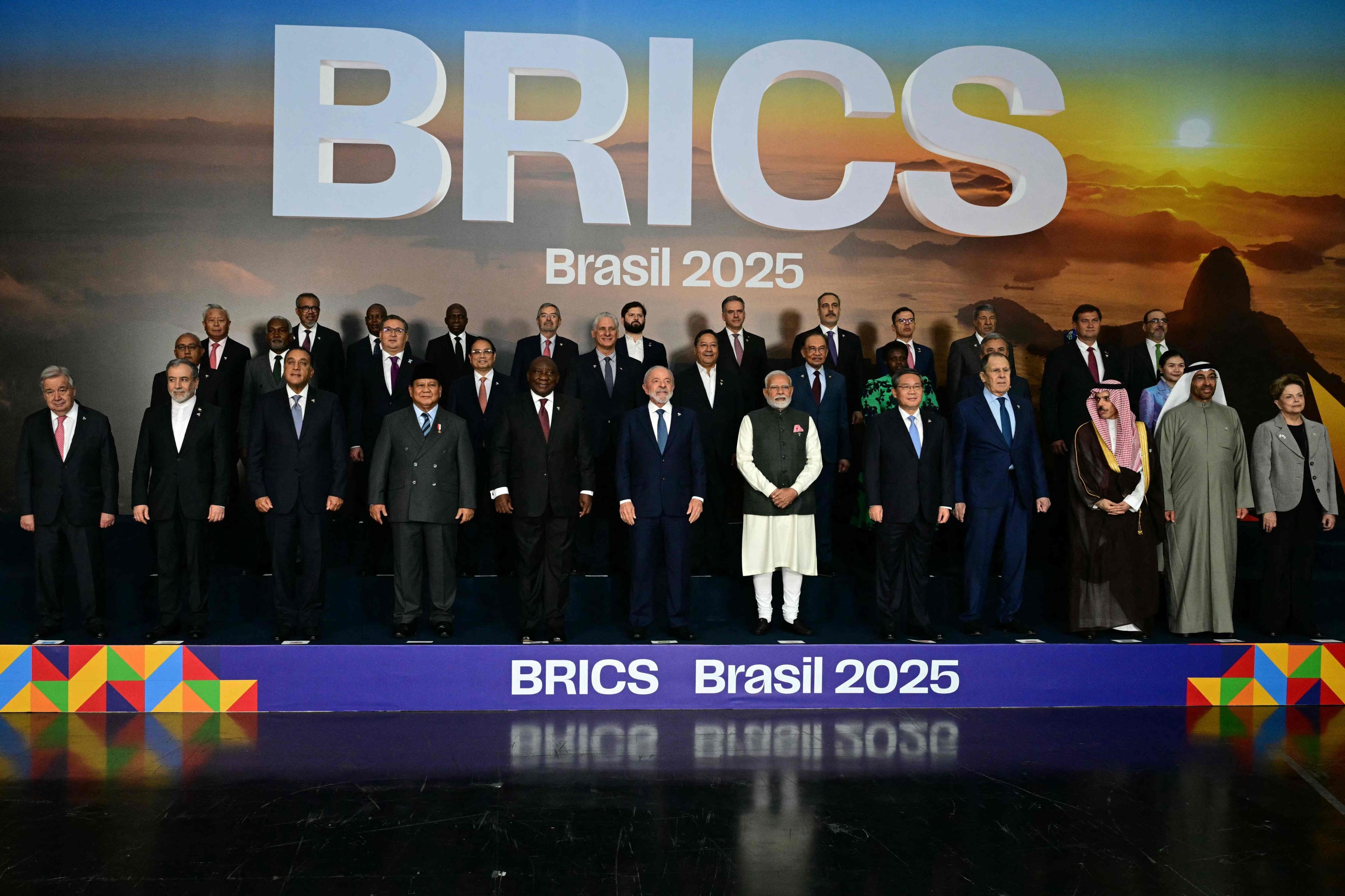
Multilateralism is under growing threat, and the Rio Summit of BRICS+, the 17th summit of the group, has led to further uncertainty.
The need for global governance to reflect the new multipolar global order is more urgent than ever. However, BRICS, as an intergovernmental group, has begun to raise doubts about its ability to adequately respond to global issues or address the demands of its member countries. The Rio Summit of BRICS+ has surely marked a new beginning for its new members. However, it has also raised many questions.
The BRICS+ members have been insisting on a fair share in global trade and decreased dependence on the U.S. dollar. Yet, the group still lacks key aspects, including coherence and the capacity to build a solid alternative to Western capitalism that would position it as another global powerhouse or pole in the global economic, financial and political spheres.
On the other hand, the expansion of BRICS into BRICS+ might have brought greater diversity and enhanced strategic and geopolitical strength in its perceived roles and goals. Nonetheless, the national interests of member states, such as Russia, China and India, continue to dominate the bloc's agenda and prevent the establishment of a unified political or economic stance or taking action against the opposing blocs, such as the EU. BRICS should certainly not be considered an alternative to the Organisation for Economic Cooperation and Development (OECD), the EU, or similar international initiatives. Instead, international blocs such as BRICS should be seen as a new window of opportunity.
Despite all the drawbacks, strengthening Global South cooperation, global governance, trade, investment and financial cooperation, as well as the increased role and cooperation of the Global South in AI and green transformation, were all key themes of this 17th summit.
For the host country, Brazil, the Summit served as a preparatory meeting for the next COP meeting (COP30), which is expected to take place in Brazil in November 2025.
Many countries, including Türkiye, are also actively exploring opportunities to enhance cooperation with international partners and achieve greater economic stability. Despite some shortcomings, cooperation with BRICS+ is still considered an opportunity not to be missed. Türkiye follows a strategy of openness to all international organizations and economic blocs, aiming to expand economic and political cooperation globally. It hopes this will create new opportunities for trade and investment and strengthen its global financial, economic, and political position.
Amid geopolitical conflicts, rising protectionism and tariff wars, the BRICS has long been presented as a potential alternative to the West’s unilateral economic and political order. To understand how BRICS+ offers a new window of opportunity, one must first recognize how the geopolitical and geoeconomic center of gravity has been shifting toward the Global South.
As of July 2025, the BRICS+ bloc represents over half of the world’s population (56%) and around 44% of global GDP. The bloc has been striving to establish a new, non-Western, multipolar financial, economic and political order.
After all, multilateralism needs to be further strengthened to address emerging global challenges. Hence, there is a growing need for an economic, cultural, financial and political bloc focused on coordination, cooperation and consultation – one that can serve as a counterweight to the G-7, Western hegemony, and even Western capitalism.
On the other hand, climate change and sustainable development remain two of the most pressing global concerns. Additionally, the development of sustainable AI and high-tech initiatives is gaining new momentum. Rising inequalities, poverty, hunger and the widening gaps in income and wealth must be addressed with urgency.
BRICS+ is a new geopolitical club aiming to address all these issues. It is a Global South-led economic cooperation organization that seeks to represent the developing world and provide an alternative to the Western-dominated global order, potentially reforming international institutions. The group includes some of the largest emerging economies – an extremely diverse economic, cultural, financial and political governance club. All of the founding members are also members of the G-20. It is an informal club or bloc seeking a new, global, multipolar and multilateral international order.
Yet, the club faces growing strategic divergences even among its five founding members, and now with six new members and an expanding network of partner economies and invited countries, these differences are becoming even more complex. Some are more interested in maintaining it as a strategic alliance, while others aim to create a new international order to mobilize the vast potential of the Global South.
More specifically, while Russia and China are still interested in using BRICS as a tool to reshape the global economic, financial, and political order, most other members would rather avoid becoming part of a new global power confrontation. Some members of the bloc have backed away from its anti-Western stance. In particular, South Africa, Brazil and India are less interested in transforming it into an anti-Western alliance. India, in particular, is collaborating with the U.S., Israel, and other partners to limit China’s sphere of influence. On the other side, with Egypt and Ethiopia joining BRICS, South Africa’s position as the sole African representative is now shared, potentially reshaping regional dynamics.
The evolution of BRICS into BRICS+ reflects both the opportunities and challenges inherent in reshaping the global order amid a rapidly changing geopolitical landscape. While the bloc symbolizes the rising influence of the Global South and offers a platform for increased cooperation on economic, financial and political fronts, it also grapples with internal strategic divergences and differing national priorities. The Rio Summit highlighted these complexities, underscoring the group’s potential to serve as a meaningful counterweight to Western dominance, yet revealing the limits posed by the varied interests of its members.
As the global center of gravity continues to shift, BRICS+ must strive for greater coherence and unity if it hopes to transform from a diverse coalition into a cohesive force capable of driving a multipolar, inclusive international order. Addressing pressing global challenges, such as climate change, sustainable development, and technological transformation, requires collaboration that transcends geopolitical rivalries. Ultimately, the future of BRICS+ will depend on its ability to balance these internal differences while leveraging the collective strength of its members to advocate for a fairer, more equitable global system.