We are living in a period where artificial intelligence is becoming widespread and rapidly transforming every aspect of life with profound effects. AI technologies are increasingly automating tasks and processes, leading to fundamental transformations in business operations. In particular, rapidly advancing large language models (LLMs) and generative AI technologies like ChatGPT are expanding the scope of this transformation both horizontally and vertically. In this context, it can be said that an AI ecosystem has emerged in a very short time.
Of course, the multipurpose applications of AI technologies have brought their risks into the center of public debate as much as their benefits. In this context, Mustafa Süleyman’s book, "The Coming Wave: Technology, Power, and the Twenty-First Century’s Greatest Dilemma" – Süleyman himself being a prominent entrepreneur in the AI field – helps us better understand the full dimensions of the massive wave brought by AI. Süleyman particularly draws on Stuart Russell’s "gorilla problem" approach to define what he sees as humanity’s greatest challenge. Based on this perspective, he emphasizes that although gorillas are physically stronger than humans, humans have been able to control gorillas through their superior intelligence, and if an artificial general intelligence (AGI) emerges, this balance of power could be fundamentally altered.
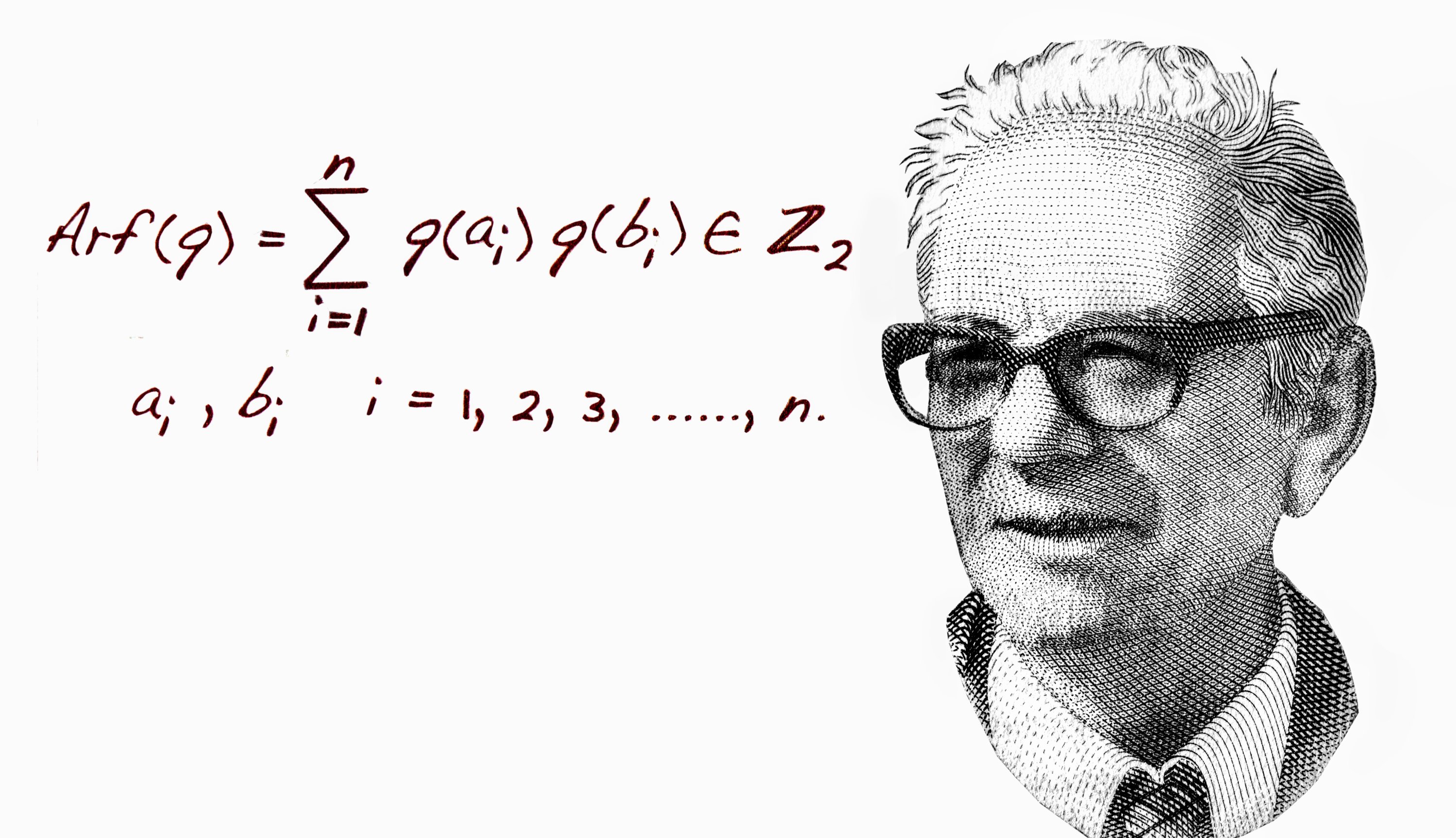
Until today, many significant discussions have taken place on this topic. In these debates, Alan Turing’s 1950 article and the question he posed, "Can machines think?" are generally regarded as the starting point. In Türkiye, a similar question was raised by our renowned mathematician Cahit Arf, who delivered a lecture in 1959 at Erzurum Atatürk University titled "Can Machines Think, and How Might They Think?" In this lecture, Arf explained with simple examples how repetitive operations could be performed by machines, both analog and digital. However, he emphasized that even if the number of operations a machine could perform were greatly increased, "we would still not be able to regard it as an artificial brain."
In this context, he emphasizes the need to develop machines with "adaptive capability" – that is, machines capable of solving problems that were not anticipated when they were originally designed. To elaborate on this proposal, he explains how the brain performs its functions, the importance of memory, how data is processed, and how new situations are evaluated, illustrating these processes with a diagram. He stresses that a thinking machine should possess dynamics similar to those of the human brain. Most importantly, he asserts that this is indeed possible: "While the human brain is capable of continuously improving itself through its own initiative, a machine remains as it was originally built. Nevertheless, it is possible to design a machine that can improve itself."
Arf’s aspiration has now become possible with today’s AI technologies. AI applications that use real-world data as their training sets are capable of responding to new situations, and moreover, once deployed, they continue to learn through their interactions with their environment (both humans and machines), thereby further developing their memory.
Arf does not stop his reflections here; he takes the discussion one step further. He emphasizes that if a thinking machine is to be produced, it must, just like the human brain, "Be capable of receiving stimuli of an aesthetic nature, processing them, and making decisions of an aesthetic nature; and it must feel free to decide whether or not to perform a given task." He points out that uncertainty lies at the foundation of these aspects. Today, we know that artificial intelligence technologies are rapidly evolving toward autonomous systems capable of making their own decisions. Moreover, as these technologies become increasingly complex, the processes by which decisions are made are becoming more opaque, and despite efforts to enhance accountability and transparency, the "black box" nature of AI technologies cannot be fully eliminated.
Even more interestingly, Arf refers to atomic dynamics as a way to instill this essential characteristic of "uncertainty" into machines: "Thus, if the events occurring among a relatively small number of atoms could be made effective in the operation of such machines, it could be hoped that the machines would resemble the human brain also from an aesthetic standpoint." I do not know whether this was exactly what Arf intended, but we are now at a turning point where the properties of the atomic world – namely, quantum physics – are being used in computation, with the development of quantum computing and its application to AI.
With the development of quantum computers, the computers we currently use are now classified as classical computers. Unlike classical computers, which use 0 and 1 bits, quantum computers utilize quantum bits (qubits) based on the fundamental principles of quantum mechanics. In this way, the characteristics of quantum mechanics are transferred to quantum computers: qubits can represent multiple states simultaneously (superposition), and the ability of qubits to be interlinked and correlate their states with one another (entanglement) increases the computational capacities of quantum computers. While classical computers perform each step of a computation sequentially, quantum computers can process these steps simultaneously. Moreover, the probabilistic nature of quantum computers allows them to generate the possible solution set to a problem, unlike classical computers, which operate deterministically. In short, Cahit Arf’s 1959 foresight regarding the development of thinking machines has proven accurate and encompasses many of today’s major advancements.