The latest dispute between Malaysia and Norway regarding the cancellation of the export license for the Naval Strike Missile (NSM) has evolved beyond a mere disagreement over a contract.
In early 2026, Oslo revoked the export approval for the Norwegian-made missile system, intended to equip the Royal Malaysian Navy’s Littoral Combat Ships (LCS), even though the procurement contract had been signed years earlier and Malaysia had already paid nearly 95% of its value. Norway justified the decision by citing stricter export controls and revised policies that limit access to some of its most sensitive defense technologies to only its closest allies and strategic partners.
However, Malaysia views the move from a vastly different perspective. The leaders regard the cancellation as an unexpected breach of trust that not only undermines the country’s naval modernization program but also jeopardizes the credibility of long-standing defense agreements.
Beyond seeking compensation and exploring legal avenues for resolution, Malaysia views the incident as evidence that even legally finalized defense contracts can be disrupted by political decisions in the supplier country, regardless of the financial commitments already made.
It is within this broader strategic context that the incident involving Norway warrants closer scrutiny. The issue goes beyond the mere delay in the delivery of a missile system. Rather, it reveals a more fundamental reality of modern defense procurement: Military capability depends not only on acquiring advanced platforms but also on the political reliability of the parties willing to supply, support and maintain them over the long term.
For a convening power like Malaysia, whose defense posture relies on diverse external partnerships, this incident serves as a reminder that strategic trust has become just as crucial as technological capability itself.
The Royal Malaysian Navy (RMN) has long been burdened by ageing assets, strained maintenance cycles and escalating operational demands. The strategic environment surrounding Malaysia has also changed drastically. Territorial disputes in the South China Sea persist, and the Strait of Malacca requires constant monitoring. Meanwhile, the waters off eastern Sabah continue to face recurring non-traditional security threats, ranging from smuggling activities to maritime intrusions.
In short, maritime pressures are mounting while existing naval capacity remains limited.
This creates an imbalance. Ageing vessels, regardless of how well they are maintained, cannot indefinitely carry out modern missions designed for newer, networked and multi-role platforms. As the demand for patrols rises, an aging fleet eventually becomes not only a maintenance burden but also a strategic vulnerability.
This makes the 13th Malaysia Plan important. It may decide whether Malaysia can finally accelerate naval modernization or remain trapped in prolonged procurement uncertainty.
Yet a more essential question must be asked: Who should Malaysia trust as a long-term naval partner?
The usual candidates naturally come to mind. The United States remains a leading defense supplier with highly sophisticated systems, yet American acquisitions often entail high costs and complex political conditions. European suppliers offer advanced naval technology, although recent events demonstrate that political risk can never be entirely disregarded. South Korea is becoming increasingly competitive in shipbuilding, while India continues to expand its maritime defense ambitions.
China also remains an unavoidable topic of attention.
Its shipbuilding capacity is immense, production speeds are impressive, and its cost-competitiveness is hard to ignore. Malaysia’s past experience with China-related naval acquisitions aptly reflects these advantages. However, the limitations of that experience are equally instructive. The concerns go beyond mere financial or logistical issues. Questions arise regarding technological interoperability and long-term integration into the broader Malaysian naval ecosystem.
These distinctions are significant because naval platforms do not operate in isolation. They must communicate across diverse systems, doctrines and command structures. For a navy like Malaysia’s, where the operational architecture comprises a mix of Western, European and increasingly varied technologies, interoperability is a strategic necessity rather than merely a technical choice.
It is in this context that Türkiye’s rise warrants closer attention.
This is not because Türkiye offers the sole solution, but because it increasingly represents a distinct strategic category within the global defense market.
Over the past decade, Türkiye has undergone one of the world’s most remarkable industrial-defense transformations. Having long relied heavily on imports, Türkiye has systematically developed indigenous capabilities in aerospace, drones, land systems and naval platforms. Its defense sector is no longer confined to the periphery of the global supply chains; it has emerged as a rapidly growing strategic manufacturing hub.
The naval sector clearly reflects this rise.
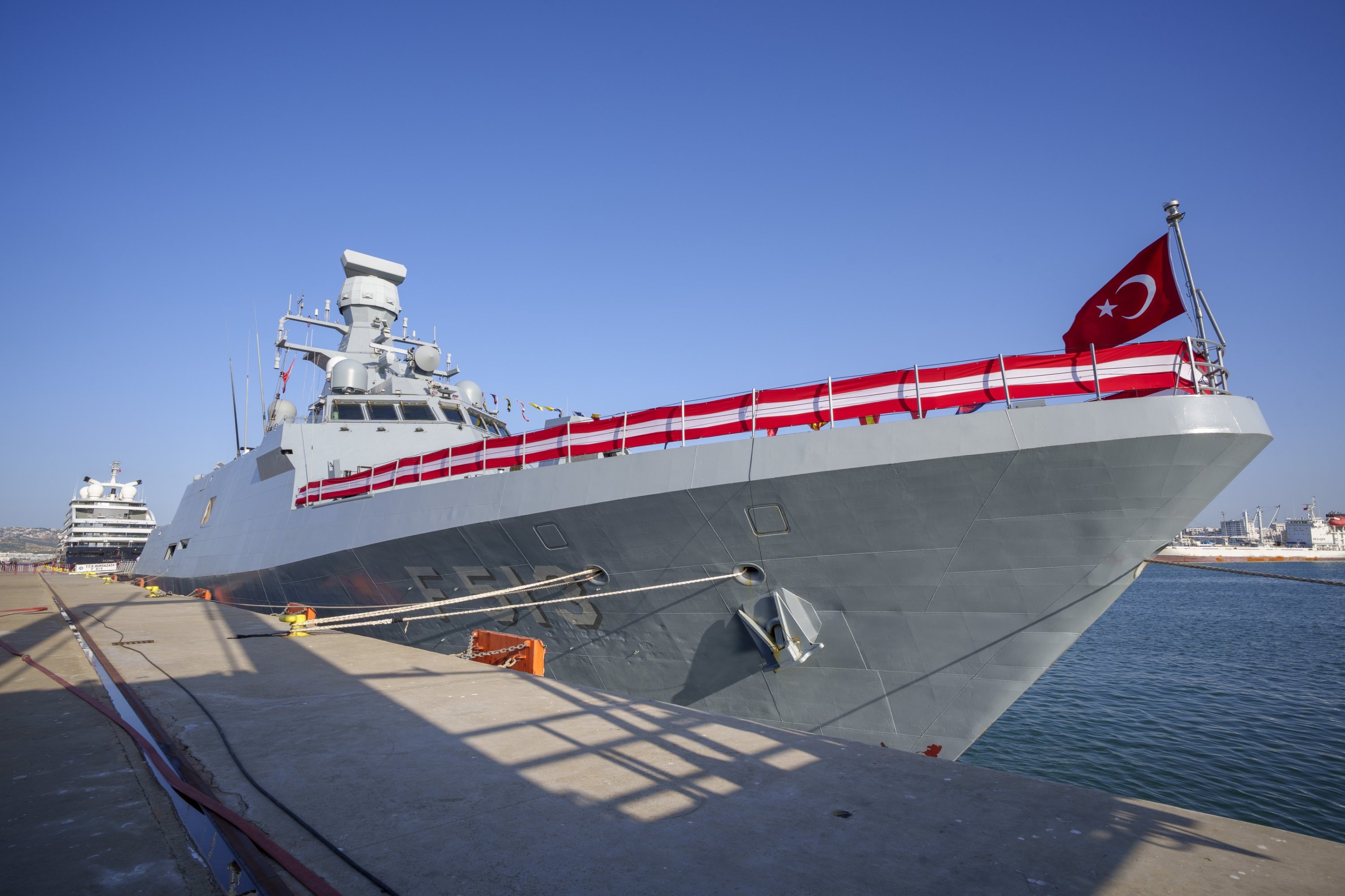
Through national naval programs such as MILGEM and other domestic shipbuilding initiatives, Türkiye has demonstrated its capability to construct, design and outfit complex naval platforms with weaponry, while simultaneously increasing the use of locally sourced components.
Unlike conventional suppliers, Türkiye occupies a unique and flexible geopolitical position.
The country is not entirely isolated from global power rivalries, yet its stance is not wholly defined by them either. Unlike the U.S., Türkiye is generally not perceived as imposing strict conditions regarding alignment on its defense partners. Similarly, compared to China, its defense cooperation does not trigger the same strategic concerns in Southeast Asia, particularly within the context of the South China Sea.
This provides Türkiye with a distinct advantage among middle powers.
Its appeal lies in more than just capability, although cost competitiveness is important. More significantly, Turkish defense cooperation increasingly emphasizes modularity, flexibility and industrial partnerships. The value proposition is no longer merely “buy our ships.” It is increasingly about building a long-term strategic ecosystem that encompasses maintenance, training, technology adaptation and local participation.
For Malaysia, all of these elements constitute important pieces of the puzzle.
Kuala Lumpur has consistently sought to avoid over-reliance on any single power. Its foreign policy tradition has long emphasised hedging, autonomy and strategic balancing. Within such a framework, supplier diversification has been more than just a prudent procurement policy; it has been a pillar of national security.
This is why the Norway episode should not be narrowly interpreted as a missile dispute. Instead, it should be viewed as a warning against the risks of excessive strategic dependency.
No supplier is perfect. Every procurement decision involves weighing trade-offs that encompass cost, political exposure, operational compatibility and long-term sustainability. Therefore, the real challenge for Malaysia is not choosing between East and West, nor between suppliers from NATO and non-NATO blocs.
The true challenge lies in identifying a partner capable of supporting Malaysia’s defense modernization efforts without compromising the nation’s strategic autonomy.
Increasingly, Türkiye appears well-positioned in this regard.
The country’s rise in the naval sector reflects broader shifts in the global defense landscape, where middle powers are no longer merely passive buyers but are actively shaping strategic partnerships. As traditional procurement hierarchies become politically volatile, nations like Malaysia may find greater value in suppliers that combine capability with flexibility.
Consequently, the future of naval modernization may not focus exclusively on major powers or long-established defense giants.
It may well belong to those capable of offering something increasingly rare in a fractured world: strategic trust.
Türkiye’s ascent in the naval domain demonstrates a keen understanding of this reality. Malaysia would do well to give this matter serious consideration.