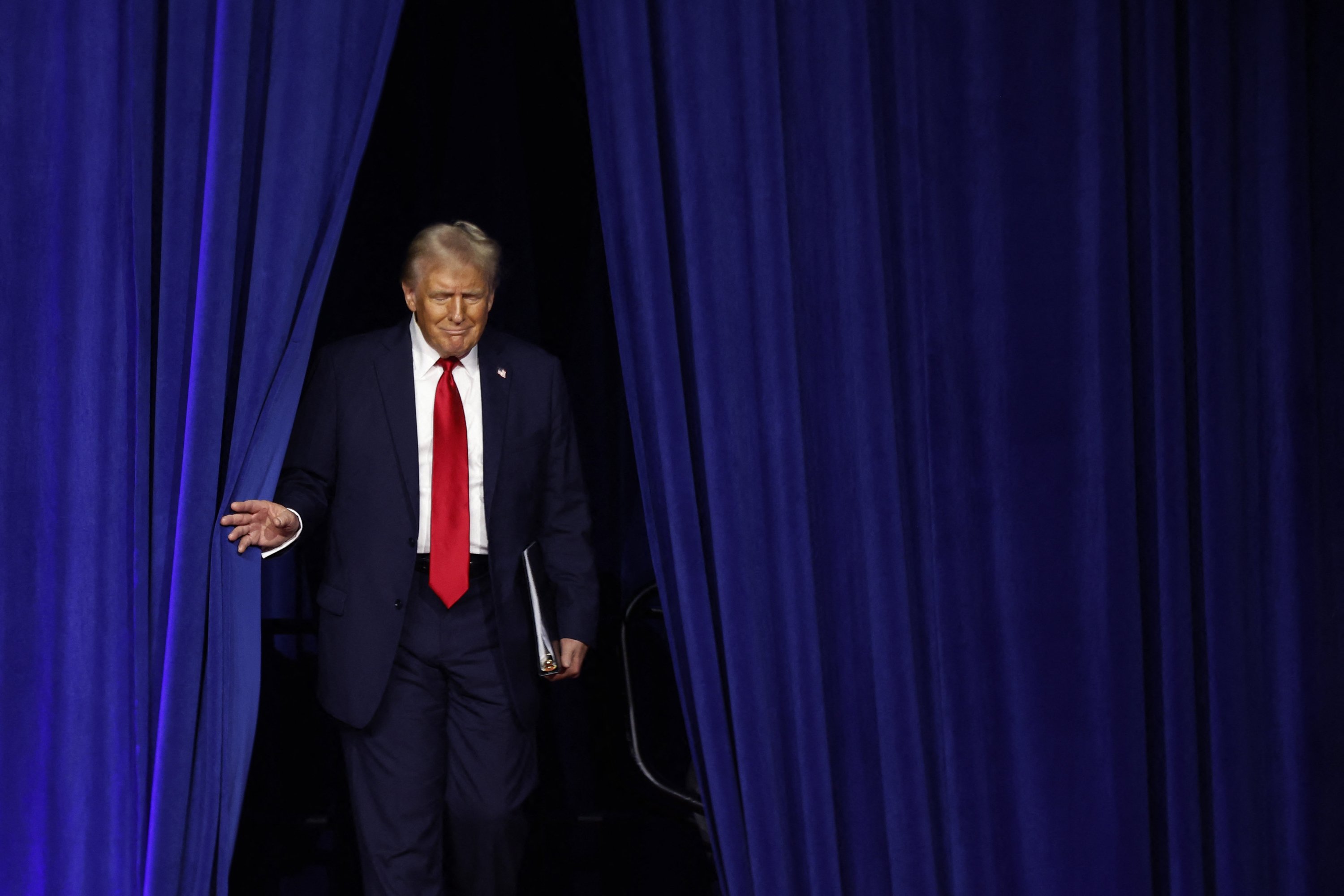
Donald Trump is back in the White House, stirring excitement in Washington. In Central Asia, however, the response is muted. For leaders from Kazakhstan to Uzbekistan, there’s little reason to think that Trump’s “America First” doctrine will bring renewed attention their way.
This region, once a vital cog in America’s war on terror, now watches as power and attention shift elsewhere. Bruce Pannier, an American journalist who has long covered the region, puts it plainly: “I think Central Asia will almost disappear from the U.S. foreign policy radar. Trump wasn’t very interested in Central Asia when he was president and when U.S. troops were in neighboring Afghanistan.”
Years of unmet promises have fueled this indifference. Washington’s aims – promoting democracy, countering Russian influence, securing energy resources – have, by many accounts, fallen short. Yet, Central Asia still hints at opportunity for the U.S., if it approaches with realistic goals and a sharper understanding of the region’s pulse.
In the early 1990s, the collapse of the Soviet Union presented the United States with an unprecedented opportunity to influence Central Asia's future. The newly independent republics were rich in natural resources – Kazakhstan alone possesses some of the world's largest oil and uranium reserves. Washington aimed to promote democracy, bring in free markets, counter Russia’s shadow, and ultimately build a network of allies. But the “U.S. Strategy for Central Asia 2019–2025” and other initiatives struggled to resonate.
However, the U.S. underestimated the complexities of Central Asian societies. Deep-rooted ties to Russia, intricate clan networks, and the challenges of nation-building presented significant obstacles. The push for rapid economic reforms often backfired. Weak regulatory frameworks allowed valuable assets to end up in the hands of a privileged few, fueling inequality and corruption. This eroded trust in Western economic models and led to skepticism about the U.S. agenda.
A recent op-ed by former USAID and White House officials Javier M. Piedra and Alexander B. Gray highlighted this shift. They argued it's time for Washington to rethink its approach to Central Asia, suggesting a fresh start that would "prioritize diplomatic engagement, de-emphasize geopolitical adventurism and moderate ideological pronouncements." In other words, less preaching and more genuine partnership.
After 9/11, Central Asia gained renewed attention as a logistical hub for U.S. military operations in Afghanistan. The U.S. established the Karshi-Khanabad Air Base in Uzbekistan and the Transit Center at Manas in Kyrgyzstan. These bases were crucial for operations, but relationships remained largely transactional. In 2005, following U.S. criticism of Uzbekistan over the Andijan massacre – where hundreds of protesters were killed – the Uzbek government expelled U.S. forces from Karshi-Khanabad.
The American focus on security overshadowed other aspects of the relationship. Economic aid frequently came with policy conditions that clashed with local governance structures. Pressure on Kyrgyzstan to combat corruption, for instance, conflicted with internal power dynamics, leading to political instability and the eventual closure of the Manas base in 2014.
Despite these strategic interests, no sitting U.S. president has ever visited Central Asia (excluding Afghanistan, which Trump visited in 2019), a point of frustration for the region's leaders.
The failure to establish lasting influence stems from geography and history. Russia remains a big player due to centuries of shared culture and political ties. China's Belt and Road Initiative has invested billions in infrastructure projects across Central Asia. Türkiye leverages ethnic and linguistic connections, weaving itself into the social and economic fabric of these nations.
These neighboring countries offer tangible benefits – railways, roads, pipelines, and markets – without the ideological strings attached. These players understand regional dynamics because they are part of them, while the U.S. has often appeared as an outsider imposing its worldview without fully appreciating the local context.
Central Asian leaders increasingly prioritize practical relationships over ideological alignments. Kazakhstan's President Kassym-Jomart Tokayev articulated this shift, saying, “We do not believe in zero-sum games. We wish to replace the ‘Great Game’ with ‘Great Gain’ for all in the heart of Eurasia.”
Recent U.S. sanctions against companies in Kyrgyzstan and Uzbekistan for allegedly assisting Russia have further strained relationships. These actions deepened skepticism about Washington's intentions. As Chinara Esengul from the Peace Nexus Foundation in Central Asia noted in an interview with TRT World, "Effective geopolitics for Central Asia isn’t about aligning too closely with the U.S. or any other major power. It’s about maintaining an equal distance from all superpowers, especially those that don’t share friendly relations."
Yet, there’s still room for U.S.-Central Asia cooperation, particularly in areas like critical mineral resources and technology. A business-oriented approach, rather than a political one, could be Washington’s most effective path forward.
As Bruce Pannier notes, “Recently, the USA has been pursuing better business ties with Central Asia, in part because of the need for critical raw materials, which exist in significant quantities in Central Asia. The U.S. also wants to help the EU expand the Middle Corridor to develop East-West trade that avoids Russia, There is still a focus on security issues since there are many militant groups – both Taliban friends and enemies – still in Afghanistan.”
In this context, Central Asia’s indifference to the U.S. election isn’t a snub; it’s a reflection of learned experience and an increasingly pragmatic approach to foreign relations.