On July 8, 2026, the European Parliament (EP) adopted a resolution addressing alleged sexual violence against Cypriot women during the 1974 Peace Operation, with 575 votes in favor, 33 against and 43 abstentions. The text, drafted under the rapporteurship of Greek-origin Member of the EP Eleonora Meleti, demands reparations from Türkiye and calls for the complete withdrawal of Turkish troops from the island.
Turkish Republic Ministry of Foreign Affairs described the resolution as containing "baseless and preposterous allegations against the heroic Turkish Armed Forces," while the Turkish Republic of Northern Cyprus (TRNC) Ministry of Foreign Affairs called the text yet another manifestation of the European Parliament's "biased, prejudiced and politically motivated" approach to the Cyprus issue. AK Party spokesperson Ömer Çelik, for his part, called the resolution "a despicable slander," stating that the text had no basis in reality whatsoever.
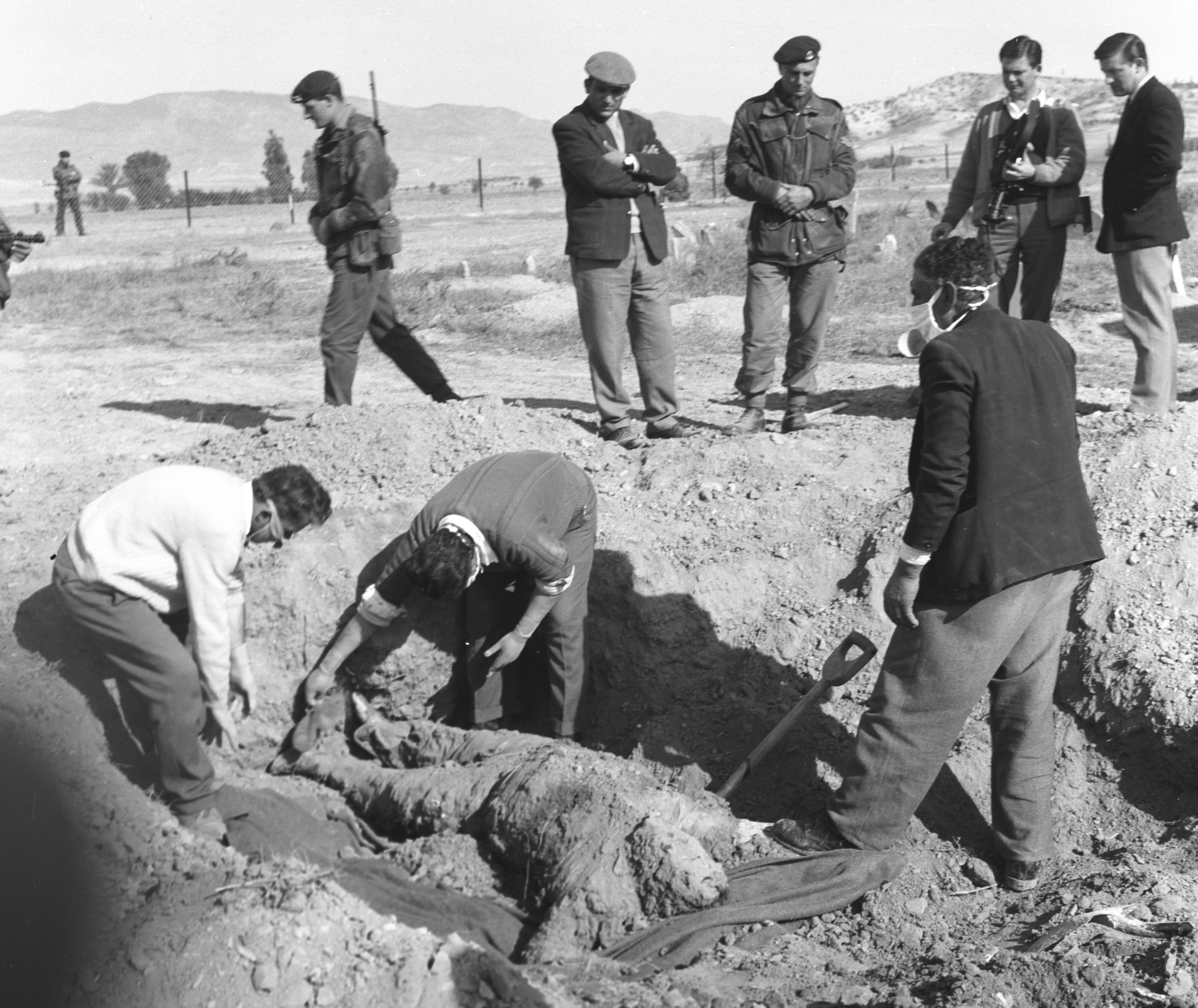
Perhaps the most striking flaw of the resolution is that it focuses exclusively on the Turkish Armed Forces (TSK) while making no mention whatsoever of the "Bloody Christmas" massacre carried out by Greek EOKA militants against Turkish Cypriot civilians in 1963-64, nor of the attacks that followed.
Notably, even Giorgos Georgiou, a member of the EP representing the Greek Cypriot administration, who voted in favor of the resolution, openly acknowledged that Greek Cypriot paramilitary groups had committed atrocities against Turkish Cypriot women, an admission that itself confirms the existence of real crimes entirely omitted from the European Parliament's text.
Türkiye's 1974 operation was carried out precisely to stop such attacks and to place the Turkish Cypriot people under protection. German member of the EP, Irmhild Bossdorf, explaining her vote against the resolution, noted that the issues addressed had little to do with the actual matters at stake between Türkiye and Greece, a remark that further exposes how fragile the resolution's standing is even within the EP itself.
The 1976 European Commission of Human Rights report cited as the resolution's basis was compiled from witness testimony amid the political climate of its era; the report itself did not establish individual military accountability. This gap alone suggests the resolution rests on a political choice rather than a legal finding. What is more, the number of alleged victims has varied over the years, from 1,000 to as many as 1,500, without ever being grounded in any official count or verified list.
Looking at how the resolution came about, the initiative was launched at the proposal of Greek Cypriot member of the EP Loukas Fourlas, with the rapporteurship again assigned to a member of the EP of Greek origin. This process shows that the text was shaped directly by Greek Cypriot and Greek political circles. A document drafted without consulting Turkish Cypriot archives, testimonies or official records cannot reasonably be considered a fair or balanced account.
Türkiye's 1974 operation was a direct exercise of the guarantor rights granted to it under the 1960 Treaty of Guarantee for the Republic of Cyprus. The coup carried out on July 15, 1974, by the EOKA-B terrorist organization with the backing of the military junta in Greece effectively abolished the Cypriot constitutional order and made clear the goal of annexing the island to Greece.
On July 20, 1974, Türkiye acted in its capacity as guarantor state, within the obligations recognized under international law, to secure the safety of the Turkish Cypriot people and to prevent what could have become a mass killing on the island. As the TRNC Ministry of Foreign Affairs put it, the operation "secured the existence and freedom of the Turkish Cypriot people."
The constitutional partnership rights of the Turkish Cypriot community rest on the founding-partner status recognized under the 1960 arrangements. The unilateral dissolution of that partnership by the Greek Cypriot administration in 1963, which excluded Turkish Cypriots from the machinery of state, remains the root cause of the dispute that persists on the island today. The fact that the European Parliament's resolution does not refer to this constitutional breach is further proof that the text was built on a selective framework detached from historical continuity.
What the U.N. Security Council has consistently emphasized in its resolutions on a lasting settlement is a framework based on a bizonal federation grounded in political equality between the two communities. The EP's resolution disregards this balance altogether, reducing the issue to a one-sided accusation and producing rhetoric that pushes the parties further apart rather than contributing to the negotiation process.
Türkiye's continued military presence on the island is not, as some circles claim, an occupation. It is the ongoing fulfillment of the guarantor's obligation set out in the 1960 treaty. The security of the Turkish Cypriot people has only been sustained through this guarantor mechanism. Without it, a repeat of the attacks endured between 1963 and 1974 would have been all but inevitable.
Indeed, there is broad agreement among international law scholars regarding the legal validity of the unilateral right to intervene granted to guarantor states under treaties of guarantee. Türkiye's operation was carried out in full accordance with this legal framework and at no stage sought to annex any part of the Republic of Cyprus. On the contrary, it aimed to preserve the island's bicommunal structure and to restore the constitutional partnership rights of the Turkish Cypriot people.
In conclusion, the resolution adopted in Strasbourg is a text that reflects a political choice rather than a legal finding, rests on selective sources, and disregards the constitutional rights of the Turkish Cypriot people. Ankara's firm response reflects a defense of historical truth and of the legal legitimacy derived from the 1960 treaty, as well as the responsibility of a state that has safeguarded the existence of the Turkish Cypriot people. For European institutions to approach the Cyprus issue with a framework that is balanced and respectful of historical reality is an imperative, both for regional stability and for the future of Türkiye-EU relations.
Türkiye's foreign policy road map going forward should rest on three main pillars. First, the archival records and testimonies documenting the systematic attacks endured by the Turkish Cypriot people between 1963 and 1974 should be shared systematically with the international public. Second, within U.N.-led negotiations, the guarantor system and the principle of political equality must continue to be defended firmly. Third, a sustained public diplomacy strategy should be put in place to convey Türkiye's legal position clearly and consistently in response to similar initiatives by the European Parliament. Only through such a determined and sustained effort will the dignity of the Turkish Cypriot people and historical truth find the place they deserve in international public opinion.