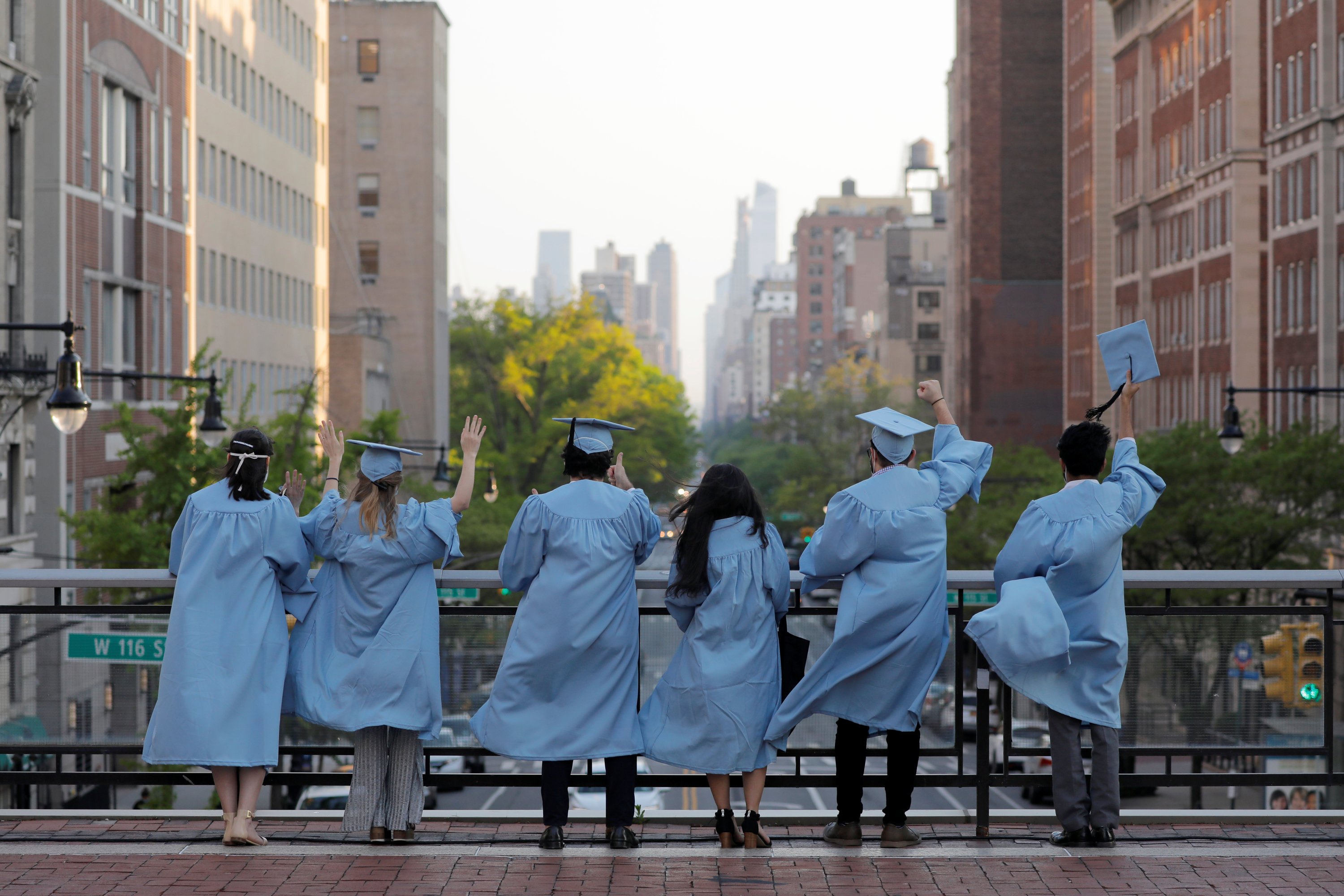
We have recently begun to hear people saying that “life will not be the same after the COVID-19 pandemic." In these uncertain times, some of the forecasts for the future are optimistic, while others are quite thought-provoking. While preparing for a new beginning, it is now quite clear that we will live in a different world from now on.
In the new normal process, where distance working will be a trend, creating less space for such physical discussion environments, it will also be necessary to consider how we can bring “innovation processes, workshops, and brainstorming” online.
Of course, universities are not only composed of campuses or laboratories. Universities offer not just education but provide for the establishment of networks that are the keys to future success. Although physical interaction on campuses has decreased, we will now see different forms of networking and a new culture in the digital environment.
It is very important to figure out how future generations will be trained from now on considering these changes. Therefore, we have tried to examine the innovations and changes that have begun to be adopted in universities in the United States.
There are 5,300 universities in the U.S. with a market share of $524 billion. All universities in the U.S. have evacuated their dormitories, sent students back home and decided to continue classes online due to COVID-19. Many scientists believe that the education sector will not be the same after the COVID-19 outbreak. It is a fact that schools will now invest more in digital education. It has been observed that the number of international students, especially in the U.S., is expected to decrease, and even some language courses have made a rapid transition to online English programs.
The administration of top Ivy League school Brown University announced that they might make it compulsory for students and academics to wear masks and seriously decrease their amount of sporting and musical events. Stanford University has announced that they are considering holding classes outdoors, even possibly in purpose-built tents. The aim here would be for fewer students to attend auditoriums. Other establishments, such as the University of New England, have started working to establish an antibody test center, and even roommates staying in dormitories may be paired according to antibody tests. Boston University has announced that it has taken new working measures to ensure the protection of students’ health by establishing working groups and a COVID-19 recovery committee. Taking a break from the infrastructure studies allowed the University of Colorado to announce a 10% pay cut from the salaries of the president, dean and other university executives.
Many university committees in America continue to plan at the highest level to help fight against the COVID-19 and provide for the health of students.
Educational institutions that have quickly adapted to this innovation and change will be successful, while those who cannot adapt will have to abandon the education sector.
Turkish students concern
Through the Work and Travel program established by the Department of State, about 100,000 university students from 130 countries visit the U.S. every summer. They work, travel and learn about the culture. I think this is an amazing and beneficial program that the U.S. offers. I applaud State Department officials for their successful leadership for this program.
Around 7,000-8,000 students from Turkey apply to the program each year. After receiving many messages from both parents and students over the last two weeks, I wanted to investigate this issue a little more. Moreover, we have conducted research to improve this program and support students who are in need since 2012.
In Turkey, many students apply for this program with what money they save in the winter or received from their families. The program is unlikely to take place this summer, however, since flights to the U.S. will not start until July, while the pandemic threat still continues. Students who apply for the program through the relevant agencies are tasked to come up with $1,800–$2,600 in advance. There are around 30 agencies engaged in the business. However, some of these charge exorbitant rates, as well as cancellation fees. Students have told me that these fees can amount to between $500-$2,400. Therefore, those students suffer a serious injustice at having to pay for a service that they cannot use.
Of course, some agencies do their jobs properly, but to expose and eliminate the bad ones is very important. Because they are hurting the current students and the program at the same time. Those students should not be victims of such injustice.
I hope that State Department and the authorities in Turkey investigate this issue further.
*President of the Turkish Heritage Organization and a 2019 Ellis Island Medal of Honor recipient