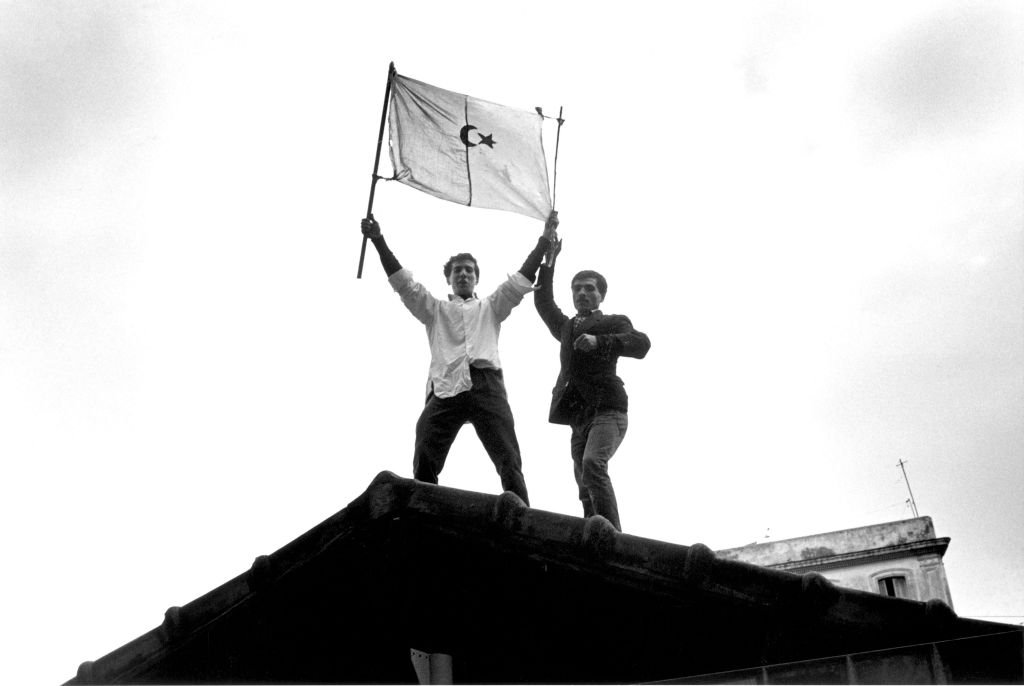
On Dec. 24, the Algerian Parliament fully passed a law recognizing France’s colonial rule in Algeria from 1830 to 1962 as a “state crime,” calling for an official apology from Paris and demanding compensation. While the law clearly confirms France’s legal responsibility for its colonial past, it also made an already fragile diplomatic relationship more visible. Paris called this move hostile, while the law text asks France to face crimes ranging from nuclear tests and extra-legal executions to organized torture and the taking of resources. It also asks for “full and fair” compensation for the material and emotional damage caused by these crimes.
Colonialism, however, was not confined to Algerian soil. Even after Algeria gained independence, the old colonial relationship continued, changing its form but still happening through labor inside French territory. After 1962, France systematically allowed North African immigrant workers, creating a reliance on labor that became a new version of old colonial structures.
Algeria’s independence was a deep historical defeat for France. After this defeat, and sadly continuing today, Algerians became the target of growing racist stereotypes in France; politicians and media linked them to crime and disorder, stigmatizing them in society.
After World War II, France faced a serious labor shortage in rebuilding roads, buildings, subway lines and industrial infrastructure. From 1945 onward, North African workers started filling this gap. Known as “Chibani” and “Chibaniyate,” these men and women silently added to France’s wealth as cheap labor. Yet, compared to French workers, they got lower wages, fewer bonuses and smaller pensions. According to reports from La Ligue des Droits de l’Homme, this unfairness forced immigrants to live their later years in poverty and hard conditions.
According to Algerian anthropologist Mahfoud Bennoune's "The Maghribin Migrant Workers in France," these workers encountered racial and class disparities, with 87.2% of Algerians, 81.4% of Moroccans and 70.3% of Tunisians confined to low-paying, semi-skilled or unskilled jobs, while French and European migrant workers were placed in higher-status, better-paid positions. Between 1954 and 1962, the number of Algerian immigrants in France grew fast, surpassing other immigrant groups. France became highly dependent on this workforce to keep its industrial and construction projects running.
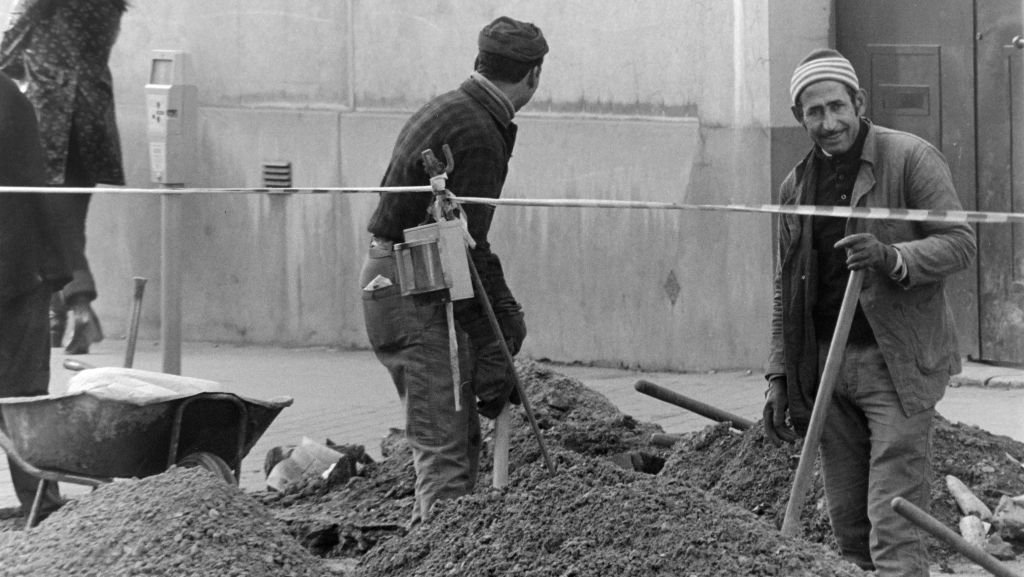
These workers faced unfair treatment not only at work but in daily life. In housing, public transport and public spaces, they were labeled “dirty” and “unwanted,” forced to live in crowded, dirty and degrading conditions. Violence, humiliation and being left out were regular parts of daily life for Algerian workers in France.
But why did Algerians leave their country and move to France? In his Les Damnes de la Terre, political philosopher Franz Fanon wrote how the war ruined Algeria’s peasant economy. About 2.35 million peasants who survived military operations were forced into “Regroupment Centers” surrounded by barbed wire and mines. France’s scorched-earth policies destroyed 8,000 villages, took livestock and left peasants without tools or animals.
Algerians came to France to earn money, send it to their families, and, especially after their homeland was taken and destroyed by France, to get a chance to own land again in Algeria.
The economic benefit France got from this labor was large. According to Bennoune, in 1966, French official Yves Chaigneau said Algerian workers added between 2.3 and 3.5 billion French Francs to the French economy. At the fixed exchange rate, this is about 350-535 million euros; but adjusted for today’s purchasing power, it equals around 3.5-5.4 billion euros. At the same time, the French capital earned about 1.5 billion Francs yearly profit from this labor, which in today’s value is roughly 2.2-2.4 billion euros.
Today, France, especially Paris, is presented worldwide as a symbol of romance and wealth. Tourists taking selfies with red berets in metro stations, streets like movie sets and comfortable train trips support this image. Yet behind this shine lies the hidden suffering of immigrant workers who built modern France. Historian Gerard Noiriel, in his Le Creuset français, provides statistics that nearly 97,000 Algerians were employed in construction and public works in 1975. They were actively participating in the construction of public housing, roads like the tarring of Parisian streets and urban infrastructure. These jobs were among the heaviest and most dangerous, often avoided by French workers, and even when skilled, immigrants had almost no chance of promotion.
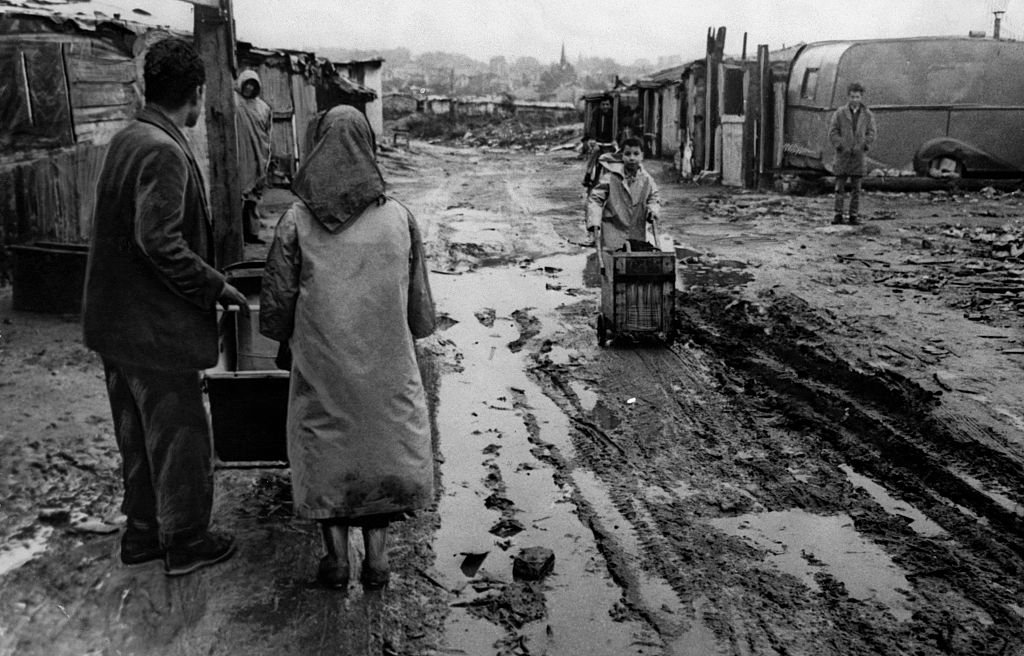
Work and living conditions were tough. Workers had to live in crowded, dirty barracks near construction sites; accidents like collapses, falls and electric shocks were common. Exposure to toxic things like asbestos and lead raised the risk of lung diseases, poisoning and cancer. Medical care was almost nonexistent. In the industry, companies like Renault, Citroen, Simca and Peugeot relied heavily on North African labor. Sociologist Laure Pitti, in her "Ouvriers algériens à Renault-Billancourt," writes that at Renault-Billancourt, Algerian workers made up 14% of the total workforce, and about one-third of all foreign workers. 95% were classed as unskilled, assigned to the heaviest and most dangerous sections, and had nearly no chance to get promoted.
Historian Rolande Trempe wrote one of the clearest examples of unfair treatment that happened at Penarroya Mining and Metallurgy Company in his "Les luttes des ouvriers immigrés à Peñarroya." One of the world’s biggest lead producers, linked to the Rothschild Group, its Lyon plant saw Tunisian worker Mohamed Salem killed on Dec. 19, 1971, when a 1,500-kilogram furnace lid fell because of a worn chain. The company tried to cover it up by hiding the broken chain, replacing it and forcing workers to lie. But a worker brought the old chain to inspectors, showing the truth. This event led Algerian, Tunisian and Moroccan workers to strike together on Feb. 9, 1972.
In their statement, workers demanded the “right to live.” Lead recycling caused serious illnesses, including lead poisoning, burns and repeated accidents. They lived stacked in temporary barracks inside the factory. Mohamed Salem’s medical file alone shows the harsh conditions of immigrant labor in France: stomach pain from heavy work, foreign objects in the eyes, burns, repeated inability to work and finally, death...
This full picture clearly shows the issue is not just about immigration. It proves colonialism never really ended, only continuing in new forms. The colonial mindset looks for new ways to use people rather than feeling guilt or shame. France once occupied Algeria, then, by using Algerian labor, it built its own wealth. Today, it still systematically keeps racist and unfair treatment against the descendants of those Algerians and other North Africans, now third and fourth generation French citizens, through the media and police violence. For a country that claims liberty, equality and brotherhood, this negative treatment of the people it once exploited is a serious historical contradiction. True justice can only come by facing the past and ensuring fairness in labor-based inequalities.