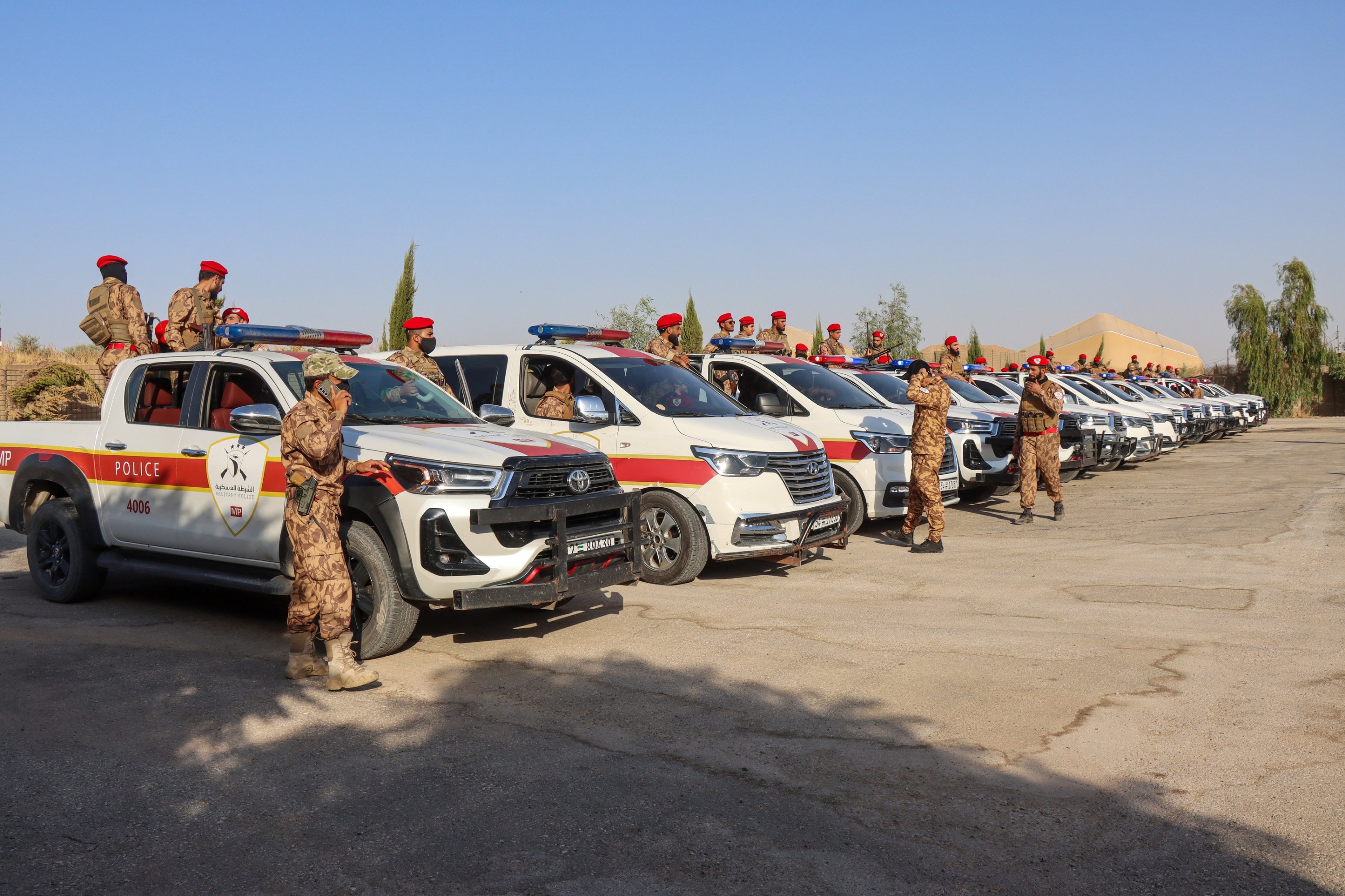
The geopolitics of the Middle East, and particularly Syria, underwent profound structural transformations following the fall of the Assad regime in 2024, reshaping the region’s security dynamics. At the heart of these political upheavals, the issue of the separatist terrorist organization YPG/SDF emerged as a major challenge. For several years, it had constituted a de facto military and administrative authority in northeastern Syria, before reaching its final stage in August 2026 with the decision to dissolve itself and integrate its elements into the central institutions of the Syrian state.
An analysis of this historic transformation and its geopolitical background helps shed light on the emergence of a new phase driven by the choice of peace and growing strategic and geopolitical coordination among Ankara, Damascus and Baghdad.
A systematic examination of the terrorist PKK/YPG-dominated Syrian Democratic Forces (SDF) requires a deconstruction of the organizational structure on which they were established in late 2015. Despite attempts to portray the alliance as an umbrella bringing together multiple components under international sponsorship to fight Daesh, a functional analysis shows that its core structure and strategic decision-making were concentrated exclusively in the hands of the YPG, the Syrian branch of the terrorist organization PKK.
The SDF’s military structure, the YPG, was designed by the leadership in the Qandil Mountains, which controlled its key security and financial levers. Syrians viewed this structural entanglement as a source of existential security concern. The danger posed by this project lay in the systematic encroachment on Syria’s geography and sovereign resources through attempts to monopolize its oil and gas resources, as well as its wheat basket. It also involved the imposition of demographic transformation policies aimed at establishing a continuous territorial strip that threatened the integrity of the Syrian state, its stability, the interests of its entire population, and the security of neighboring Türkiye. In this context, dismantling it became a strategic necessity to preserve Syria's national unity and territorial integrity, as well as the security of the Turkish-Syrian border.
During the years of conflict, the YPG’s political conduct was characterized by excessive pragmatism and the pursuit of factional interests outside the framework of Syria’s broader national agenda. This positioning can be examined along two main tracks.
The first was coordination with the fallen regime. Since 2011, the leaders who dominated the Kurdish political scene chose not to join the revolutionary movement against the authoritarian Assad regime. Under implicit understandings, the YPG took control of the administration of vast territories, including Hasakah, Afrin and Ayn al-Arab, following the tactical withdrawal of regime forces. Oil and financial channels between the two sides remained active throughout the conflict.
The second is the social trust deficit. The YPG pursued strongly exclusionary policies that created a deep rift between itself and even the Kurdish population, undermining trust within the very community it claimed to represent. This divide stemmed from its all-encompassing ideological orientation, which rejects pluralism and makes the exclusion of others a central principle of governance.
Although Arabs constitute the demographic majority in areas east of the Euphrates, they were largely excluded from the actual centers of decision-making. The YPG also enforced compulsory military conscription, requiring local residents to serve in its armed forces, often under threat of force. These policies fueled widespread resentment and triggered protests and uprisings among Arab tribes in the region.
This exclusionary conduct and structural and ideological violence were not confined to Arabs; they also extended to suppressing political pluralism within the Kurdish community itself. Kurds who opposed this approach were subjected to systematic elimination or arrest. The Kurdish National Council, which was part of the Syrian opposition to the Assad regime, was subjected to severe restrictions: its offices were dismantled and its cadres arrested. This demonstrates that Syrian Kurds were never a homogeneous bloc supporting the "SDF project." On the contrary, a large segment of them stood alongside their fellow Arab citizens and were themselves direct victims of the seizure of their political decision-making and the transformation of their regions, through force and intimidation, into a theater of proxy conflict.
Following the collapse of the Assad regime and the establishment of the new authority, the YPG attempted to cling to the status quo and preserve hopes of autonomy. However, the shift in the international approach, particularly changes in the strategy of the U.S. administration, combined with intense military pressure from Syrian government forces and tribal formations in Deir el-Zour and Raqqa, reduced its military options and narrowed the geopolitical room for maneuver of the Qandil-based leadership, which exercised the real power in the region, with SDF serving merely as its political façade.
Faced with this reality, the new Syrian government adopted a strategy combining firmness with political wisdom. It issued Decree No. 13 to address the historical injustices suffered by Syrian Kurds, accumulated over several decades of rule by the Assads and the Baath Party, which had exploited the Kurdish issue for political purposes and deprived a large number of Kurdish citizens of their civil rights.
This political opening deprived the YPG of its ideological claims and culminated in the announcement of the definitive dissolution of its military structures and its integration into the central institutions of the Syrian state.
This new reality produced major strategic gains, notably through the restoration of the central state’s sovereignty over the oil and gas resources and vital dams of the Euphrates region. The return of these resources to the Syrian people was not merely a sovereign victory; it also represented a step toward restoring economic and social balance and freeing tribes and local communities from dependence on the de facto authorities. Nevertheless, concerns remain over the continued presence of armed groups comprising remnants of the YPG, which may seek to resist the restoration of state control over these areas.
Residents of Hasakah Governorate and the city of Ras al-Ayn made this clear by holding popular demonstrations earlier this month to denounce the remnants of the YPG’s security influence and demand that the government assume full control of public-service and judicial institutions, while ensuring that the possession of weapons remains exclusively in the hands of the state’s internal security forces.
The Kurds’ acceptance of joining the central authority and their complete break with the projects of the PKK open the way to a new strategic equation based on the choice and wisdom of peace. The policy of exploiting local aspirations to exhaust the states of the region is gradually giving way to high-level security and strategic coordination among Damascus, Ankara and Baghdad. This rapprochement is no longer limited to securing Syria’s northern border and clearing it of weapons to safeguard Turkish and Syrian security interests jointly; it also opens the way for major development projects serving shared interests.
Freeing the borders from the threat posed by armed groups now makes it possible, for example, to move seriously toward implementing the strategic railway connectivity project linking Syria, Türkiye and Iraq.
Supported by a regional vision, this project will connect the ports of Basra and Latakia to Turkish and European markets. It will also transform the northern border shared with Türkiye, once a front line of persistent military tension, into an economic artery and international trade corridor connecting peoples and revitalizing the Syrian and Turkish economies.
Ultimately, the integration of the YPG/SDF into the Syrian state demonstrates that Syria’s stability and the preservation of its territorial integrity constitute the fundamental foundations for sustainable regional peace based on the interests of sovereign states.