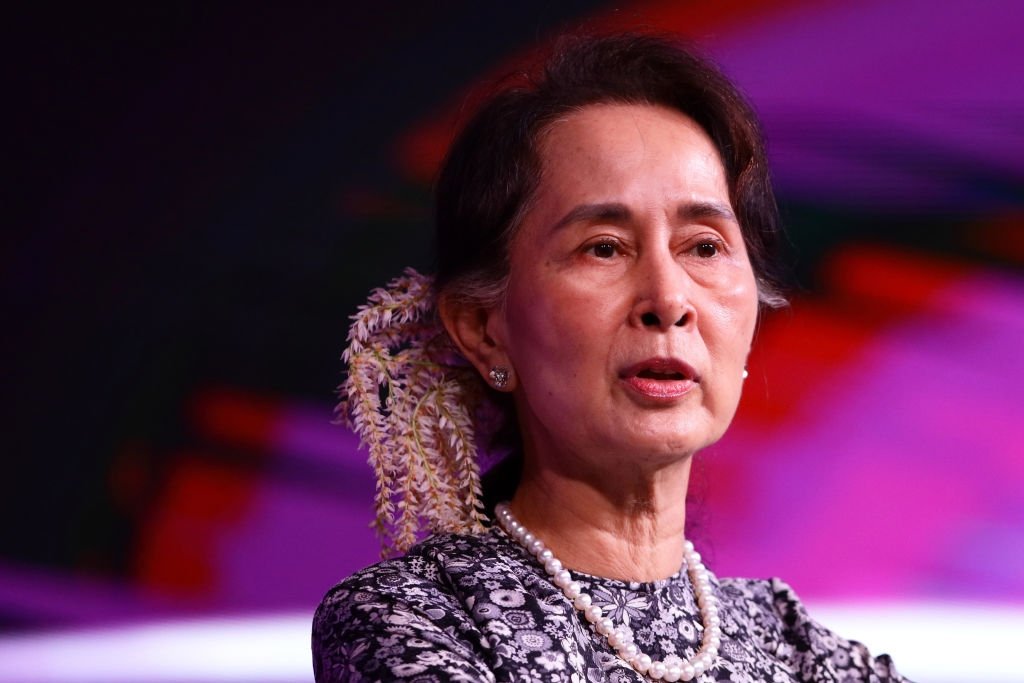
Aung San Suu Kyi is the daughter of Aung San, Myanmar’s independence hero and founder of the modern Burmese army. She studied at the University of Oxford in the United Kingdom and later married British academic Michael Aris. She returned to Myanmar in 1988 during pro-democracy protests and became the main leader of the National League for Democracy (NLD).
For her non-violent resistance against military rule, she spent around 15 years under house arrest and received the 1991 Nobel Peace Prize while still in detention. After the NLD won the 2015 elections, she became the de facto civilian leader of Myanmar from 2016 until the 2021 military coup. Her later political role became highly controversial due to international criticism over the Rohingya crisis.
Aung San Suu Kyi’s political legacy cannot be separated from the Rohingya crisis. The Rohingya crisis was not an accident. It was born out of decades of discrimination and reached its apex when leaders who had the power to make an impact opted to remain silent.
When the Rohingya needed protection, however, NLD’s leader Aung San Suu Kyi aligned with the military leadership, and those same generals who hold her in confinement.
Her stance during the Rohingya crisis was not passive silence but a political choice that reinforced the military’s position and weakened accountability. Her story begets a straightforward question: when you refuse to see the suffering of a persecuted people, who will protect you when your own power shatters?
Decades of discrimination culminated in the 2017 military crackdown under Senior General Min Aung Hlaing’s leadership. On Aug. 25, 2017, a Muslim armed group known as the Arakan Rohingya Salvation Army (ARSA) attacked about 30 police posts in northern Rakhine. Twelve officers died. That incident became a pretext for the military’s campaign, which carried out genocide in response.
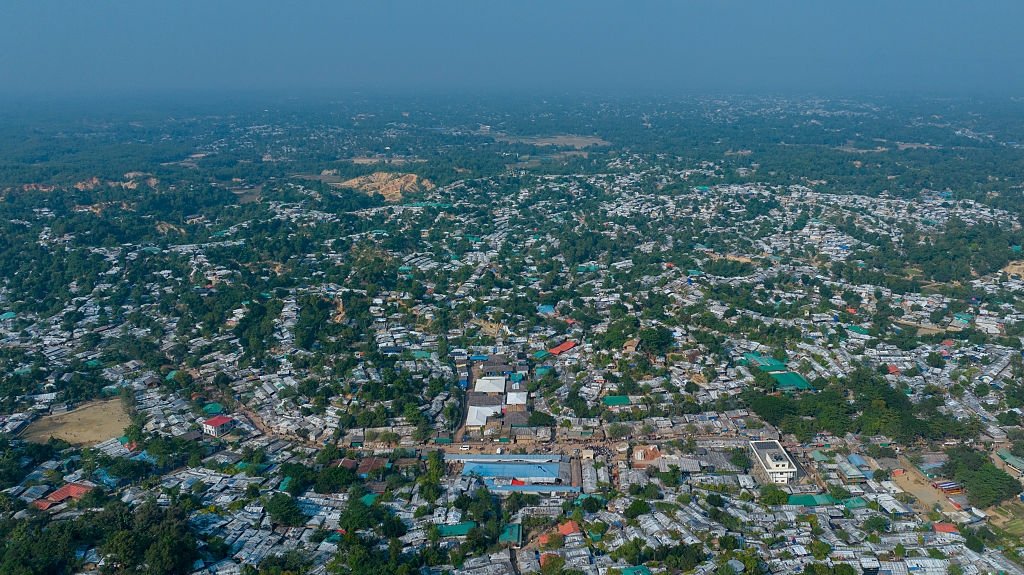
In this military’s response, the Rohingya suffered mass displacement, loss of villages and their homes, and destruction of entire towns. By satellite imagery, hundreds of Rohingya-majority villages in northern Rakhine had been seen torched, some with ruins, in their entirety, and some only partially or entirely burned. Homes, mosques and farmland were obliterated, as nearby non-Rohingya villages are often unspoiled. More than 700,000 people in 2017 fled to Bangladesh, creating the world’s largest refugee camp. The United Nations described it as a “textbook example of ethnic cleansing.” The U.S. officially declared it genocide.
After a major U.N. fact-finding mission found the military had committed genocide and crimes against humanity against the Rohingya, Suu Kyi remained largely silent even when the United Nations and human rights groups called on her to intervene. Rather than confront the findings, she led a public event to consider literature by forgetting the U.N. report. When she spoke in 2017 about the crisis, she called the violence a “security operation.”
During her defense of Myanmar at the International Court of Justice (ICJ) in 2019, she never used the term “Rohingya.” Instead, she named it “Muslims from Rakhine state.” This was perceived by rights groups as a concerted denial of Rohingya identity, a key constituent of systemic denial. Her administration, however, directly denies the Rohingya’s identity as an ethnic minority and labels all reports of sexual abuse against women as false despite documentation by Human Rights Watch and Amnesty International.
The same human-rights defender who remained silent when thousands of Rohingya were killed, who defended the very generals who committed genocide, confronted the same system she once stood up for. The military she had defended at the international level pivoted against her. On Feb. 1, 2021, the Tatmadaw carried out a coup and arrested Suu Kyi just as the newly elected parliament was preparing to meet. The woman who had once spoken for the country on the world stage was silenced in jail.
The charges against her were numerous and political. They included carrying walkie-talkies and breaking Covid-19 rules, corruption and misuse of charitable funds. Subsequent secret trials have included additional charges under the “Official Secrets” law, communications laws and alleged election fraud.
In December 2021, she was sentenced to several years for incitement and Covid-related crimes. Since then, successive rulings have added decades to her sentence. The courts remained closed to public scrutiny, trials remained behind locked doors and media coverage has been censored, a construction that is more about show than justice. The irony is stark.
The very generals who ordered mass atrocities, mass population clearance, and the smashing of Rohingya villages arrested the woman who had once stood alongside them.
Her fall is a caution: when you defend oppressors, the system you guard might eventually turn against you, with no ally and no protection.
Her sentence, once 33 years, was brought down to 27, then further reduced to 22 years and six months through successive amnesties. On April 30, 2026, the junta commuted what remained to house arrest. She had been confined before being moved to a specially equipped compound in Naypyidaw. Information about her condition has stayed tightly controlled, with reports of low blood pressure, dizziness and heart problems surfacing in 2024 and 2025, though none could be independently verified.
For years, her legal team has not spoken publicly; gag orders and censorship prevent almost all external contact. They have not been allowed to meet her in person since December 2022. Even now, under house arrest, she remains isolated, unable to communicate freely with colleagues, family or the outside world. According to leaked prison logs, her daily routine was strictly controlled: early morning arousals, plain staples, almost no access to books or news, little outside exposure. Her own son called it a "hellhole" and warned she could die any time if conditions did not improve.
Aung San Suu Kyi dedicated years to protecting a violently organized government, one that perpetrated mass killings, burned villages and displaced hundreds of thousands of Rohingya. But that same system turned against her.
Today, she is in her 80s, no longer behind prison walls but still not free. Analysts have described the transfer as a calculated gesture, the junta rehabilitating its image abroad rather than showing any genuine mercy.
In her past decisions, she has reduced international sympathy. Meanwhile, the Rohingya continue to wait for justice. Their homes are destroyed, their communities are scattered across the world, and accountability for their suffering is delayed indefinitely. Suu Kyi, once recognized as a leader of democracy and a Nobel icon, backed genocide through the military and remains in her early 80s in the custody of those she once chose to shield.