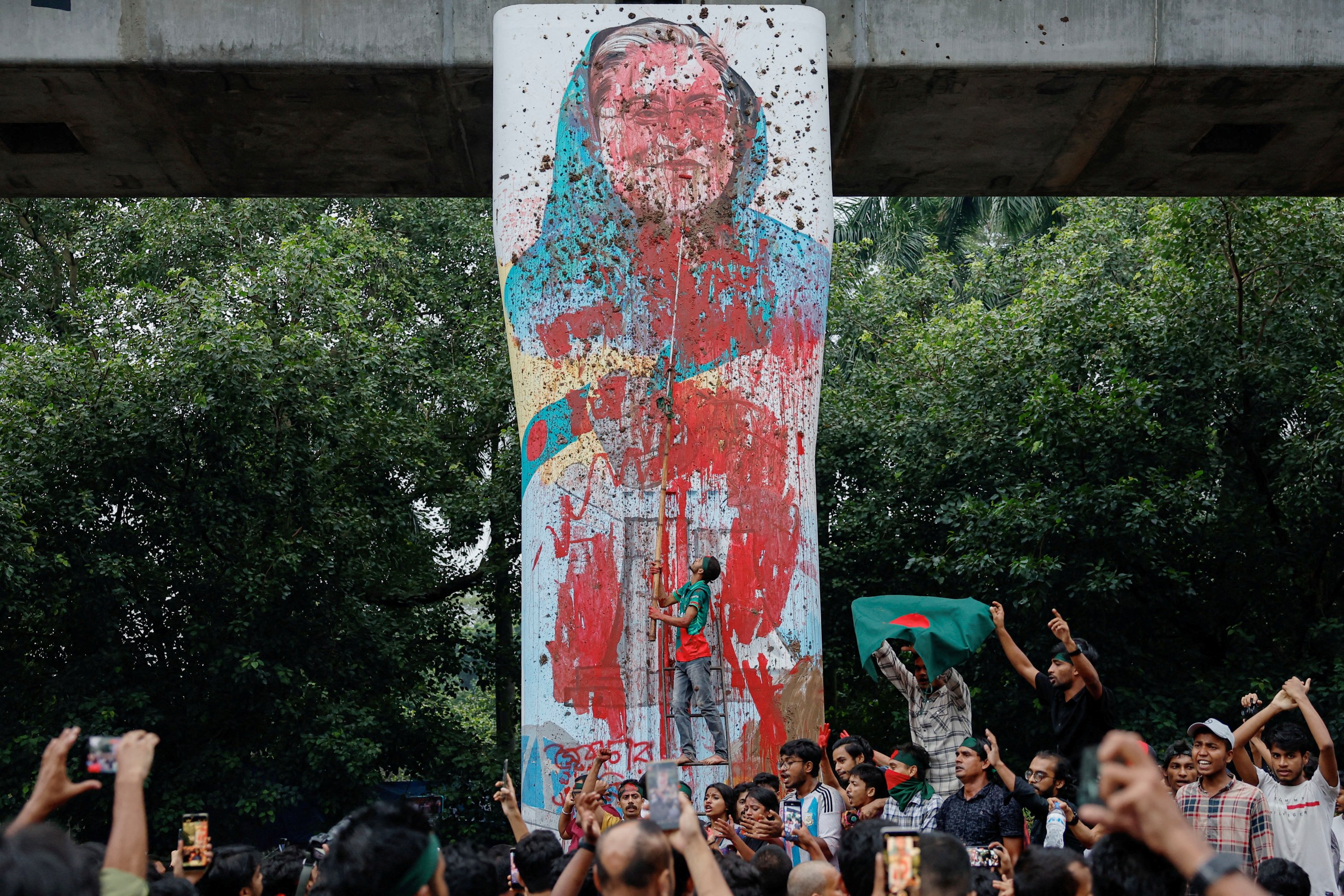
In the political landscape of Bangladesh, Sheikh Hasina stands out as a pivotal figure, deeply rooted in the country’s history. The daughter of the prominent freedom fighter Sheikh Mujibur Rahman, Hasina first assumed the role of prime minister in 1996, succeeding Khaleda Zia with a popular mandate. After a protracted opposition period from 2001 to 2008, Hasina returned to power with a landslide victory in the 2008 general elections. Hasina’s party, the Awami League, won 230 out of 300 seats in the National Parliament. This victory marked the beginning of Sheikh Hasina's third and longest term as prime minister of Bangladesh, which continued allegedly unopposed for 15 years. Paradoxically, Hasina was tragically ousted from her position on Aug. 5, due to nationwide protests against her reservation policy, which led to her unexpected resignation.
Interestingly, under Hasina’s leadership, Bangladesh has witnessed remarkable economic growth and development due to her stringent policies. Over the past 15 years, Bangladesh has enjoyed a steady gross domestic product (GDP) growth rate averaging 6.29% annually. Moreover, the per capita income has surged from $698 in 2009 to over $2,500 in 2023, making it one of the highest in the region, surpassing India for the first time. Additionally, the current account balance has seen a steady increase from $3.56 billion to $4.39 billion, while foreign direct investment rose from $900 million in 2009 to $1.63 billion in 2022. Exports of goods and services have more than doubled, growing from $1.87 billion in 2009 to $4.22 billion in 2023. These impressive figures highlight the effectiveness of her economic policies and governance strategies.
Consequently, significant strides have also been made in primary infrastructure development. The provision of electricity has expanded from 57% in 2009 to over 99% in 2023. Access to clean fuels and technologies for cooking increased from 12% in 2009 to 28% in 2023, while the percentage of the population using the internet has increased substantially from 3% in 2009 to 39% in 2023, demonstrating the effectiveness of her welfare policies.
In the realm of poverty alleviation, Hasina’s tenure has achieved notable success through targeted and intervention-based programs. The establishment of Innovations for Poverty Action in Bangladesh (IPA-B) in 2010 has bolstered efforts to combat poverty, leading to a significant reduction in the poverty gap. Measures of poverty intensity, such as those at $6.85 a day (2017 PPP) have seen substantial decreases from 46.5% to 29.7%, lifting over 30 million people out of poverty and reflecting her commitment to poverty alleviation programs.
However, the benefits of these economic achievements have been hampered by perennial socio-economic challenges. Income inequality remains a significant and constant threat, with the Gini index rising slightly from 0.32 to 0.33. In addition, the share of income held by the lowest 10% has decreased marginally, while the share held by the highest 10% has increased, indicating persistent disparities.
Hasina’s tenure has seen nominal improvements in the political landscape, with the Political Stability Index improving from -1.54 to -1.09. This suggests limited progress, characterized by increased violence and a deterioration of democratic ideals. Consequently, the Rule of Law Index has shown minimal improvement, rising from -0.78 to -0.60, indicating slight enhancements in legal and judicial effectiveness. However, the situation remains far from ideal. Notably, the Press Freedom Index fell significantly from 121st place in 2009 to 165th place in 2023, placing the country among the lowest in South Asia. Furthermore, the arrest of the former PM Khaleda Zia, the house arrests of other opposition leaders and the crackdown on free speech through the detention of journalists highlight her deeply troubling stance against dissent.
Despite significant economic advancements under Hasina’s leadership, the persistent issues of income inequality, political instability and deteriorating democratic governance highlight the complex interplay between governance, economic performance and political challenges. While her administration has fostered economic development and made strides in infrastructure and social services, the concentration of political power and concerns about democratic freedoms reflect autocratic tendencies. This demonstrates that her leadership has been a blend of significant accomplishments and contentious governance practices.
Now, as Bangladesh moves forward with the formation of an interim government under Nobel Laureate Muhammad Yunus, addressing these socio-political challenges will be crucial. Although the economic progress made under Hasina’s leadership provides a strong foundation, ensuring inclusive and equitable growth, alongside political stability, remains a key challenge that will shape the nation’s future.