Today, Italy presents a stark structural divide: the North stands as the productive, wealthy and tax-paying engine, while the South (Il Mezzogiorno) remains economically weaker, continually waiting for a socio-economic transformation. Positioned in the middle is Rome, the political hub that governs the country and houses its vast state bureaucracy.
However, Rome is frequently criticized from both ends: Northerners often condemn it as "lumbering and slow," while Southerners view it as "cold and centralist." Yet, operations within the political heart of the capital are far more complex and challenging than these stereotypes suggest. To understand this better, we must take a closer look at Rome's deep-seated polarizations and its historically fragile stability.
With the remarkable exception of former Prime Minister Silvio Berlusconi, the average lifespan of an Italian government is approximately one year.
Italy’s political instability did not emerge by accident. It was largely shaped by the trauma of fascism. After the fall of the dictator Benito Mussolini’s regime in 1945, the architects of the new Italian Republic were determined to ensure that no leader would ever again accumulate excessive political power. The 1948 Constitution, therefore, created a system with a strong parliament and a comparatively weak executive. At the same time, a proportional electoral system encouraged coalition politics rather than single-party governments.
The result was a political system built on compromise, but also on fragility. Governments often depended on several coalition partners with different ideological priorities. Even a small party could bring down an entire cabinet by withdrawing its support. Since 1946, Italy has witnessed more than 60 governments, making it one of Europe’s most politically fragile administrations.
On the other hand, governmental instability in Italy does not undermine the state's strategic continuity in foreign policy, because a deeply rooted bureaucracy and international commitments largely keep the main course of foreign policy steady.
Any discussion of Italian politics would be incomplete without mentioning one of Italy's most influential statesmen, Aldo Moro. His kidnapping and assassination in 1978 marked one of the darkest chapters in the history of the Italian Republic and served as a fundamental turning point.
Moro aimed to reduce intense ideological polarization through cooperation with the Italian Communist Party (PCI) and to ensure national stability in the face of rising political violence and economic crisis. However, the far-left terrorist organization, the Red Brigades, strongly opposed this strategy.
The Red Brigades sought to force the state to negotiate with them, secure the release of their imprisoned members, and make the state appear weak. They hoped to provoke a revolutionary crisis by exposing what they regarded as the collaboration between the Christian Democrats and the PCI.
Paradoxically, Moro was kidnapped and murdered not by the political right, but by the far-left Red Brigades. This tragedy demonstrated that political polarization in Italy often runs just as deeply within ideological camps as it does between them.
Silvio Berlusconi was arguably one of the most popular and enduring figures in Italian political history. Serving as prime minister for a total of over nine years across three terms, he became the longest-serving premier in the history of the Republic. Yet, throughout his extensive political career, he was forced to confront countless challenges.
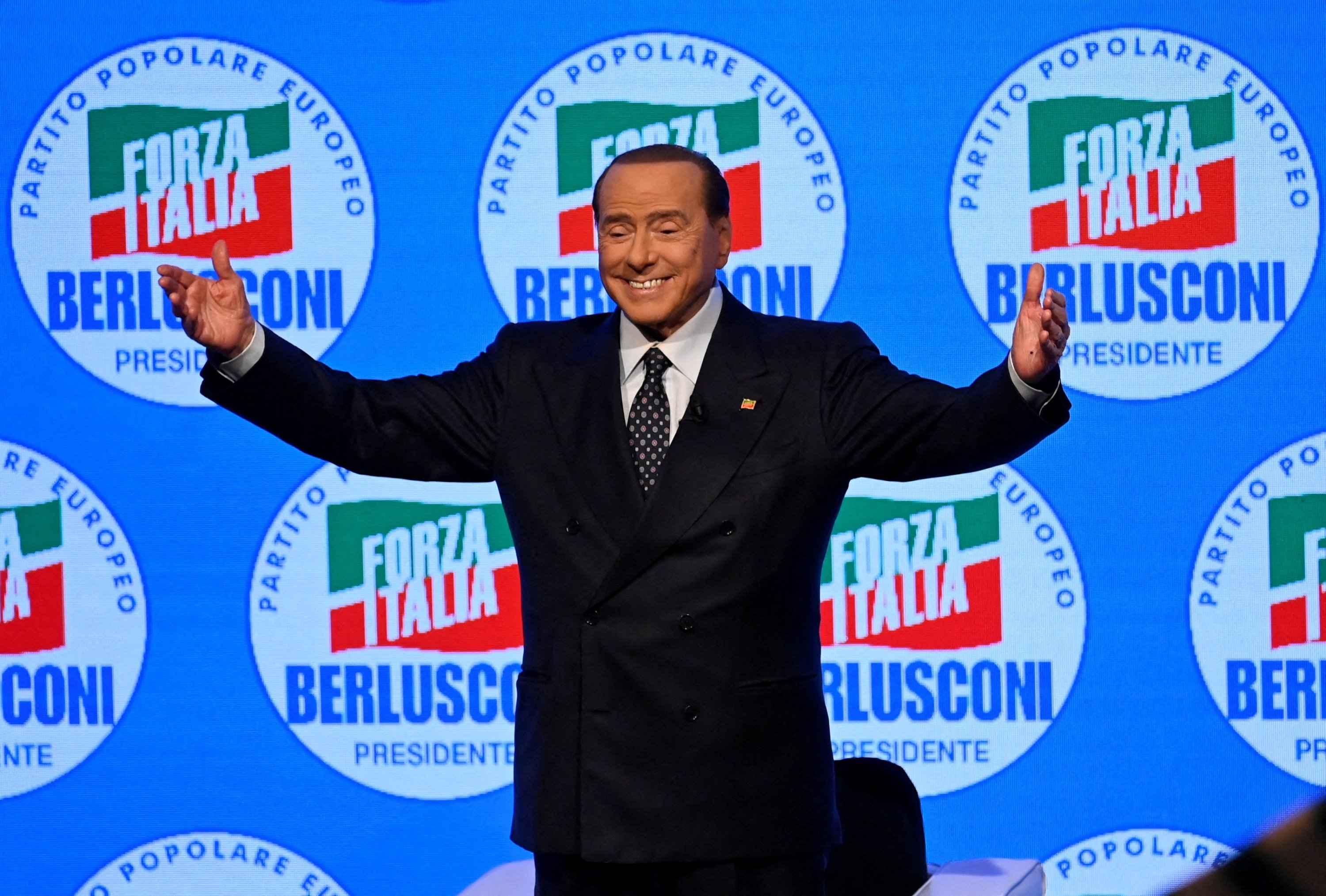
At the height of the Eurozone debt crisis, as the country's borrowing costs skyrocketed, he lost his legislative support and was forced to resign. Despite all of this, and notwithstanding his 2013 conviction for tax fraud, which led to his expulsion from the Senate, and a heart attack in 2016, he consistently managed to pull off remarkable political comebacks. He was the ultimate symbol of political resilience.
The secret behind Berlusconi's extraordinary success lay in his unique persona as a "super-salesman." As a shrewd, energetic and charismatic figure, he managed to build a fiercely loyal support base that treated him almost like royalty. He was also a leader who attracted significant attention and support within the international community. It has often been argued that his media empire was the cornerstone of this success. However, reducing his achievements solely to media power would be unfair. Indeed, in other countries, such as Türkiye, very wealthy, powerful and charismatic media tycoons have founded political parties, yet utterly failed to replicate his success.
From a standpoint of political longevity, the Second Berlusconi Government (June 2001-April 2005) lasted for three years and ten months, making it the longest-lasting single cabinet in the history of the Italian Republic. Besides, to overthrow Berlusconi, his arch-rival and another former prime minister, Romano Prodi assembled a broad coalition tent of nine distinct parties, ranging from marginal communists to Catholic centrists. This coalition of opposing ideologies successfully wrestled power away from Berlusconi. The Second Romano Prodi Government held office from May 2006 to May 2008.
This proved to be one of the dramatic periods in modern Italian politics. Prodi held only a razor-thin majority in the Parliament by a margin of just two or three seats, leaving the government sweating through every single legislative vote. Eventually, radical left-wing partners revolted over Italy’s military presence in Afghanistan and other foreign policy decisions. This friction, combined with a crippling bribery scandal, shattered the coalition. Following the collapse of this disorganized administration, the electorate once again turned to Berlusconi.
What followed was a transition away from simple two-bloc rivalries, moving into a process where direct economic crises and global influences began to dictate domestic politics. Up until 2008, real economic substance was rarely on the table, but 2008 reshaped this landscape entirely, forcing local political dynamics to evolve into a far more complex structure under the weight of global economic shocks.
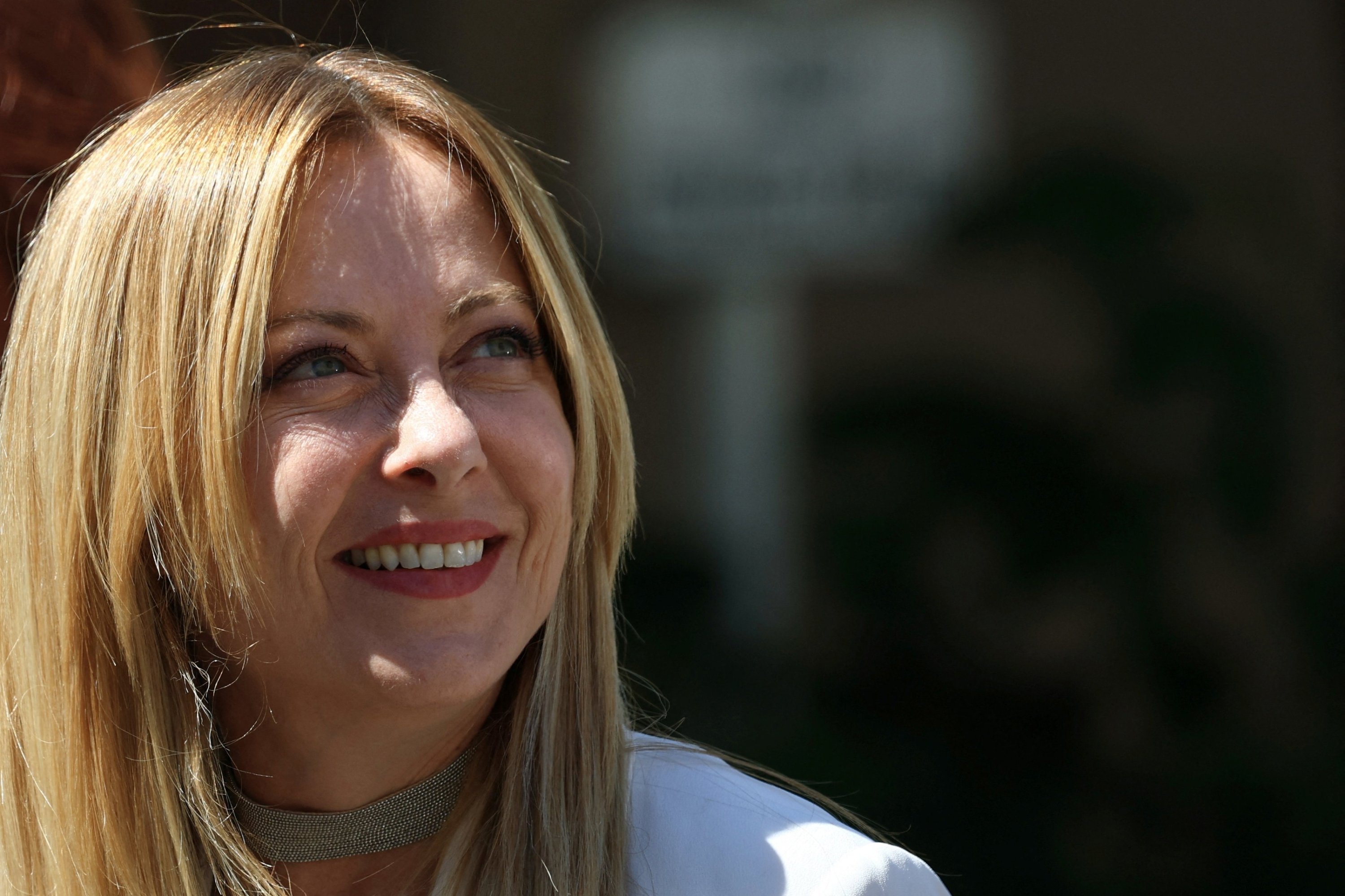
Following the Berlusconi era, the government led by Prime Minister Giorgia Meloni has established itself as the longest-running administration in contemporary Italian politics.
Having served in Berlusconi's cabinet, Meloni is an experienced political figure who learned valuable lessons from both the domestic political instability that characterized the pre-2008 period and the far-reaching effects of the 2008 global financial crisis. Domestically, she delivers strong populist right-wing rhetoric to satisfy her coalition partners, while internationally, she maintains a highly cooperative, mainstream approach. This calculated duality instills a sense of stability and confidence in both her domestic allies and international partners.
When Giorgia Meloni took office in October 2022 as Italy's first female prime minister, she inherited a heavy legacy burdened by deep economic challenges, a persistent migrant crisis, and an acute energy crunch. Stepping into politics as the product of post-fascist political tradition, Meloni achieved a remarkable electoral success that reverberated across European politics by bringing a once-marginalized political lineage straight into the halls of governance.
The secret to Meloni's success lies in her collaborative and highly pragmatic leadership style. By successfully blending the optimistic populism of Berlusconi with the more pessimistic populism of far-right leader Matteo Salvini, Meloni managed to unify the Italian right around her own banner. Although she rose to prominence on radical rhetoric, she took great care to secure institutional legitimacy upon taking office, adopting a political line carefully aligned with European standards. Her conservative-nationalist discourse, combined with her strong leadership qualities, allowed her to achieve a level of right-wing unification that the Italian left has failed to counter for years. Consequently, Meloni has demonstrated a masterful ability to remain loyal to her populist base while simultaneously positioning herself as a legitimate, mainstream political actor at the heart of Europe.
Yet, the journey is far from over, and a challenging process continues.
In today's globalized world, a leader must skillfully manage both domestic and foreign policy simultaneously, because economics, energy and defense are no longer independent variables.
Within this multifaceted equation, even though Meloni acts in harmony with external actors like the United States, the European Union and NATO, domestic public demands occasionally clash with the mandates of international politics. She also reinforced Italy's Mediterranean strategy through migration cooperation with Albania and long-term energy agreements with Algeria.
Recent tensions between Italy and the U.S. have further highlighted the constraints of this balancing strategy. In the context of escalating geopolitical pressures surrounding Iran, debates have emerged over the extent to which NATO infrastructure in Italy could be used for operational purposes.
Statements attributed to NATO Secretary-General Mark Rutte regarding the use of Italian bases for allied military operations sparked political sensitivity in Rome, prompting the Italian government to clarify that its facilities are available strictly for logistical and defensive purposes, in line with constitutional restrictions and parliamentary oversight. At the same time, U.S. President Donald Trump’s increasingly transactional approach to alliance management, centered on burden-sharing and operational contribution, has added further pressure on European partners, including Italy.
Against this backdrop, Prime Minister Giorgia Meloni has maintained a careful distinction between strategic alignment and direct military engagement: firmly anchored within NATO while remaining cautious about any direct involvement that could draw Italy into a broader regional conflict.