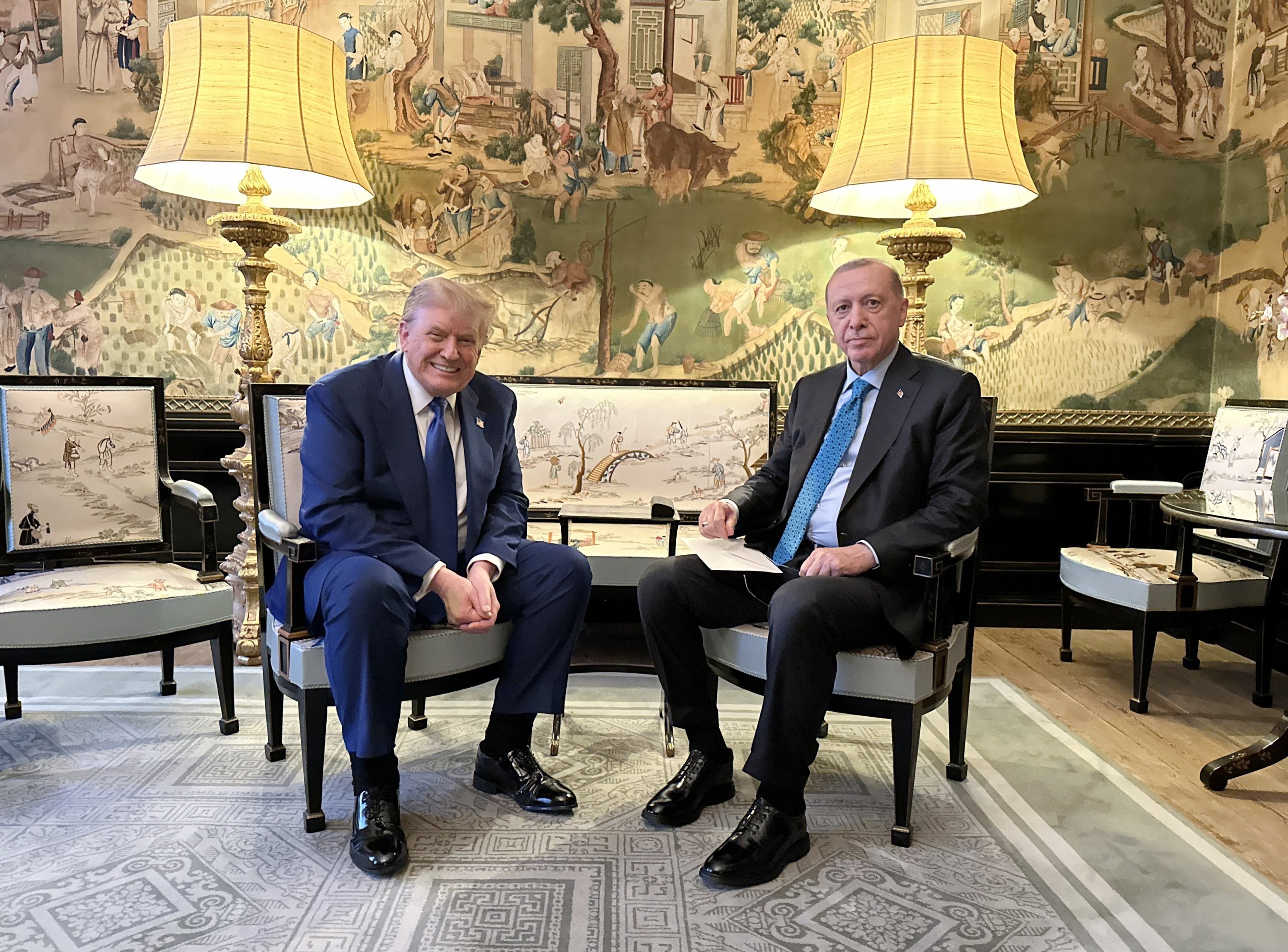
Donald Trump's reelection as U.S. president in November 2024 has shifted the global balance of power but also triggered ongoing debates regarding the future trajectory of Türkiye-U.S. relations. President Trump's personal brand of pragmatism, interest-based cooperation and emphasis on regional balances has already shaped Ankara-Washington relations. Unlike ideologically driven foreign policies, Trump prioritizes strategic bargaining and the “America First” agenda. President Recep Tayyip Erdoğan’s administration also expects a more pragmatic tone in bilateral ties. Trump's personal ties with Erdoğan, marked by mutual respect and a shared interest in deal-making, remain a significant factor. While some figures on Trump's team – such as former and current secretaries of state, Mike Pompeo and Marco Rubio – have adopted a more cautious approach toward Türkiye, the personal chemistry between the two leaders is seen by many analysts as a key dynamic that could facilitate constructive engagement.
One of the key areas of bilateral cooperation is Türkiye’s active diplomacy in the Middle East, particularly regarding the Palestinian issue. For years, Türkiye has recognized Hamas as Gaza's legitimate representative and strongly criticized Israeli military operations, describing them as genocide. President Erdoğan has consistently called for an immediate cease-fire in Gaza, while also seeking channels of coordination with the U.S. According to various Western sources, Erdoğan has reportedly emphasized at the latest NATO summit that "all parties should respond positively to our ally Trump’s call for an Iran-Israel cease-fire." Trump's unorthodox and pressure-driven approach toward Israel during his new term has, to some extent, created space for Türkiye to act as a mediator or facilitator in Palestinian negotiations. Presidential Communications Director Fahrettin Altun has also noted that in the Trump era, Türkiye-U.S. dialogue is expected to focus more on shared strategic interests.
Türkiye's position as the only NATO member engaged with both Russia and Ukraine gives it unique diplomatic leverage. This ability to maintain a multi-channel dialogue strengthens Türkiye’s role in Trump's strategic calculus. According to multiple sources, Erdoğan suggested to Trump that he could join an upcoming summit in Türkiye between Russian and Ukrainian leaders, but that meeting was not held, even though this proposal reportedly met with a positive response from Trump. Erdoğan has also called for close Ankara-Washington coordination in resolving the Gaza and Ukraine crises. These developments indicate that Türkiye’s mediation role in both conflicts may prove valuable in Trump’s pragmatic foreign policy vision.
Türkiye’s regional influence has grown significantly during Syria's transformation. On Dec. 8, 2024, forces led by Hayat Tahrir al-Sham (HTS) leader Ahmed al-Sharaa overthrew the Assad regime, and al-Sharaa assumed the interim presidency. Reports frequently cite Türkiye’s multifaceted support during this process, including its military presence and the establishment of buffer zones in northern Syria. In May 2025, al-Sharaa visited Türkiye and met with Erdoğan to discuss reconstruction plans and broader regional developments, including the Iran-Israel cease-fire.
Türkiye’s Syria diplomacy continues under the Trump administration. In May 2025, following a high-level meeting in Riyadh, Trump announced the lifting of U.S. sanctions on Syria, offering major support to al-Sharaa. Describing al-Sharaa as “a true leader,” Trump stated his willingness to support efforts to unify Syria and revive its economy. This diplomatic breakthrough was largely facilitated by Erdoğan’s regional mediation. During Trump’s Middle East tour, Erdoğan joined a virtual summit alongside Trump and al-Sharaa. This summit culminated in Trump declaring an end to the U.S. sanctions regime that caused severe economic damage to Syria. This trilateral interaction marked the emergence of an emerging cooperation triangle between Türkiye, the U.S. and the interim Syrian government centered on mutual interests. Through its backing of al-Sharaa, Türkiye has effectively aligned itself with Washington in shaping Syria’s post-conflict future. Erdoğan’s leadership in stabilizing Syria has, in turn, reinforced Türkiye’s regional clout and positioned it as a reliable partner in Washington’s eyes.
Personal dynamics between the two presidents will continue to shape bilateral relations. During his first term, it has been reported that Trump granted Erdoğan unprecedented access, including direct calls and informal contact even during his leisure time. The two leaders have met nine times in four years, reinforcing Erdoğan’s preference for leader-to-leader diplomacy. Analysts have underlined the strong chemistry between both leaders, suggesting that mutual trust could help overcome diplomatic gridlock. Nevertheless, despite this affinity, several deep-rooted and structural disagreements – primarily stemming from U.S. policy – remain unresolved.
Key among these is the issue of U.S. support for the YPG, the Syrian wing of the PKK terrorist group. From Ankara’s perspective, Washington’s continued cooperation with these groups undermines Türkiye’s counterterrorism efforts. While partial U.S. withdrawals from Syria and Turkish military operations east of the Euphrates occurred during Trump’s first term, this issue may resurface in more complex ways. Even though the March 2025 deal between the U.S. and the YPG temporarily shelved tensions, the situation remains volatile and could reignite a bilateral crisis.
The Gülenist Terror Group (FETÖ) issue also persists. In 2018, Trump openly rejected calls to extradite FETÖ leader Fethullah Gülen. While the topic has lost some political urgency since Gülen's death, the broader issue of U.S.-based FETÖ networks continues to undermine bilateral trust. These structural problems, though unlikely to disappear entirely, may be moderated under Trump’s deal-oriented approach, especially given shared interests in Syria and the Russia-Ukraine conflict.
Another long-standing issue is Türkiye’s acquisition of the Russian-made S-400 air defense system. This led to Ankara’s removal from the F-35 fighter jet program and triggered Countering America's Adversaries Through Sanctions Act (CAATSA) sanctions in 2019. While the Trump administration occasionally downplayed the dispute, citing Obama’s earlier reluctance to sell Patriots, the S-400 controversy remains unresolved.
To sum up, recent developments have provided both countries with incentives to explore new avenues of strategic cooperation. Trump and Erdoğan's mutual pragmatism is likely to facilitate progress in key areas, even without a complete consensus. Türkiye’s assertiveness and success from Afghanistan to Ukraine, along with its growing regional influence and diplomatic flexibility, have made it an indispensable actor from Washington’s perspective. In particular, increased coordination may be expected in Syria, Gaza and Ukraine. Trump’s desire to stabilize regional dynamics may align with Ankara’s ambitions in these arenas. Ultimately, while structural challenges persist, both Türkiye and the U.S. are entering a period marked by a strategic imperative for cooperation. Even without resolving every issue, this pragmatic convergence between leaders could inject new momentum into bilateral ties.