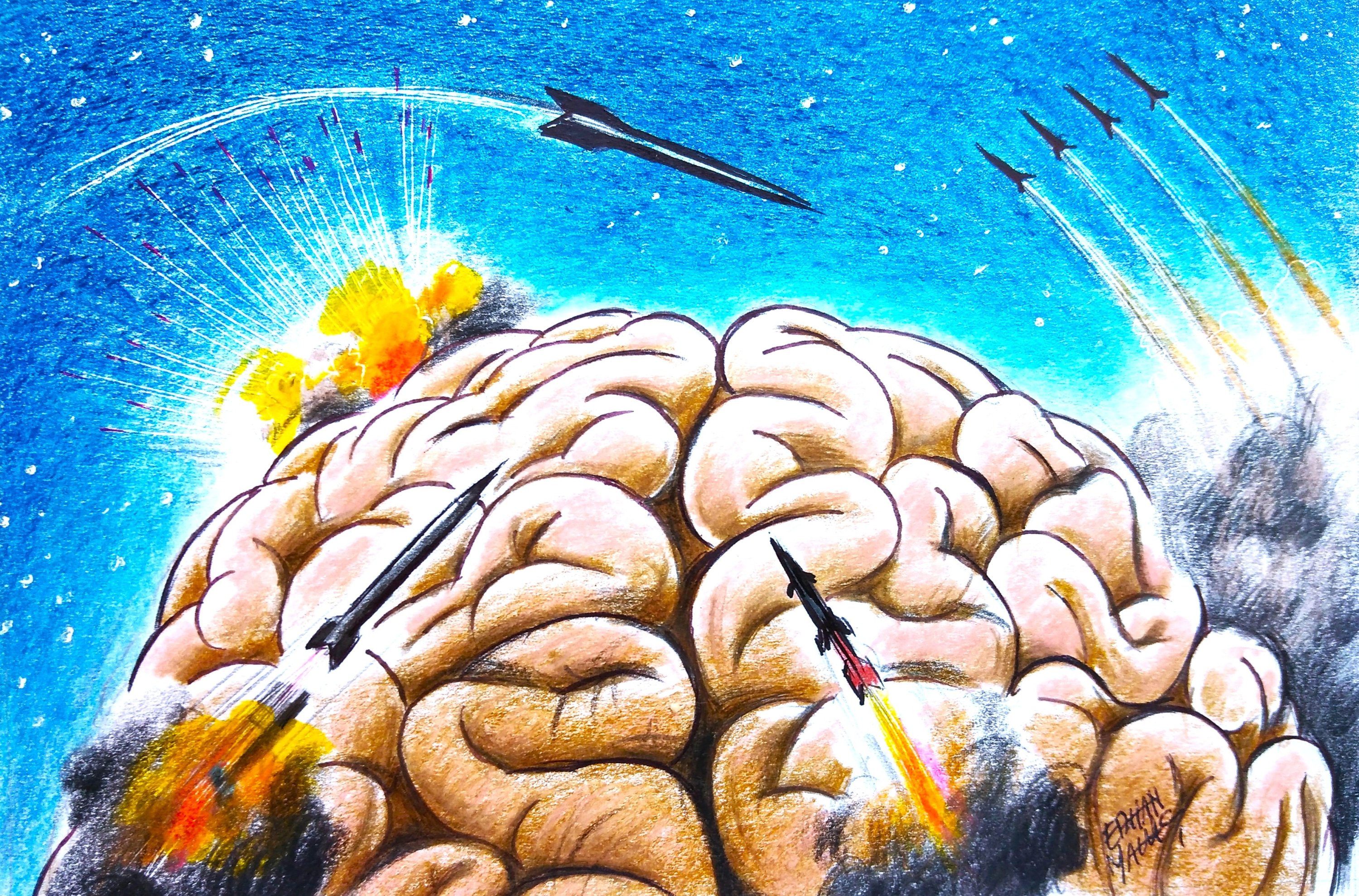
There was a time when Samuel P. Huntington’s name came up frequently in international news reports, particularly after his 1993 Foreign Affairs article: “The Clash of Civilizations?” He argued that the ideological divisions of the Cold War would increasingly give way to conflicts shaped by culture and religion as he then called civilizations. His map divided much of the world accordingly.
On the other hand, Francis Fukuyama had published "The End of History and the Last Man" only a year earlier. His argument was often reduced to the claim that history had somehow ended, which was never quite what he wrote. Liberal democracy, in his account, had survived the great ideological struggles without a serious universal rival. He also wondered whether liberal societies could satisfy demands for recognition.
Those questions received less attention amid the confidence of the early post-Cold War years.
The 9/11 terrorist attacks had naturally changed the way Huntington was read. Culture and religion moved rapidly toward the center of strategic debate, and suddenly his thesis seemed to explain a great deal.
They are harder to overlook in 2026, after years of democratic backsliding, populist politics and the renewed use of national and religious identity in political debate.
Most recently, at the Munich Security Conference (MSC) this year on Feb. 14, U.S. Secretary of State Marco Rubio spoke to European allies about a “Western civilization” that shared a common heritage.
“For the United States and Europe, we belong together ... We are bound to one another by ... shared history, Christian faith, culture, heritage, language, ancestry, and the sacrifices our forefathers made together,” he said.
Yet the world is hardly divided between civilizations.
Indonesia, Pakistan, Iran and Saudi Arabia may all belong to what Huntington called Islamic civilization, but their politics, alliances and national interests have frequently gone in different and sometimes conflicting directions.
Within the Islamic civilization, Sunni and Shia communities have confronted each other for centuries. Religious and secular movements, governments and organizations fight each other.
Türkiye does not fit into Huntington’s civilizational framework either. Huntington himself called it a “torn country” between Western and Islamic civilizations.
Türkiye joined the Council of Europe in 1950 and NATO in 1952. Ankara later expanded its relations across the Middle East, Central Asia and Africa without leaving the Western institutions it had joined decades earlier.
Relations with Western allies, as well as with neighboring Muslim countries, have at times been difficult. Nevertheless, cooperation with both sides has continued. Viewing Türkiye primarily as a country unable to choose between two identities, however, overlooks a crucial point: Türkiye does not have to choose between them.
There is also geography, which international relations theories occasionally make more complicated than it is. Türkiye borders the Balkans, the Caucasus and the Middle East, with the Black Sea to the north and the Mediterranean to the south. Its Ottoman past did not disappear with the establishment of the Republic, just as decades of secular state tradition did not erase the Muslim character of its society.
International law also offers an interesting contrast to Huntington’s arguments. Article 2 of the United Nations Charter is based on the sovereign equality of states, while the Universal Declaration of Human Rights affirms the rights of human beings.
Civilizations have no comparable legal personality. Sometimes states supposedly belonging to the same civilization vote against each other, sometimes they even fight, which is not particularly surprising.
In fact, we should consider Russia and Ukraine before going any further with that idea. They both share Orthodox Christian traditions, long historical connections and considerable common cultural heritage. None of this stopped Russia’s waging war on Ukraine in 2022. Territory, sovereignty, security and military power have mattered rather more in explaining that war. Civilizational closeness did not prevent it.
Neither culture nor history told us in advance what Russia would do as a state, and a shared Orthodox faith certainly supplied no meaningful boundary between the two.
Fukuyama’s old concern about recognition sits somewhere nearby. Liberal democracy survived the Soviet Union’s collapse as the dominant political model across much of Europe. Arguments over nation and historical belonging survived too. He worried about that human demand for recognition, while Huntington gave culture a much larger geopolitical role.
Three decades later, the difference between those claims looks more important than it did when their books and articles were first placed opposite one another.
Huntington’s 1993 article therefore remains worth reading. More than thirty years later, its vocabulary is still around. Culture, religion, and belonging obviously did not disappear after the Cold War. But the world it was supposed to explain is definitely messier than his framework can account for. The concept of civilization becomes less useful when it is expected to predict how states will behave. National interest has an irritating habit of intervening. Geography does too.