

Daily Sabah logo

Politics
Diplomacy Legislation War On Terror EU Affairs Elections News Analysis
TÜRKİYE
Istanbul Education Investigations Minorities Expat Corner Diaspora
World
Mid-East Europe Americas Asia Pacific Africa Syrian Crisis Islamophobia
Business
Automotive Economy Energy Finance Tourism Tech Defense Transportation News Analysis
Lifestyle
Health Environment Travel Food Fashion Science Religion History Feature Expat Corner
Arts
Cinema Music Events Portrait Reviews Performing Arts
Sports
Football Basketball Motorsports Tennis
Opinion
Columns Op-Ed Reader's Corner Editorial
PHOTO GALLERY
JOBS ABOUT US RSS PRIVACY CONTACT US
© Turkuvaz Haberleşme ve Yayıncılık 2026

Daily Sabah - Latest & Breaking News from Turkey | Istanbul

  • Politics
    • Diplomacy
    • Legislation
    • War On Terror
    • EU Affairs
    • Elections
    • News Analysis
  • TÜRKİYE
    • Istanbul
    • Education
    • Investigations
    • Minorities
    • Expat Corner
    • Diaspora
  • World
    • Mid-East
    • Europe
    • Americas
    • Asia Pacific
    • Africa
    • Syrian Crisis
    • Islamophobia
  • Business
    • Automotive
    • Economy
    • Energy
    • Finance
    • Tourism
    • Tech
    • Defense
    • Transportation
    • News Analysis
  • Lifestyle
    • Health
    • Environment
    • Travel
    • Food
    • Fashion
    • Science
    • Religion
    • History
    • Feature
    • Expat Corner
  • Arts
    • Cinema
    • Music
    • Events
    • Portrait
    • Reviews
    • Performing Arts
  • Sports
    • Football
    • Basketball
    • Motorsports
    • Tennis
  • Gallery
  • Opinion
    • Columns
    • Op-Ed
    • Reader's Corner
    • Editorial
  • TV
  • Opinion
  • Columns
  • Op-Ed
  • Reader's Corner
  • Editorial

Is Iran the one buying time this time?

by Orhan Sali

Apr 13, 2026 - 1:12 pm GMT+3
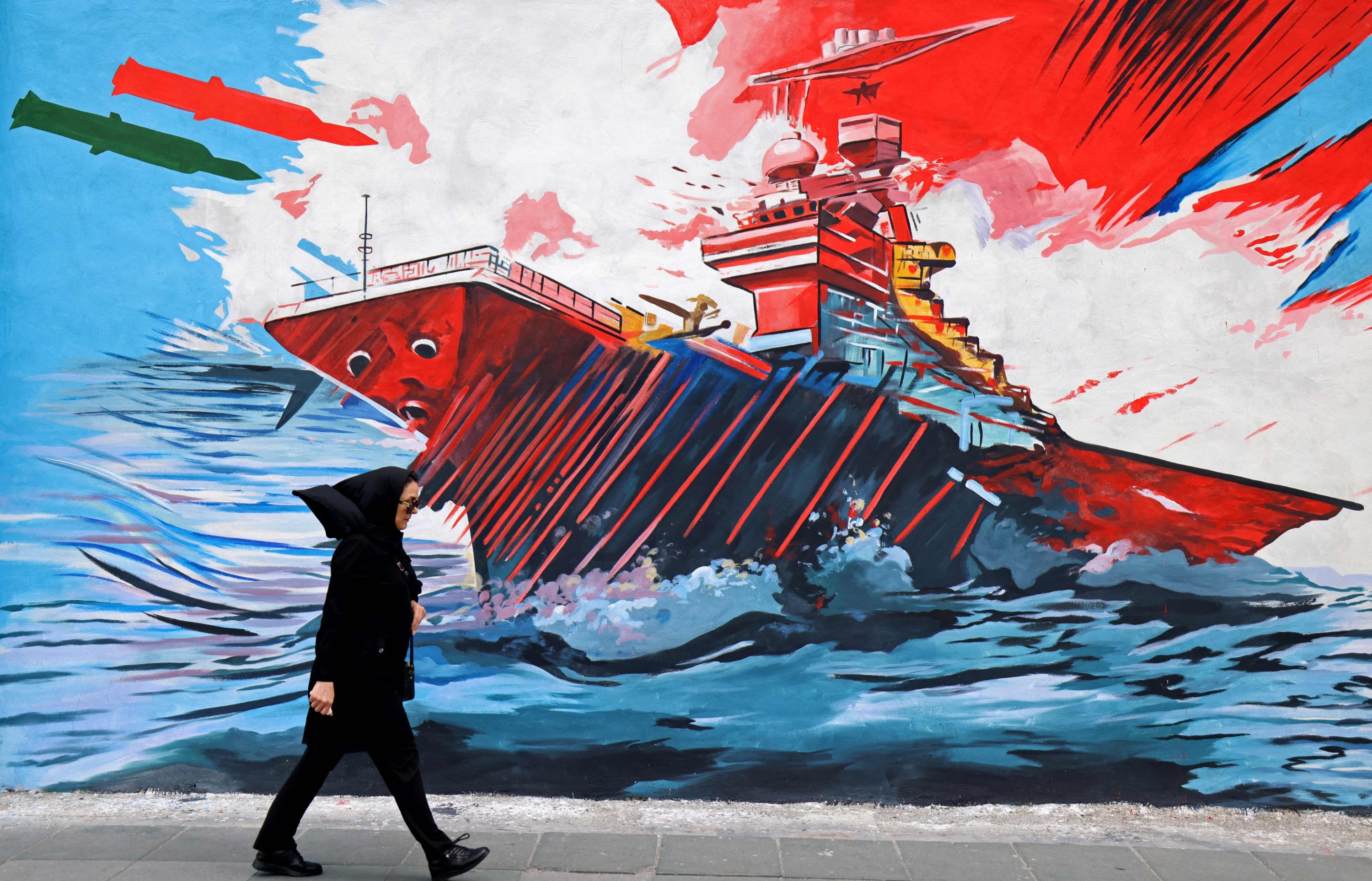
A woman walks past an anti-U.S. mural, Tehran, Iran, April 8, 2026. (AFP Photo)
by Orhan Sali Apr 13, 2026 1:12 pm

As the U.S. strike exposed its power and tactics, Iran learned and bought time, while China observed

Everyone is trying to make sense of what is happening in Iran. The negotiations held on Feb. 27 in Geneva had created a sense that diplomacy was still possible. Yet, just hours later, the American strike once again revealed that realities on the ground can be far harsher than intentions at the negotiating table, despite the signs that the process was moving in a positive direction.

So the same question is once again echoing in people’s minds: Who is really buying time in this process? The United States or Iran?

The instinctive answer is often Washington. Because the U.S. strikes, dismantles, steps back and then returns to the table from a position of strength. This has been a familiar pattern since the Cold War. But this time, the picture is not that conventional. In fact, the established order may be quietly reversing.

To understand this, one must look at recent history.

The Russo-Ukrainian War marked a historic rupture in Russia’s military trajectory. Under President Vladimir Putin, Moscow had planned to take Kyiv within weeks. The attempt to encircle the capital via Belarus failed. What followed was a retreat. Generals were dismissed, strategies revised but the outcome did not fundamentally change.

Today, Russia has lost hundreds of thousands of soldiers. Its economy has been battered by sanctions, and its military capacity has been significantly eroded. More importantly, throughout this war, the West, led by the U.S., has effectively studied Russia in a live laboratory. Its tactics, reflexes and vulnerabilities have been carefully analyzed.

This is one of the defining features of modern warfare: understanding your adversary in real time.

Now, a similar dynamic may be unfolding on a different front, with a different actor.

The U.S. has deployed nearly the full spectrum of its military power against Iran. Its most advanced aircraft, its most sophisticated missile systems and its massive naval assets, all have been sent into the region. This was not merely an operation. It was also a demonstration, a show of force.

But such displays always have a hidden dimension.

Because the moment you reveal your capabilities on the battlefield, your rivals begin to study you.

This is where China enters the frame. Beijing has remained relatively quiet throughout the Iran war. No loud rhetoric, no direct involvement. Yet, it has been watching closely. It has been analyzing which systems the U.S. deployed against Iran, how it reacted, how quickly it moved and where its vulnerabilities might lie.

In a sense, the U.S. has not only exposed itself to Iran but to all of its strategic competitors.

History offers a clear lesson here: wars are not won solely on the battlefield; they are won with information, patience and timing.

And this brings us back to the critical question: Does the side that absorbs the first blow necessarily lose?

There is an old military saying: “If you don’t fall with the first punch, you learn how to fight.” Iran may now be entering precisely that phase. It has endured the initial wave. It has tested its systems. It has identified its weaknesses. And perhaps most importantly, it has measured the limits of its adversary.

There may now be a more prepared Iran. More cautious, calculated and resilient.

Which means that every move from this point forward becomes more costly, not only for the U.S. but for the entire region.

So today, the answer to the question “who is buying time?” is no longer as obvious as it once was.

The U.S. may have struck fast. But Iran may have used that time to learn, adapt and harden.

And if a war drags on, if the initial objectives are not fully achieved and the opponent is still standing, then time does not necessarily favor the one who strikes first, but the one who endures.

So perhaps, this time, it is not the United States that is buying time; it is Iran.

And behind the scenes, there is another actor watching patiently: China. Because it knows that a superpower under strain eventually reshapes the balance of power.
About the author
Journalist based in Istanbul, editorial coordinator of A News
The views and opinions expressed in this article are solely those of the author. They do not necessarily reflect the editorial stance, values or position of Daily Sabah. The newspaper provides space for diverse perspectives as part of its commitment to open and informed public discussion.
  • shortlink copied
  • KEYWORDS
    us-china rivalry us military us-iran war iran
    The Daily Sabah Newsletter
    Keep up to date with what’s happening in Turkey, it’s region and the world.
    You can unsubscribe at any time. By signing up you are agreeing to our Terms of Use and Privacy Policy. This site is protected by reCAPTCHA and the Google Privacy Policy and Terms of Service apply.
    In photos: Massive COVID-19 surge in India
    PHOTOGALLERY
    • POLITICS
    • Diplomacy
    • Legislation
    • War On Terror
    • EU Affairs
    • News Analysis
    • TÜRKİYE
    • Istanbul
    • Education
    • Investigations
    • Minorities
    • Diaspora
    • World
    • Mid-East
    • Europe
    • Americas
    • Asia Pacific
    • Africa
    • Syrian Crisis
    • İslamophobia
    • Business
    • Automotive
    • Economy
    • Energy
    • Finance
    • Tourism
    • Tech
    • Defense
    • Transportation
    • News Analysis
    • Lifestyle
    • Health
    • Environment
    • Travel
    • Food
    • Fashion
    • Science
    • Religion
    • History
    • Feature
    • Expat Corner
    • Arts
    • Cinema
    • Music
    • Events
    • Portrait
    • Performing Arts
    • Reviews
    • Sports
    • Football
    • Basketball
    • Motorsports
    • Tennis
    • Opinion
    • Columns
    • Op-Ed
    • Reader's Corner
    • Editorial
    • Photo gallery
    • DS TV
    • Jobs
    • privacy
    • about us
    • contact us
    • RSS
    © Turkuvaz Haberleşme ve Yayıncılık 2021