
Relations between Türkiye and Uzbekistan have undergone a remarkable transformation in recent years. Bilateral relations, which were once driven by rhetoric centered on cultural affinity and political solidarity, are now increasingly grounded in concrete economic foundations.
The Türkiye-Uzbekistan Business Forum, held in Tashkent on June 16 as part of the 5th International Tashkent Investment Forum, marked the latest stage in this transformation. Chaired by Trade Minister Ömer Bolat and Uzbekistan’s Deputy Prime Minister and Minister of Economy and Finance, Jamshid Kuchkarov, the forum signalled a new phase aimed at deepening the economic dimension of the strategic partnership built between Ankara and Tashkent in recent years.
The economic liberalization policies launched by Uzbekistan’s President Shavkat Mirziyoyev following his accession to office have significantly enhanced the country’s capacity to attract foreign investment. In particular, the new legal framework established for foreign investors, industrial modernization projects and regional connectivity initiatives has transformed Uzbekistan into one of Central Asia’s most dynamic economies.
During this process, Türkiye has emerged as one of the key partners in Uzbekistan’s integration into the global economy. Indeed, the fact that Türkiye has ranked among the top countries investing in Uzbekistan over the past two years is a concrete indication of this trend.
The significance of the business forum held in Tashkent also becomes apparent at this point. The forum aims to achieve far more than simply maintaining existing economic relations. The primary objective is to extend economic cooperation between Türkiye and Uzbekistan into new sectors, integrate supply chains, and transform the two countries into actors that act in unison within Eurasia’s changing economic landscape.
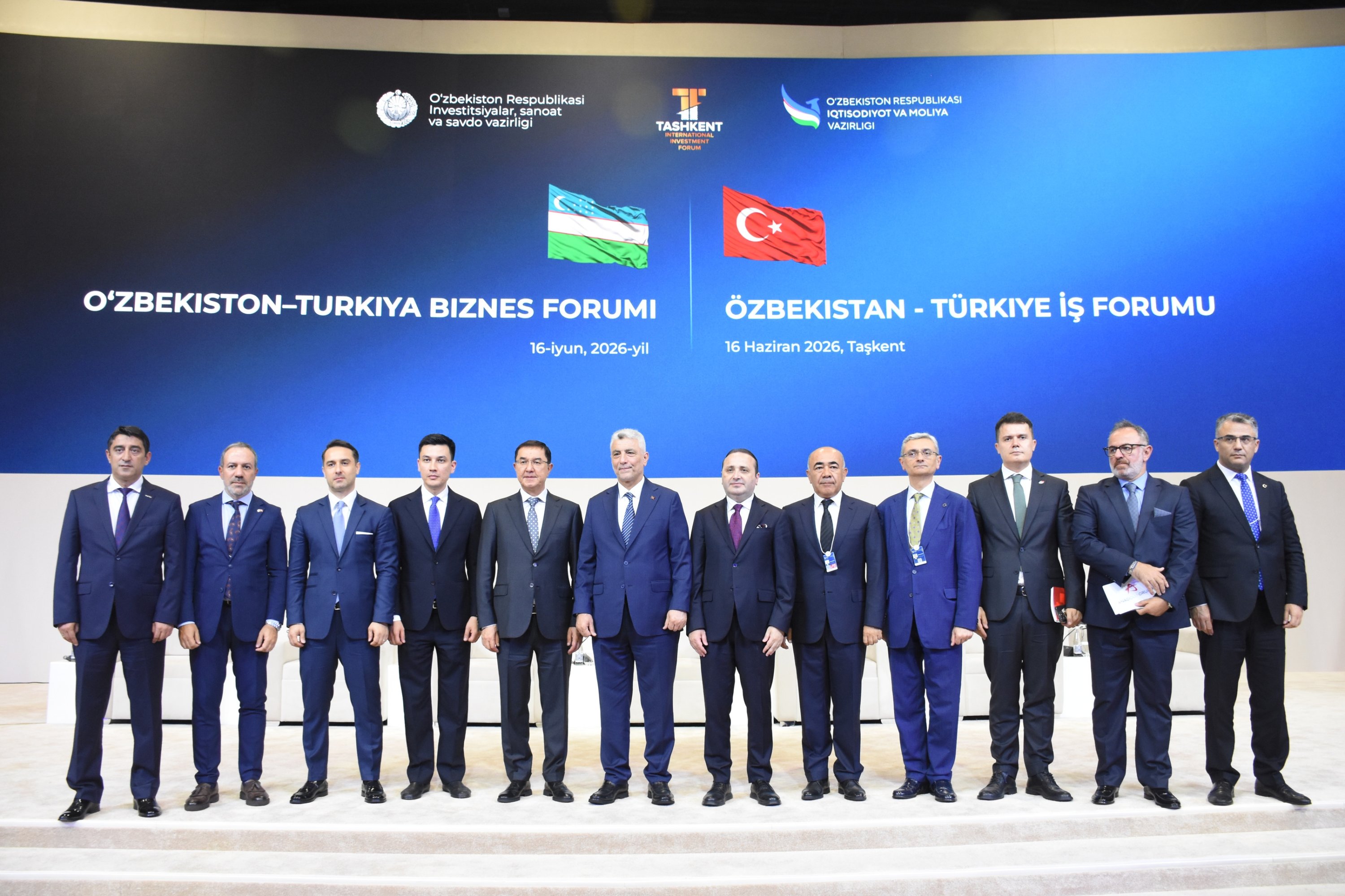
For many years, the complementary nature of Türkiye’s industrial exports and Uzbekistan’s growing domestic market has formed the fundamental dynamic of the relationship. However, trends that have emerged in recent years indicate that this relationship is beginning to move beyond the traditional framework of exports and imports. The messages conveyed in Tashkent also confirm this transformation. It was notable that topics such as production, investment, industrial cooperation, technology transfer and joint ventures came to the fore throughout the forum.
Underlying this transformation are structural changes in the global economy. Supply chain disruptions during the pandemic, logistical disruptions arising from the Russia-Ukraine War, ongoing regional tensions in the Middle East and neighbouring regions, and the increasing economic repercussions of great power rivalry have driven companies to seek new production centers and more reliable partnerships. Within this framework, factors such as political stability, legal certainty, transport infrastructure, regional connections and market access have become key determinants of investment strategies.
Uzbekistan is one of the countries attracting attention in this new era. Thanks to the reform process, improvements to the investment climate, increased incentives for foreign capital and the development of industrial zones have enhanced the country’s appeal. From Türkiye’s perspective, Uzbekistan is a strategic partner that could serve as a production hub for Turkish companies expanding into Central Asia.
For this reason, the investment targets outlined at the forum should not be viewed merely as technical targets relating to economic scale. The key issue here is the greater integration of Turkish capital into Uzbekistan’s industrialization process. The more than 2,200 Turkish-owned companies currently operating in the country demonstrate the level to which economic relations have progressed. These companies operate across a wide range of sectors, including textiles, food, construction, energy, logistics, machinery manufacturing and services. Consequently, economic relations are taking on a direct dimension in terms of production and employment.
The activities of the Turkish construction sector in Uzbekistan are also one of the key indicators of this transformation. The fact that the total value of the 325 projects undertaken to date has reached $9.5 billion demonstrates just how effective a role Turkish firms have played in the country’s infrastructure and development processes. This cooperation, which is developing through transport networks, housing projects, industrial facilities, energy investments and public infrastructure projects, is helping to establish economic relations on a long-term and sustainable footing.
Furthermore, the regional experience possessed by the Turkish business community also creates a significant advantage. Turkish companies have a better understanding of the economic structure, business culture and bureaucratic processes of the post-Soviet region than many of their Western competitors. This enables Turkish investors to operate more swiftly in the Uzbek market and forge stronger partnerships. The forum held in Tashkent also served as an important platform for utilising this advantage in a more systematic manner.
Another notable aspect of the forum was the discussion of new opportunities for cooperation in the fields of energy, renewable energy technologies, digital transformation, agricultural technologies, transport, logistics and high-value-added industries. Particularly at a time when the energy transition is gathering pace, investments in solar and wind energy could represent a new dimension of economic cooperation between the two countries. Furthermore, joint projects developed in the field of the digital economy could help economic relations take on a more innovative character in the future.
Another notable aspect of the forum is that it is directly linked to the geopolitical dimension of economic cooperation. For this reason, regional geopolitics must also be taken into account when assessing the economic rapprochement between Türkiye and Uzbekistan.
Uzbekistan’s location at the heart of Central Asia affords the country a significant strategic advantage. Situated at one of the junctions of trade routes stretching from China to Europe, Uzbekistan plays a critical role in the development of regional transport networks. Türkiye, meanwhile, stands out as a key logistics hub providing access to markets in Europe, the Mediterranean, the Black Sea and the Middle East. When these two positions are combined, a broader field of geo-economic cooperation emerges.
The economic rapprochement between Türkiye and Uzbekistan has the potential to contribute directly to the effectiveness of the Middle Corridor. The aim to increase the volume of trade from its current level of $3.1 billion to $5 billion, and subsequently to $10 billion, necessitates the development of transport infrastructure and the streamlining of logistics processes. To achieve these targets, the simplification of customs procedures, the reduction of border crossing times and the lowering of transport costs are of paramount importance.
Another noteworthy aspect here is the push for economic integration within the Organization of Turkic States, which has gained momentum in recent years. The “Turkic world” approach, which for a long time centered on cultural and political cooperation, has now begun to take on an economic dimension. Transport corridors, joint investment projects, trade facilitation and industrial partnerships are among the key elements of this process. The strong economic ties established between Türkiye and Uzbekistan also constitute one of the most concrete examples of this large-scale drive towards integration.
For economic integration to be sustainable, progress must be made in other areas alongside transport projects. The development of digital trade infrastructure, the widespread adoption of electronic customs systems, the establishment of joint investment funds and the strengthening of financial cooperation mechanisms are of critical importance to this process. The fact that the forum held in Tashkent paved the way for new contacts in these areas can be regarded as a significant development in terms of the meeting’s long-term impact.
Ultimately, the business forum demonstrated that Ankara and Tashkent are seeking to place their economic relations within a new strategic framework. If this process is managed successfully, the partnership between Türkiye and Uzbekistan will evolve into a model of cooperation that plays a decisive role in the reshaping of Eurasia’s economic architecture. Indeed, current developments indicate that the parties are closer than ever to achieving this goal.


