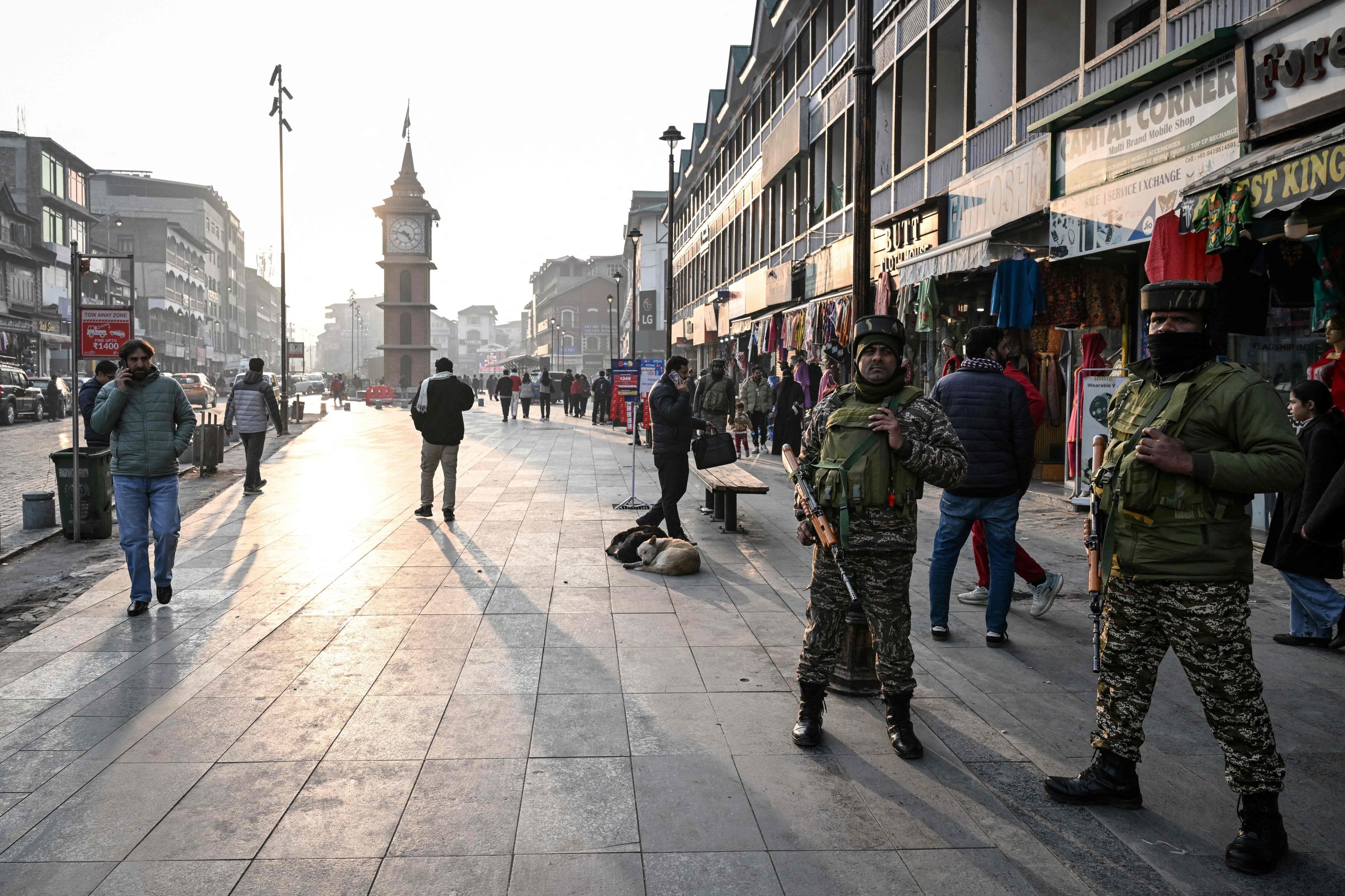
When we think of everyday essentials, we often picture the obvious: our morning coffee, the phone in our pocket or the roof over our heads. Yet, the most fundamental necessities of life are those we barely notice until they are taken away: the air we breathe without restriction, the water we drink without fear, and the simple freedom to walk down the street without intimidation. These are not privileges or conveniences; they are basic human rights, woven into the fabric of human dignity. For the people of Indian Illegally Occupied Jammu and Kashmir (IIOJK), however, these essentials have been transformed into distant luxuries, systematically denied through force, fear and repression. What should have been ordinary has become unattainable in the Indian occupied Kashmir.
Each year, Kashmir Solidarity Day (Feb. 5) renews global attention on one of the longest-standing unresolved disputes on the United Nations agenda, a stark indictment of selective human rights advocacy and the failure of the international system to uphold its own principles and commitments. For more than seven decades, the Kashmiri people have continued to endure occupation, repression and systematic denial of their fundamental rights in silence. Kashmir today stands as a sobering reminder of how international law and human rights commitments can be hollowed out by persistent non-compliance and diplomatic evasion.
In an era defined by pretentious commitments to democracy, accountability, and human dignity, Kashmir exposes the deep contradictions embedded within the global human rights regime. While violations elsewhere prompt swift condemnation, sanctions, and international mobilization, the daily suffering of Kashmiris is met with muted concern, cautious diplomacy or deliberate indifference. For millions in IIOJK, the law does not function as a shield but as a tool of control used to intimidate, punish and silence dissent.
The roots of the Kashmir dispute lie in the unfinished business of the 1947 partition of British India. Unlike many contemporary conflicts, its resolution is neither ambiguous nor contested. The U.N. Security Council explicitly recognized Jammu and Kashmir as a disputed territory and prescribed a clear solution: a free and impartial plebiscite to allow Kashmiris to exercise their right to self-determination. This commitment, once accepted by all parties including India, remains unfulfilled, underscoring not a lack of legal clarity, but a lack of political will.
Over the past 78 years, Indian occupation in IIOJK has been defined by heavy militarization, persistent repression, grave human rights violations and information lockdown. The presence of nearly 900,000 troops has transformed the region into one of the most militarized zones in the world. The abrogation of article-370 in August 2019 wasn’t merely a constitutional rearrangement- it was a colonial style take over aimed at stripping away Kashmiri identity. These measures blatantly violated UNSC resolutions and the Fourth Geneva Convention. Equally alarming is the systematic attempt to engineer demographic change through the issuance of millions of illegal domicile certificates to non-Kashmiris and the marginalization of the Indigenous population. Such practices mirror other unresolved colonial legacies, most notably Palestine, where international resolutions exist, but justice remains elusive due to geopolitical interests and selective enforcement.
Credible international institutions have repeatedly documented these human rights violations. Reports by the Office of the High Commissioner for Human Rights, Human Rights Watch, Amnesty International and major global media outlets reflect a persistent and widespread pattern of human rights violations and shrinking civic space. Yet documentation alone has proven insufficient. The absence of accountability has emboldened further repression, reinforcing the perception that some lives matter less than others in the global order.
Alongside Palestine, Kashmir represents one of the longest-standing cases of unlawful military occupation where the right to self-determination, enshrined in the U.N. Charter and affirmed by multiple Security Council resolutions, remains structurally denied. Pakistan continues to stand in solidarity with the Kashmiri people, grounded not only in historical and cultural ties but in the universal principle of self-determination enshrined in international law. Support for Kashmir’s right to self-determination is not a preference; it is a legal and moral obligation. Likewise, voices from countries such as Türkiye, which have consistently raised Kashmir at international forums, highlight that principled positions remain possible even in an unfair, polarized world.
Kashmir is more than a territorial dispute; it is a litmus test for the credibility of the international human rights system. Selective outrage and silence in the face of documented injustice erode trust in global institutions and weaken the very norms they claim to defend. Durable peace in South Asia cannot be achieved by ignoring Kashmir, nor can global human rights retain legitimacy if applied selectively. History will not judge the world by its declarations, but by its actions, or its failure to act. The continued suffering of the Kashmiri people demands more than expressions of concern. It demands accountability, consistency, and the courage to uphold international law without fear or favour. The time for justice is long overdue.