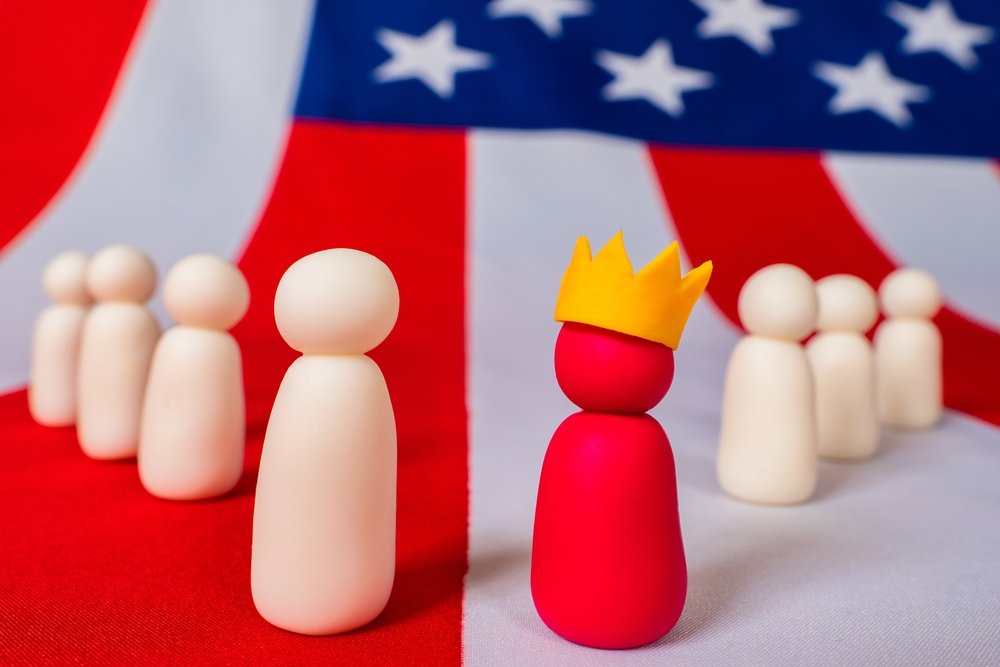
As the dust settles on the euphoria surrounding Zohran Mamdani’s election as mayor of New York City, it calls for a deeper reflection than the celebratory assumption that the rise of a man with a multilayered background will somehow transform American politics, and by extension, the world. At 34, the young Muslim immigrant endured intense media scrutiny throughout a campaign in which President Donald Trump labeled him a communist. His populist-driven victory is notable, but far from a revolutionary point.
Born in Kampala to filmmaker Mira Nair and scholar Mahmood Mamdani, Zohran carries intersecting cultural and religious identities. His marriage to Syrian-American artist Rama Duwaji adds another dimension, shaping a life that reflects and complicates the American dream.
That dream, a melting pot of cultures, is both an inspiring and paradoxical reality, recalling my own two brief stints at an American peace institute at the turn of the millennium. Coming from conflict-ridden Kashmir, I found the experience revealing. Peace studies there seemed less about resolving conflicts than managing them – softening tensions, containing them within timeframes and allowing them to fade rather than pursuing justice and reconciliation.
Whether I truly absorbed peace-making skills is debatable, but I did grasp the crucial difference between conflict resolution and conflict management. While writing a paper on fundamentalism then, I sought feedback from the head of Islamic Studies, a fine Bangladeshi scholar. Over breakfast one morning, she gently asked, “Do you realize what you mean when you call America a melting pot?” Without waiting for my answer, she explained, “It implies the destruction of your native culture and the adoption of a new one, that of being American.”
That moment stayed with me. To succeed in the pursuit of the American dream, one must pass through that melting pot, leaving much of oneself behind, ground and remade into the American identity.
In that sense, Mamdani’s victory is remarkable yet hardly transformative. It must be read within the American context, the ongoing struggle between right and left that animates its democracy. The meaning of his election lies not in civilizational change but in the continuity of America’s ideological contest, where identity and politics perpetually reshape one another. Mamdani may represent the progressive or socialist-democratic tradition challenging the populist wave embodied by the MAGA movement, a movement that paradoxically defies the immigrant spirit that built America.
It evokes a similar irony in Britain, where under former Prime Minister Rishi Sunak, himself of Indian origin, the home secretary adopted the harshest stance on immigration. Such contradictions define modern politics. Mamdani’s success, then, rests on his ability to inhabit an American identity forged and affirmed by the very melting pot that both enables and consumes it.
Yet the very idea of the "melting pot" invites a deeper reflection: What becomes of the self once it melts into the collective ideal? Does success demand the surrender of essence? These questions lead inevitably to the larger inquiry into identity itself.
Amartya Sen, the economist and Nobel laureate, argues that “the identity of an individual is essentially a function of her choices, rather than the discovery of an immutable attribute.” He warns against “the singular view of identity,” calling it “incendiary and dangerous,” because every person belongs simultaneously to many groups – religious, professional, national and moral. Sen thus presents identity as plural and overlapping, not fixed or monolithic.
To grasp the complexity of his argument, identity may be imagined as an onion, composed of layers representing the roles one assumes in life. Yet if one were to peel away each layer and find nothing within, the metaphor exposes the materialist limitation of such a view. Sen is right to emphasize multiplicity, but the suggestion that there is “nothing” beneath the layers implies identity is merely a sum of experiences without a center.
If identity is only a collection of shifting layers, what anchors the self when values collapse or truth becomes subjective?
Identity may indeed be multi-layered, yet beneath those layers lies a kernel – the seat of conviction, faith or commitment to what is held as absolute truth. This kernel defines purpose, gives coherence to the self and becomes the moral compass by which one lives, even dies. It is this enduring center that distinguishes conviction from mere opinion and truth from emotion. And once this center erodes, both individuals and societies lose their inner coherence, the very malaise that now defines the modern West.
That, in essence, is what the American dream has come to represent: materially rich yet morally impoverished. Truth, once a moral pursuit, has been reduced to emotion or personal feeling. The crisis of meaning that now defines modern life stems from this erosion of conviction. As empathy declines and the family as a moral institution disintegrates, the collective sense of belonging gives way to the supremacy of individual choice. What was once the foundation of civilization, the balance between individual freedom and collective well-being, is being overturned. The individual now reigns supreme, detached from any higher moral or spiritual order.
In this world of moral fluidity, even reality itself is recast as perception. The absolute realities bestowed by nature – being a man, a woman or otherwise – are now reduced to subjective perceptions of how one feels about oneself. Gender, once an immutable biological truth, has been transformed into a matter of emotional self-definition. What was discernible as absolute truth is now treated as relative and what was constant is made contingent upon individual desire. This is the real crisis of meaning: a world where conviction is replaced by choice and truth dissolves into perception.
Material progress has not elevated humanity but hollowed it from within. The pursuit of wealth and pleasure, celebrated as freedom, has replaced the search for purpose and virtue. The result is a civilization dazzling in its material achievements yet impoverished in spirit, a world devoid of meaning and purpose.