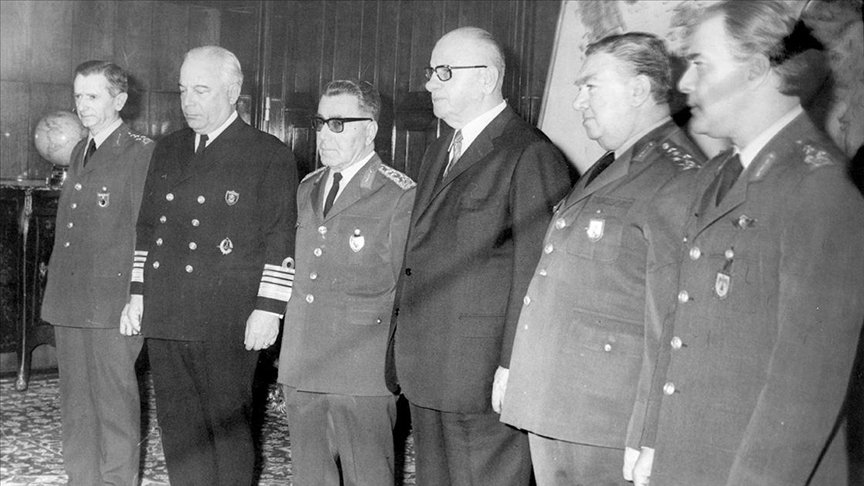
Today marks 55 years since the March 12, 1971 Memorandum, one of the important turning points in Turkish democratic life. Although it did not involve a direct seizure of power, this intervention, which forced the government to resign, initiated a process in which military tutelage emerged in a different form in Turkish political life. In this respect, March 12 cannot be considered a classic military coup or an ordinary change of government. Rather, it marked the beginning of a period referred to as an “interim regime.”
On March 12, 1971, on behalf of the Turkish Armed Forces (TSK) command, Chief of General Staff General Memduh Tağmaç, Commander of the Land Forces Gen. Faruk Gürler, Navy Commander Adm. Celal Eyiceoğlu, and Air Force Cmdr. Gen. Muhsin Batur presented a memorandum to President Cevdet Sunay, the Presidency of the Senate, and the Presidency of the National Assembly
This statement, which was read on TRT radio stations at 1 p.m. that same day and announced to the public, declared the beginning of a new political process in Türkiye.
At the time the memorandum was issued, the Justice Party (AP) was in power, with Prime Minister Süleyman Demirel at the head of the government. The AP had won approximately 46% of the vote in the 1969 general elections, securing 256 seats in the assembly and establishing a strong government. However, in 1970, a split within the party resulted in 41 deputies leaving, reducing the number of seats in the assembly to 215. Thus, the ruling party fell below the 226-seat threshold required for a parliamentary majority. This development weakened the government's political power and became one of the factors that paved the way for military intervention.
The effects of the 1968 movement had also reached Türkiye at that time. The country was experiencing turbulence not only politically but also economically and socially. Student movements intensified at universities, labor actions and strikes increased, and conflicts between right-wing and left-wing ideological groups grew increasingly violent. With the economic decisions taken in August 1970, the Turkish lira lost 66% of its value against the dollar, rising from TL 9 to TL 15. Price increases on basic consumer goods such as sugar and gasoline increased inflation.
Under these conditions, various disagreements began to emerge within the army. Although it was known that Chief of Staff Memduh Tağmaç was opposed to the army's direct intervention in politics, various coup formations were emerging, particularly among young officers. Not only within the army, but also among civilians, some leftist intellectual circles that supported military intervention had been formed. A significant portion of these groups aimed to end the AP's rule and implement the reforms they believed had been left unfinished by the May 27, 1960, military intervention.
The text of the March 12 communique clearly stated the reasons for the intervention. The first article of the communique claimed that Parliament and the government had “plunged the country into anarchy, civil strife and economic turmoil with their attitudes, views, and actions,” and stated that the future of the Republic of Türkiye was in danger. It also stated that the reforms envisaged by the Constitution to reach the level of modern civilization targeted by Mustafa Kemal Atatürk, founder of the Republic of Türkiye, had not been implemented. The memorandum was a clear warning: If a strong and reformist government was not formed, the TSK would take direct control of the administration.
Following the memorandum and Sunay's refusal to openly support the government, Demirel resigned. Thus, while the parliamentary system officially continued, a new era began in which military authority was decisive in the political process.
After Demirel's resignation, Nihat Erim, a deputy from Kocaeli who had resigned from the Republican People's Party (CHP), was tasked with forming a “non-partisan” government. The technocrat-dominated government formed under Erim's leadership received the support of both the military authority and the political parties in Parliament.
However, this government was unable to successfully implement the comprehensive reforms expected of it. The Erim government was soon replaced by the Ferit Melen government, formed on May 22, 1972.
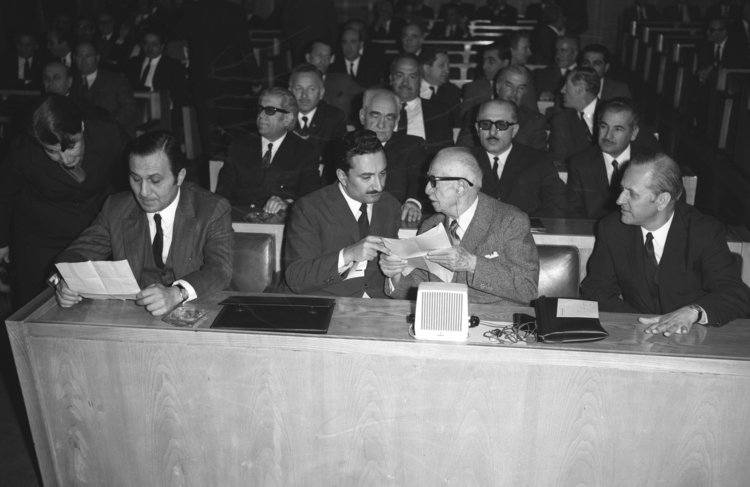
After the Melen government, the government formed under the chairmanship of Mehmet Naim Talu took office and ruled the country until the 1973 elections.
Following the 1973 elections, Bülent Ecevit, chairperson of the CHP, became the head of the newly formed government, thus ending the interim period that began on March 12.
Assessments of the reasons behind the March 12 memorandum show that the intervention was based on both internal and external dynamics. Among the internal reasons, the authoritarian-leftist coup tendencies gaining power in certain sections of the army and civilian circles are noteworthy. It was stated that the army took action within its chain of command against the coup plans of these leftist officers and intellectuals, known as the "March 9ers."
In terms of external causes, researcher and author Mehmet Hastaş draws attention to a point that has been overlooked in the literature: "Within the conditions of the Cold War, the foreign policy choices of Türkiye, a NATO member, were significant. The economic relations developed by Süleyman Demirel's government with the Soviet Union and its resistance to banning opium cultivation despite intense pressure from the United States were considered developments that caused unease within the Western alliance." This assessment also necessitated Demirel's removal from power.
As a result, the March 12 period also paved the way for the significant curtailment of the liberal provisions of the 1961 Constitution. The 1971 and 1973 constitutional amendments restricted fundamental rights and freedoms, increased the powers of the executive branch, and curtailed the autonomy of institutions such as universities and TRT. Thus, the memorandum was not merely a change of government but an intervention that had lasting effects on the constitutional order and contributed to the institutionalization of military tutelage over civilian politics.