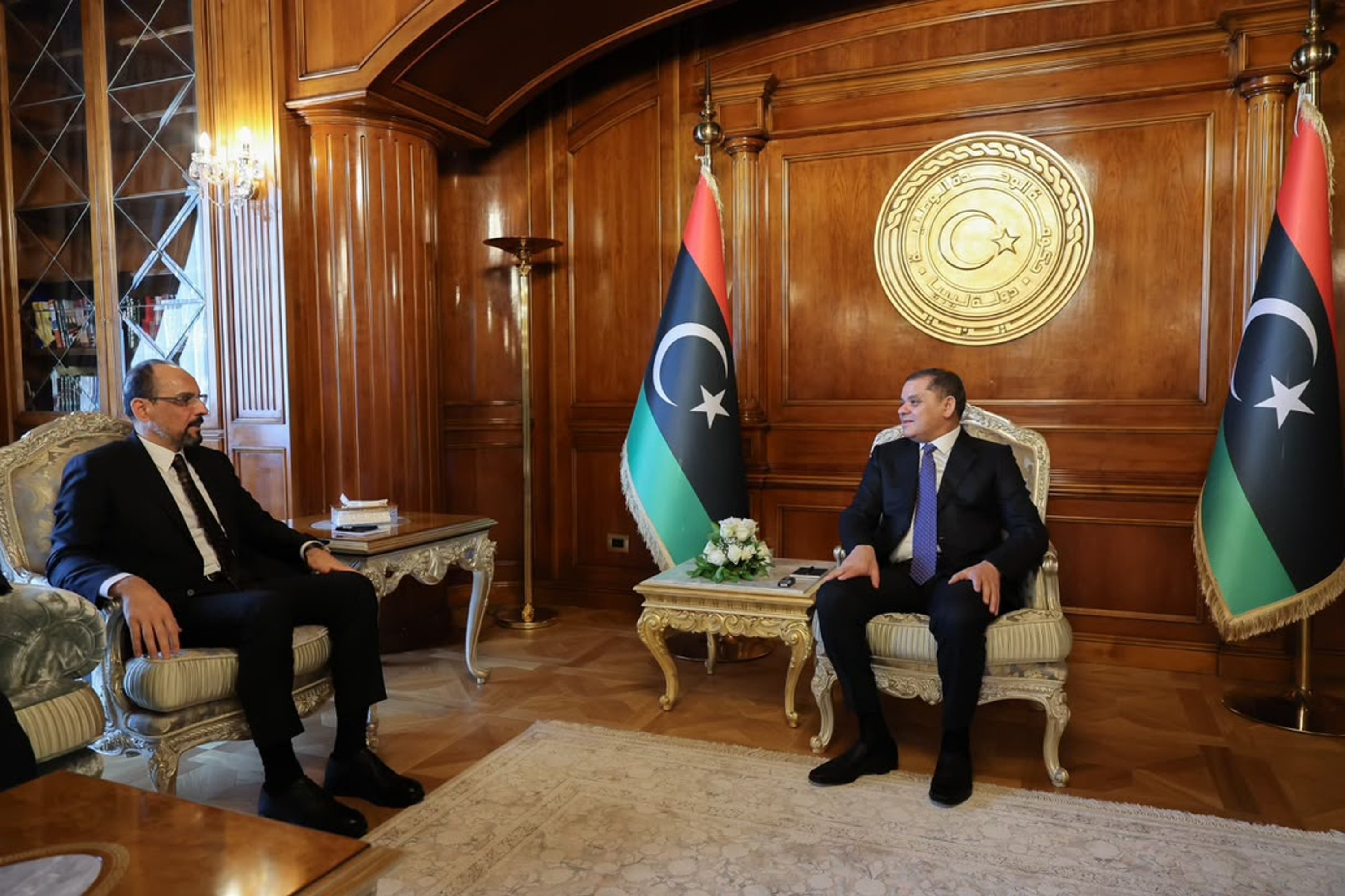
On Oct. 20, the decision by Libya's eastern-based House of Representatives to approve the 2019 maritime boundary delimitation agreement between Türkiye and Libya emerged as a significant development in the geopolitics of the Eastern Mediterranean.
The decision of the House of Representatives, an important and legitimate institutional actor in Libya's political structure, also removes a major basis for criticism previously directed at Türkiye over the fact that the agreement had not received parliamentary approval. Previously debated in terms of domestic political legitimacy and the approval process, the agreement has now gained broader political acceptance by securing the backing of the legislative body in eastern Libya. This achievement is the outcome of Ankara's efforts to build a network of relations in Libya that does not rely on a single political center.
This development is significant not only for Türkiye-Libya relations but also for the agreement's political weight, its prospects for implementation and the competition over energy resources in the Eastern Mediterranean. When the agreement was signed, regional competition was largely shaped by cooperation initiatives centered on the exploration of natural gas resources in the Eastern Mediterranean and their transportation to Europe. Some initiatives developed without Türkiye heightened Ankara's concerns that it could be excluded from regional energy arrangements. The EastMed pipeline project also brought into focus debates over energy routes designed to bypass Türkiye and the Turkish Republic of Northern Cyprus (TRNC).
The Türkiye-Libya memorandum has become one of the key elements of Ankara's strategy to counter efforts to exclude it from the regional equation. Moreover, for Ankara, the issue is not simply access to potential hydrocarbon reserves. It is also about ensuring that Türkiye's interests are taken into account as maritime boundaries and energy partnerships in the Eastern Mediterranean take shape. The Türkiye-Libya memorandum enabled Türkiye to reinforce its claims concerning maritime jurisdiction areas through a concrete bilateral agreement.
The maritime boundary agreement between Türkiye and Libya goes beyond symbolic diplomacy, offering tangible opportunities for strategic and economic cooperation. The delimitation of exclusive economic zones could provide a basis for joint exploration of unassessed hydrocarbon resources, securing maritime trade routes and protecting strategic sea lanes. Broader political support could facilitate the implementation of the agreement and open new avenues for cooperation in energy, infrastructure and reconstruction. Beyond these areas, Türkiye’s contributions to Libya’s military and security sectors can also be viewed as part of broader efforts to establish a more stable state structure.
For Libya, meanwhile, the development expands opportunities to utilize its maritime resources and strengthens the basis for deeper economic relations with Türkiye. Ultimately, however, lasting stability will depend on Libya making progress in political reconciliation, institutional integration and security sector reform, beyond the maritime agreement itself.