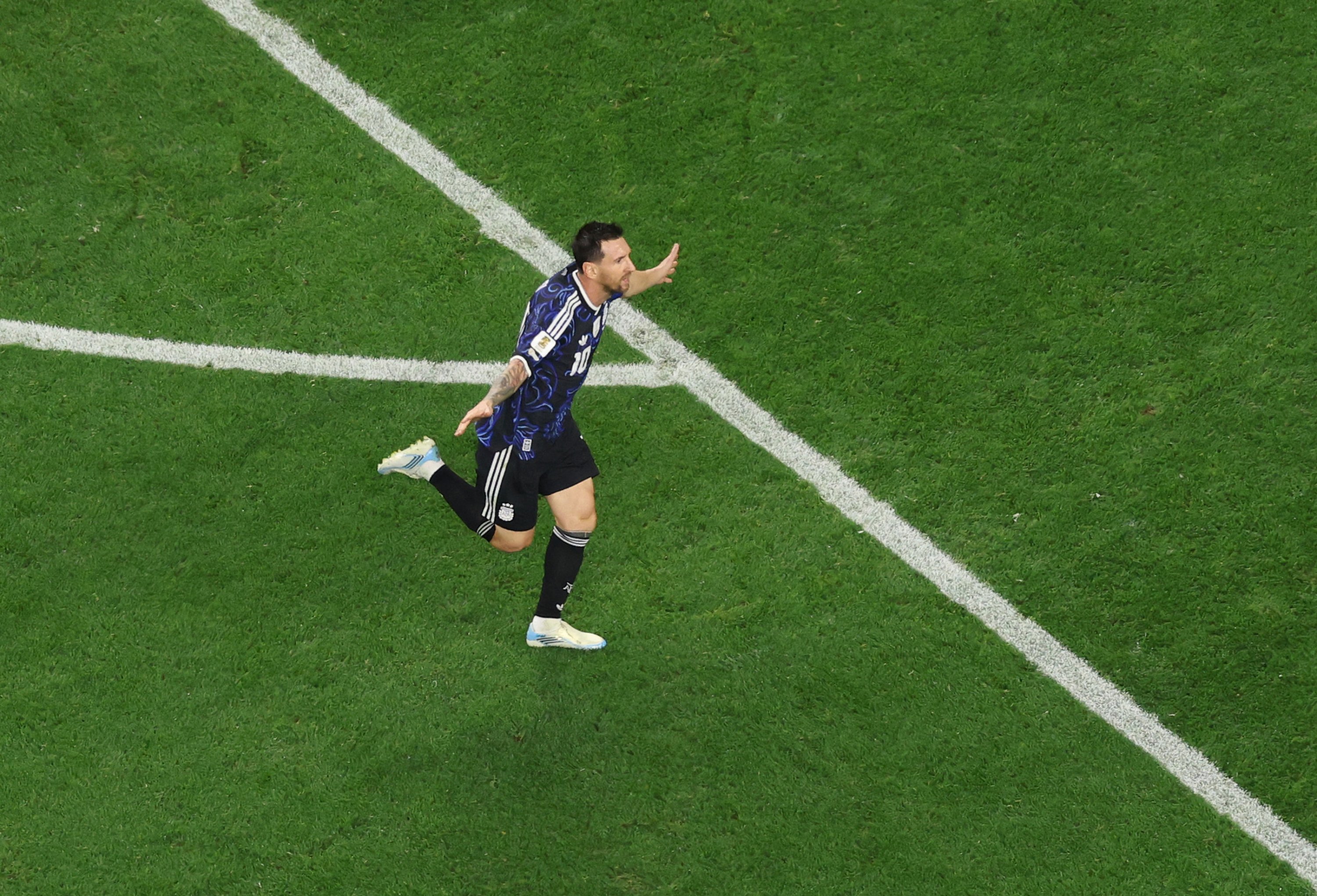
Lionel Messi did not just rewrite the record books at this World Cup. He rewrote what we thought was possible for a 39-year-old footballer still performing at this level. After opening the tournament with a hat trick against Algeria, Messi scored twice more against Austria to become the outright all-time leading scorer in men's World Cup history, surpassing Miroslav Klose's record of 16 goals to reach 18. Five goals in two games. At 39. At a World Cup.
Messi's second goal against Austria came deep in stoppage time, when he outfoxed four defenders to seal a 2-0 win and send Argentina into the knockout rounds with a game to spare. This is not a player living off his reputation. This is a player still making the decisive contribution when it matters most. He now holds the record for most goals in World Cup history across men's and women's football combined. His World Cup journey began 20 years ago when an 18-year-old came off the bench and scored against Serbia and Montenegro. Two decades later, he is still the most important player on the pitch.
To understand just how far Messi has come, it helps to remember where he once was. In June 2016, after Argentina lost the Copa America final to Chile on penalties for the second year in a row, a tearful Messi stood before the cameras and said: "For me, the national team is over. I've done all I can. It hurts not to be a champion." At the time, despite five Ballon d'Or awards, four Champions League titles with Barcelona and every major club honor the game had to offer, the one thing that seemed out of reach was a trophy with Argentina. It had been four major finals and four defeats. The criticism was relentless. Too quiet. Too passive. Not a leader. Not Maradona.
He came back. He won the Copa America in 2021. He won the World Cup in Qatar in 2022. He won the Copa America again in 2024. He picked up his eighth Ballon d'Or in 2023. And now, here he is in the U.S., still scoring goals, still breaking records, still the most important player on the pitch. The story of Messi's international career is a story about not giving up, even when giving up would have been the easier and more understandable choice.
What makes Messi's tournament so impressive is the context in which he arrived. Questions about his fitness, his age and whether this would be a farewell appearance rather than a genuine title defense have been answered on the pitch. There is no drama for its own sake, just one well-taken finish after another. After the Austria match, he told Telemundo: "I'm really happy about the win. This is the World Cup; it was a very intense match, and we're happy to have already qualified." That is the version of Messi that wins tournaments.
None of this takes away from what Cristiano Ronaldo continues to do. He is also appearing at his sixth World Cup, still leading the line for Portugal at 41 years old. Earlier in the tournament, he became the first player in history to score in six different World Cups, a record that stands entirely on its own. Two of the greatest players of all time, still competing on the same stage twenty years after they first appeared on it, is something football should be grateful for.
While the big names were making their marks elsewhere, Türkiye produced the standout result of Friday's group stage action. Kaan Ayhan scored on the final kick of the match to give Türkiye a 3-2 win over the U.S. at SoFi Stadium in Los Angeles. It was the only Turkish win of the tournament and one of the most dramatic finishes of the group stage.
Arda Güler was the key figure throughout, setting up goals and creating the moment of skill that led to the winner deep in stoppage time. For a nation preparing to host 32 NATO leaders in Ankara in less than two weeks, it was a timely reminder that Türkiye knows how to make an impact when the moment counts.