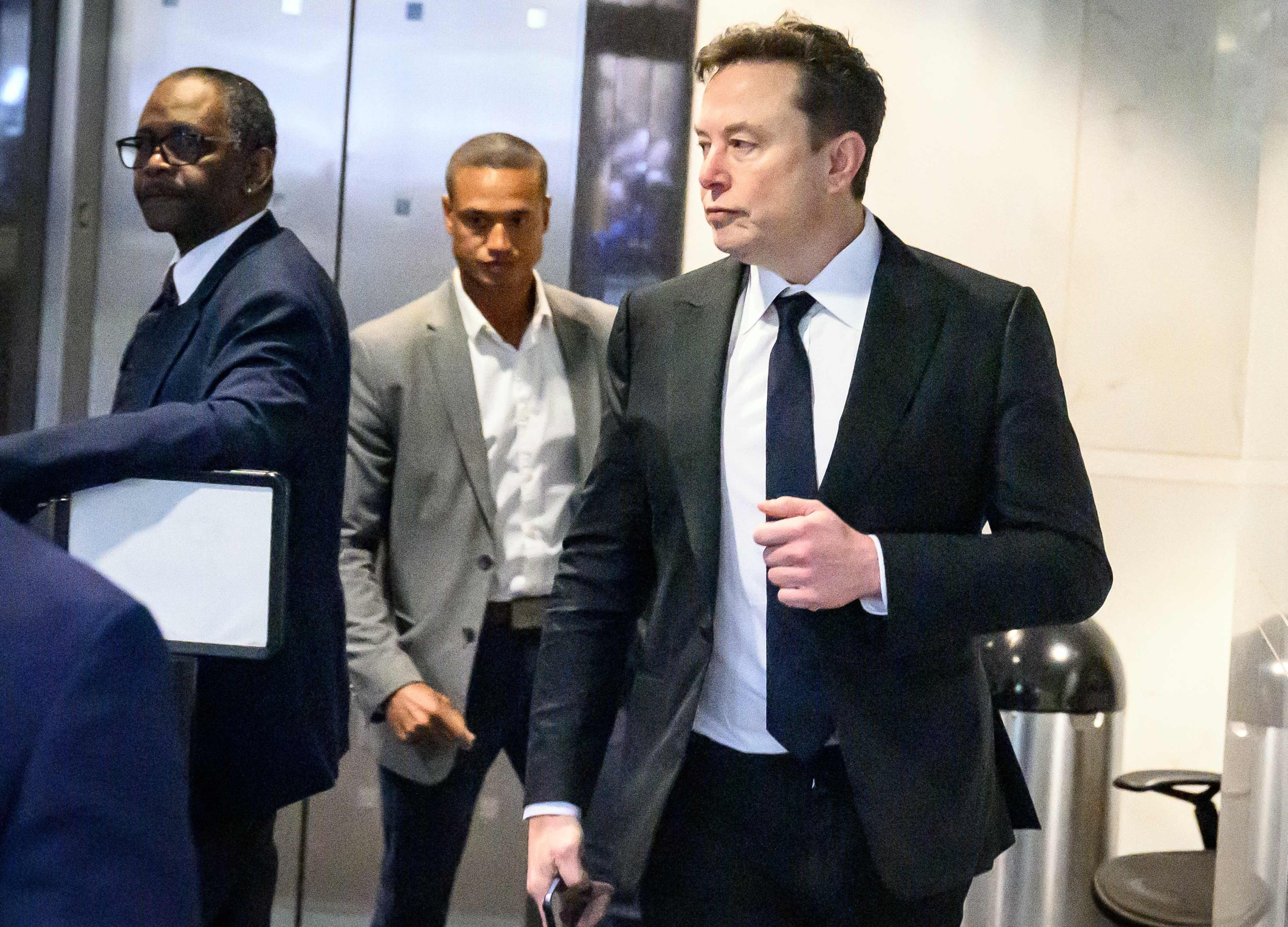
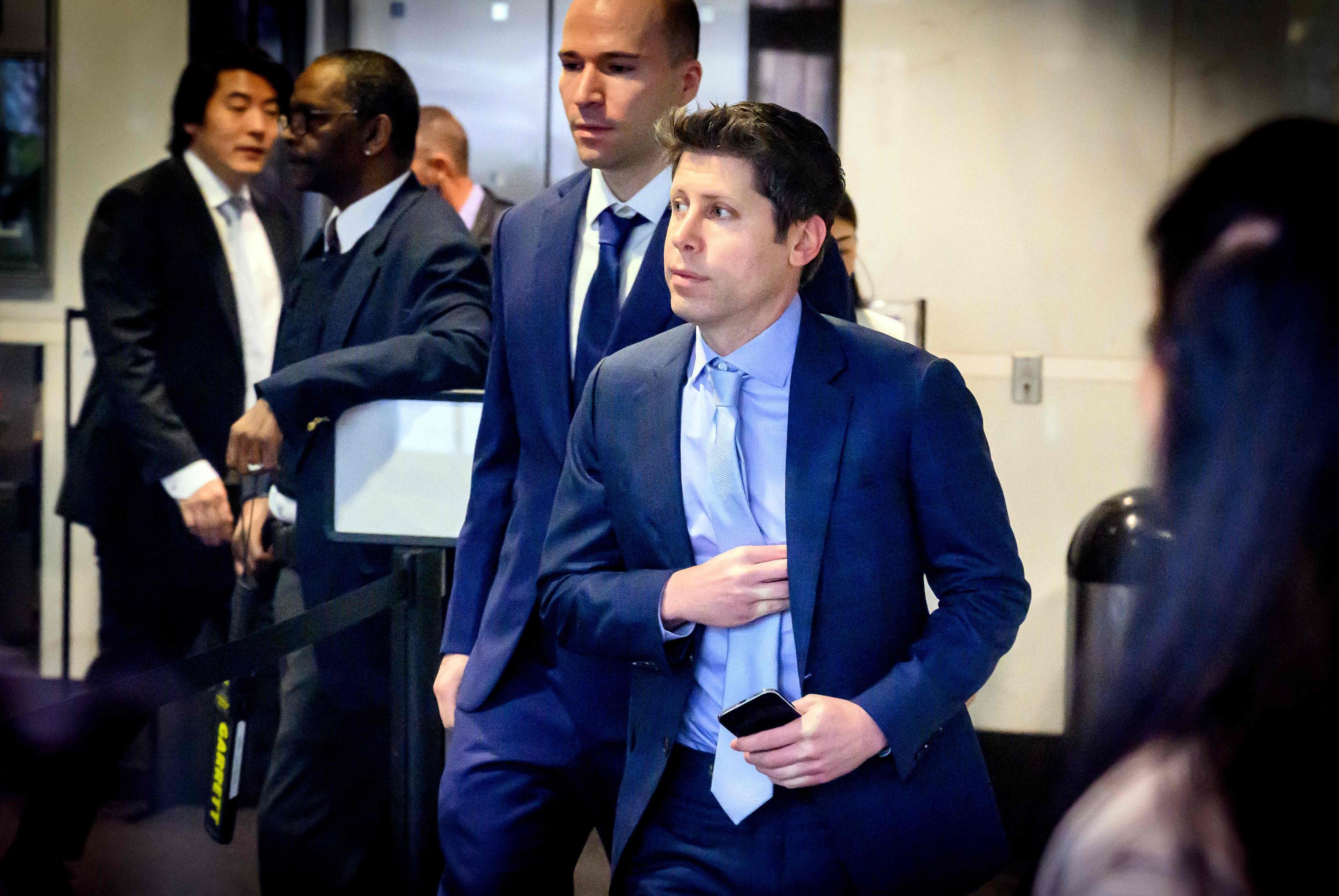
The courtroom has become the new battlefield of artificial intelligence. In a federal courthouse in Oakland, California, Elon Musk and Sam Altman, two of the most powerful figures in Silicon Valley, are facing off in a trial now in its third week.
Musk, who co-founded OpenAI in 2015, accuses Altman and the company of betraying its original nonprofit mission by turning it into a profit-driven juggernaut. Altman, testifying this week, insists the shift was essential to attract the capital required for frontier AI. What began as a dispute between former collaborators has exposed the fragile moral architecture behind the AI revolution. This is a trial over who gets to define the moral, political and economic architecture of artificial intelligence.
OpenAI was born in December 2015 with a founding myth that felt almost utopian. Musk, Altman, Greg Brockman and others pledged roughly $1 billion to develop artificial general intelligence (AGI) that would benefit all of humanity. The organization would remain open, safe and free from commercial pressures. Musk contributed about $38 million on the explicit understanding that the entity would operate as a nonprofit “charity” for the public good. The charter was clear. AGI must benefit everyone, not a handful of shareholders. That language, humanity-first, nonprofit, open, became the moral cornerstone of the entire AI industry.
Yet today that founding myth lies in ruins. OpenAI has restructured into a public benefit corporation, with Microsoft holding roughly 27% equity after investing more than $13 billion since 2019. The company’s valuation has soared past $850 billion, and it is reportedly eyeing an Initial Public Offering (IPO). The Stargate project, a $500 billion AI infrastructure initiative involving OpenAI, SoftBank, Oracle and Microsoft, aims to build massive data centers across the U.S.
These steps represent a wholesale pivot from a research lab into an industrial-scale empire. The material realities of frontier AI, cloud monopolies, sovereign-scale capital, energy grids, chips and geopolitical maneuvering have collided head-on with the original humanitarian vocabulary. The Musk-Altman conflict is therefore about whether the original humanitarian vocabulary of AI can survive the economic infrastructure needed to build it.
This tension crystallizes in the collapse of AI’s founding myth. Musk’s lawsuit contends that Altman and Brockman persuaded him to donate tens of millions on the promise of a nonprofit structure, only to later pursue a capped-profit model, massive Microsoft funding and full corporate conversion. OpenAI counters that the restructuring was essential to compete in an arms race that no single nonprofit could win. The humanitarian language that launched OpenAI sounded noble in 2015, when training a large model cost millions. It sounds quaint in 2026, when the next frontier system demands hundreds of billions in compute, energy and data. AI is no longer a scientific experiment. It is general-purpose infrastructure, and infrastructure of this scale has always been captured by capital, states and empires.
My second argument cuts deeper here. Whether “public benefit” language can ever genuinely discipline private power. OpenAI’s defense rests on its hybrid structure, with the nonprofit foundation retaining ultimate control. Yet this arrangement risks becoming little more than a moral wrapper around infrastructural dominance. Who defines the “public”? Who measures the “benefit”? In an age when AI systems will mediate knowledge, labor markets, security policy and electoral outcomes, these questions are not abstract. “Public benefit” may reassure regulators, but it cannot resolve the fundamental mismatch between corporate governance and civilizational technology.
Musk’s critique of this mission drift is not empty, but it arrives wrapped in paradox. He is both a critic of AI centralization and one of its most ambitious practitioners. While he rails against OpenAI’s transformation, his own xAI raised $20 billion in January 2026 to build the world’s largest GPU clusters, with Tesla adding another $2 billion. Musk’s empire, xAI, X, Tesla, SpaceX and Starlink, already constitutes a vertically integrated stack spanning social media, energy, mobility, space and frontier AI. He is building a rival techno-political sovereign. It simply reveals that every major actor now speaks the language of humanity while competing ruthlessly for control over infrastructure, talent, data and political access. Both Musk and Altman claim to speak for humanity, but both operate within the logic of empire-building.
Altman’s position is equally paradoxical. He champions “responsible deployment” and insists the public benefit corporation structure safeguards the original mission. Yet the trial has exposed a governance and character crisis. Former executives testified to a pattern of behavior documented by Ilya Sutskever in a 52-page memo alleging a “consistent pattern of lying” and manipulation. Other witnesses described Altman as “deceptive” and “chaotic.” These are contested claims, but they are important. AI governance debates usually focus on technical safeguards and regulation. But the OpenAI saga shows that personality, trust and institutional culture are significant at least as much.
The Musk-Altman feud is a techno-political succession struggle. It is a contest between two models of sovereignty over the infrastructure of intelligence. Altman represents the institutionalized AI corporation. It’s a deep partnership with Microsoft, global infrastructure diplomacy through Stargate, regulatory engagement and the language of responsible scaling. Musk embodies the founder-sovereign model. This model has vertically integrated platforms, personal political influence and direct confrontation with institutions. Their clash is a conflict over how technological power should be organized in the 21st century, through hybrid corporate structures or founder-led empires that fuse AI with other domains of civilizational infrastructure.
This is why the OpenAI trial matters far beyond Oakland. It is about whether the future of intelligence will be governed as a public trust, a private empire or a hybrid structure that pretends to be both. AI began with the language of openness, safety and humanity. It now speaks the language of infrastructure, valuation, litigation and sovereignty. The real betrayal may not be one man’s betrayal of another, but Silicon Valley’s betrayal of its own founding myth.
Both Musk and Altman are asking the same question in different ways. Who has the right to build the machine that may reorganize civilization? The nonprofit dream is over. The age of techno-political empires has begun. The courtroom in Oakland is merely the first arena in which that new reality is being tested. History will remember not who won the lawsuit, but who ultimately defines the architecture that follows. The rest of us, humanity included, will live inside the systems they build.
Even as the trial unfolds, Musk’s strategic maneuvers underscore this founder-sovereign logic in real time. Through a surprise partnership with Anthropic, granting the rival lab full access to SpaceX’s Colossus 1 supercomputer in Memphis, with more than 220,000 Nvidia GPUs and 300 megawatts of capacity, Musk is now channeling compute power and hardware dominance through former adversaries, while simultaneously advancing plans for orbital data centers in the sky.
As part of the deal, Anthropic has expressed explicit interest in partnering with SpaceX to develop multiple gigawatts of space-based AI compute infrastructure, merging Musk’s vertically integrated empire with the very competitors he once critiqued.
This aforementioned pivot aligns with an intellectual shift articulated in recent weeks by Marc Andreessen, who has repeatedly invoked James Burnham’s 1941 classic “The Managerial Revolution” to declare that managerialism is dead. In the AI era, Andreessen argues, we are returning to a founder-led model. It’s the professional manager class that once scaled enterprises at the cost of innovation, mission clarity and raw ambition is giving way to AI-empowered founders who wield superhuman leverage, slashing bureaucracy and restoring the “oppressive” alignment of the original bourgeois capitalist era.
The Musk-Altman courtroom drama is thus a vivid symptom of this tectonic realignment, where the empires of intelligence are rebuilt not by committees or professional stewards, but by visionary sovereigns who refuse to let managerial grayness dilute the civilizational stakes of artificial intelligence