A child’s relationship with his/her primary caregiver – between the ages of 0-6 from infancy and especially the ages of 0-3 – shapes their perception of the self and the world. In the first year from birth, babies receive and appropriate whatever comes from the outside world, often based on the stimulus they receive from their caretakers. When babies receive positive feelings from their caretaker, they think how good they and the world are. However, this is life and the caretaker, as a human being, has to navigate different kinds of limitations and restrictions, which can impact their inner peace. Naturally, there are times when they go through emotional lows. In such periods, babies can sense the change, which in turn has a negative effect on them and makes them think how terrible they and the world are. This emotion is directed to objects.
Under normal circumstances, babies are expected to eliminate this split and reach the phase of integration by establishing a healthy relationship with their caregiver. For babies to tolerate negative emotions, an integration that can create a single healthy self and single perception of the world is required. If a child can reach this phase, they can see the accent colors of life rather than black and white.
In the integration period, children need to receive more positive emotions from their caregivers. Otherwise, self-perception and world-perception are shaped negatively. In this case, the “splitting mechanism” comes into effect. That means if I do not have the strength to see and contain the negative in me, I call myself good and the other becomes evil for whatever reason. If a child does not have the emotional capacity to embrace negative feelings within, they always reflect the “evil” part inside them to others, even in adulthood, in order to keep themselves “good.” It is called “projective identification.” In this way, a person tries to ensure the continuity of identity by externalizing negative feelings and self-harm thoughts. Because if they have this evil side it cannot be escaped; however, if the evil is outside or belongs to someone else, the individual is under the illusion that they can escape from it. However, they are also in danger of having these externalized features return to them like a boomerang. Therefore, they feels the need to constantly check the externalized object to determine whether it accepts these contents or not.
Identity’s integrity is maintained by means of projective identification or externalization. An individual distinguishes their own identity from the identity of the target object considered to be “the other.” Xenophobia or fanaticism of a race, religion, or team are linked to these two defense mechanisms.
From a psychodynamic point of view, besides the core identity of a person, the group identity is also dependent of the environment in which a person grew up. In the first six years, a person grows up internalizing the social norms, religious and cultural values of the environment around them – inculcating both, the good and the bad. In another word, the goodness or badness in a person’s environment shapes their personality.
However, it shouldn’t be forgotten that no one is fully good or bad, meaning that we all reflect the opposite of ourselves as well. When examining any conflicts, it has been found that there are many common characteristics of groups that fight each other.
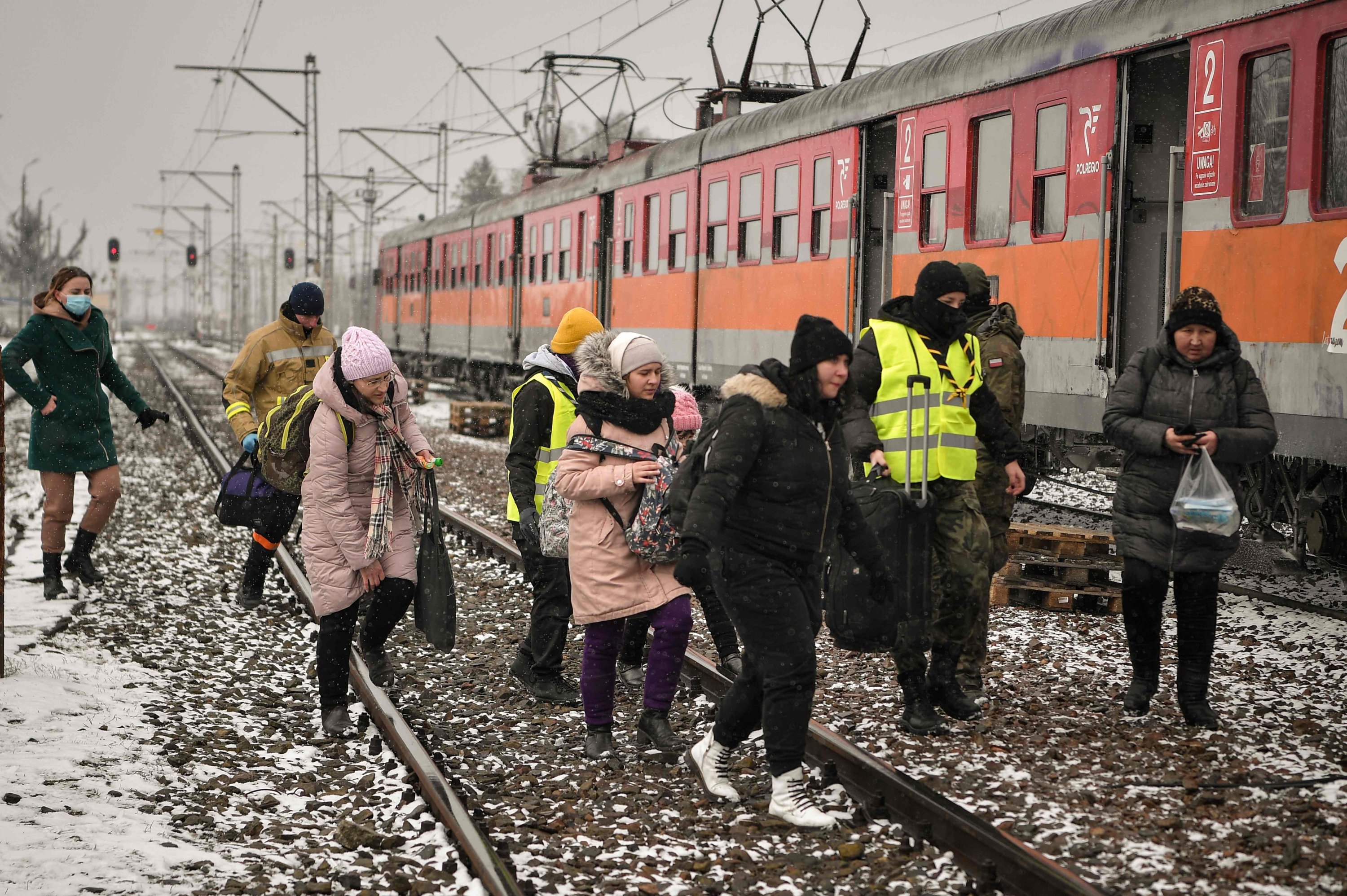
Defense mechanisms are unconscious methods that our minds use to maintain a sense of security, to protect our identity from disintegration and to regulate negative emotions such as guilt and worthlessness. In the recent “blue-eyed refugees first” approach of some to the Russia-Ukraine war, we apparently saw how this defense mechanism works.
Splitting and projective identification are two very primitive defense strategies: They indicate severe pathology. People with an unintegrated self-perception unconsciously use these two mechanisms most often, especially in situations of intense stress. People with an integrated and healthy self prefer mature defense mechanisms, such as conscious suppression or humor, to cope with difficulties in life.
Unfortunately, situations that endanger human existence and security such as economic crises, pandemics or incidents of terrorism cause a state of constant anxiety that regresses people, causing the unconscious to work at a more primitive level. In this sense, the need for mental health is gradually increasing worldwide.
The impact of the caretaker-child relationship on the development and prevention of hostile and destructive perceptions is great. For this reason, it is obvious that policies that will increase the quality of the caretaker-child relationship, in particular, are needed. The nature of that relationship determines the deconstruction of prejudices into a malignant or destructive character. Therefore, multidisciplinary approaches, including a psychoanalytic perspective are needed to determine the policies that reduce bias both at the social and individual levels.