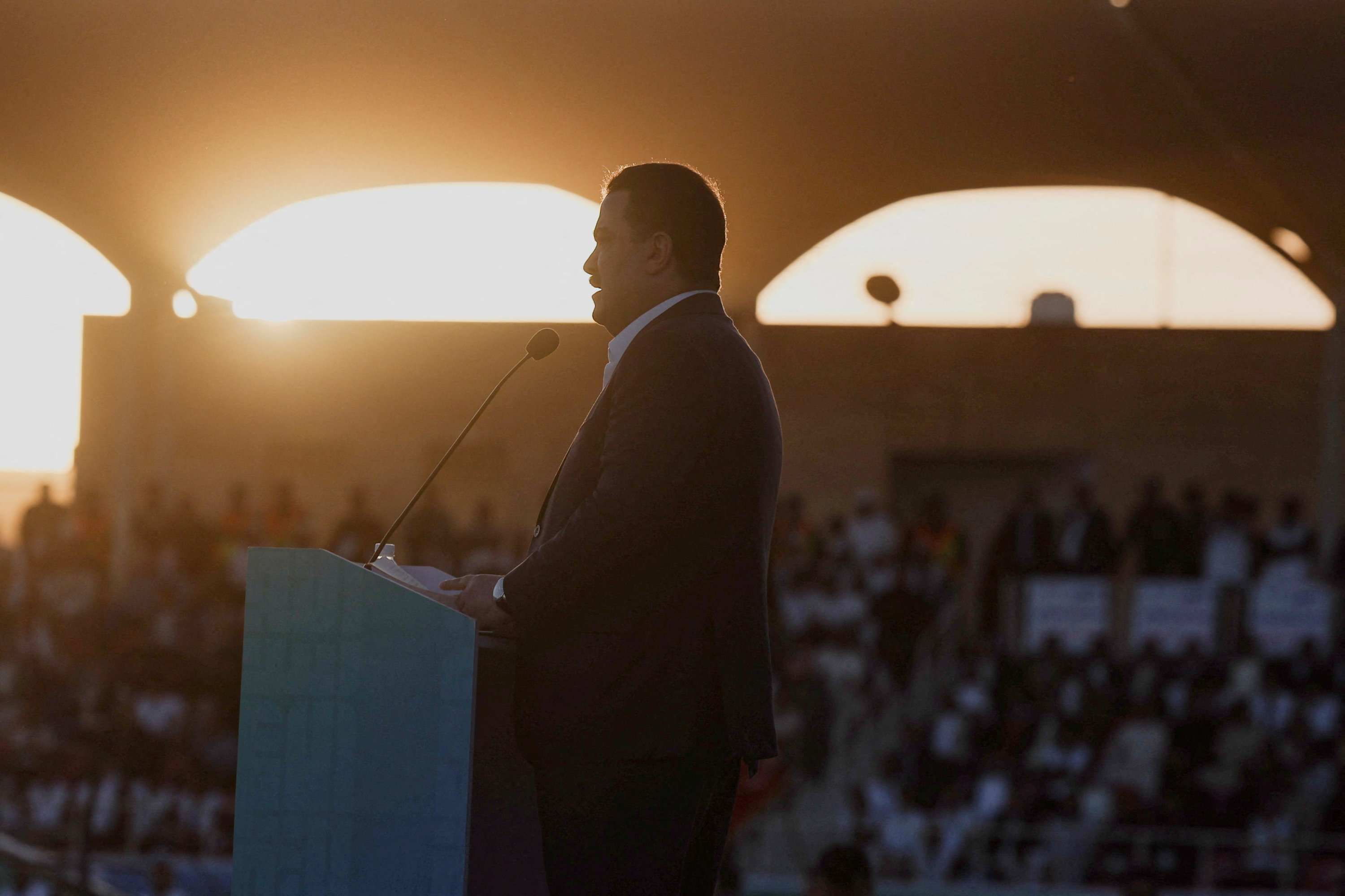
On Nov. 11, Iraqis headed to the polls for the sixth parliamentary election since the fall of Saddam Hussein in 2003. While elections were relatively calm, disillusionment with Iraqi politics and political elites continues, especially among young Iraqis, with 46% of them wanting to emigrate. The Independent High Electoral Commission announced a 56% voter turnout, but only 21 million of 32 million eligible voters registered for the elections, suggesting a real turnout of roughly 40% and indicating a disconnect between politicians and the public.
This election was marred by widespread practices, including candidates buying votes, offering people payment to prove how they voted and some politicians who promised payments fleeing the region after learning they had not been elected. AI-generated videos were widely used, but many young people found them bizarre and didn't watch them.
Many Shiite parties spread fake news on social media to increase turnout and counterbalance Shiite religious leader Muqtada al-Sadr's boycott of the elections, claiming that another Shiite religious authority, Ayatollah Ali al-Sistani, gave a fatwa to vote. However, al-Sadr's boycott calls were important and led to the lowest turnout in Najaf, Karbala and Baghdad; turnout in Shiite areas was higher than expected.
Another detail worth noting was that the Iraqi Communication and Media Commission, where pro-Iranian groups are dominant, put pressure on journalists criticizing Iran, like Adnan Altia.
On the other hand, Sunnis saw al-Sadr's boycott calls as an opportunity to gain greater influence in the elections and achieved a high turnout rate, especially in al-Anbar. Kurdistan Democratic Party (KDP) strongholds had the highest turnout, garnering over 1 million votes and securing the third-highest position by seats in the Iraqi Parliament.
There were no surprising results in the elections except for a few minor changes. No party can form a government from the required 165 seats out of 329, so parties will again need to build alliances, which is expected to take months. Prime Minister Mohammed S. Al Sudani had a 64% approval rating in 2024. His Al-Furatayn party, which had only two seats, has now expanded into the Reconstruction and Development Coalition, which now has 46 seats.
The Shiite Coordination Framework parties, many linked to the Popular Mobilization Forces (PMF) and Iran, ran separately but declared they would regroup, securing 93 seats combined. The main Sunni party, the Progress Party, secured 33 seats and did relatively well, especially in Baghdad. The Azm Alliance won 15 seats, National Sovereignty won 9, and the National Resolve Coalition won six seats among the major Sunni parties, while minor Sunni lists won 13 seats, totaling 76 seats. Progress Party leader Mohammad al-Halbousi, who was removed from Parliament on widely disputed corruption charges in 2023, had the charges dropped in April 2025, boosting his popularity in Sunni areas. Kurdish parties secured 56 seats total. The KDP won 26 seats, plus five minority seats held by KDP affiliates, while the Patriotic Union of Kurdistan (PUK) won 17 seats.
As clearly seen, the Muhasasa system reigns again. Sunni parties held 23% of the seats with 30% of the population, Shiites held 56% of the seats with 55% of the population, and Kurds held 17% of the seats with 15% of the population in Iraq. Basically, every ethno-sectarian group votes for the parties that prioritize their own ethno-sectarian voter pool.
Election results in the Kurdish Regional Government had only a few surprises, with both the KDP and PUK keeping their strongholds intact. In Nineveh, a predominantly Sunni Arab province, the KDP secured the most seats thanks to cross-ethnic candidates. However, in Diyala province, no Kurdish candidates won seats for the first time since 2005.
It must also be noted that there is still no regional government formed in the KRG due to disputes between parties since 2024, mainly caused by the PUK waiting for the Iraqi election results to strengthen its hand in electing the Iraqi President – a position traditionally held by the PUK since 2003 but with a chance to be swapped by the KDP since it is in the top three blocs in terms of seats at the federal level.
This election also showed that the votes PUK lost after its leader and former president of Iraq, Jalal Talabani, died seem to be gone for good, as they now go to other parties that split from the PUK, this time mainly to the Halwest party.
The morale of Kurdish voters was boosted by winning Nineveh, but losing more than half of Kirkuk's seats for the first time has been a big blow in the disputed oil-rich area.

The biggest losers of the election, as expected, are independents, liberals and secular candidates who still cannot find themselves a room in post-2003 Iraq politics. Al-Sadr can also be seen as a loser, as his boycott calls were largely unheeded. Yet the boycott still had a strong effect in conservative Shiite cities, and his followers, many of them armed, remain loyal to him, even though they voted.
The Shia Coordination Framework (SCF), which brought Al Sudani to power in 2022, said it won enough seats to pick the prime minister and does not require an alliance with Al Sudani. Former Prime Minister Nouri al-Maliki, who holds the most seats in the SCF, also opposes Al Sudani's second term. However, the Sadrist movement, rivaling the SCF, supports Al Sudani.
Most parties in the SCF have PMF military wings and are directly under Iranian influence, including Badr, Asaib Ahl al-Haq, Kataib Hezbollah, and Kataib al-Imam Ali. Both al-Sadr and the United States want to disarm these militias. Moreover, among Iraqis, only 34% view Iran favorably, and 70% of the population believes that Iranian influence in the region is a threat to Iraqi national sovereignty.
Al Sudani, while balancing the interests of Tehran, Washington, Türkiye and the Arab world, may give compromises to the SCF. However, fearing he has amassed too much power in his first term, the SCF thinks it is unwise to keep his seat, given his rising popularity. If Al Sudani wants the Kurds' support in forming a government, he must regain their trust, as chronic problems remain unresolved, such as salary payments and oil exports. If resolved, Al Sudani may counterbalance the SCF with Kurdish seats (though Iran can manipulate the PUK) and the Sunni Progress Party.
Given the fragmentation of Shiites and Sunnis, Kurds can play kingmakers in negotiations, but this all depends on the PUK's and other minor parties' bargaining over the KRG's internal disputes. While Halwest and other minor parties called for the annulment of the Kurdistan elections, and the PUK remains under Iranian influence, this presents a major challenge.
If the SCF succeeds in forming the government, the key problem of removing militias remains. The SCF may face economic and security consequences from the U.S., so it may seek to find a middle ground by disarming militias and fully integrating them into the Iraqi Armed Forces while keeping their personnel, structure and patronage. Yet Iran can use militias even more if they fully integrate into the Iraqi army and use it as a Trojan horse.
Iraqis have lost confidence that ballots can deliver real change. Democracy functions primarily as theater, maintained for international appearances rather than genuine governance. The 2025 contest reveals a deeper crisis: a pervasive belief that the system cannot be fixed. This phenomenon is characterized by earned helplessness, repeated failures, and the conviction that action is futile. Breaking Iraqis free requires fundamental institutional reforms. Iraq must diversify beyond oil and gas revenues and dismantle the sprawling patronage apparatus that dominates the public sector.
Without such transformations, electoral cycles will continue as empty ceremonies. Currently, citizens have scaled back their hopes to mere stability and essential public goods, yet even forming a governing coalition could take many months.