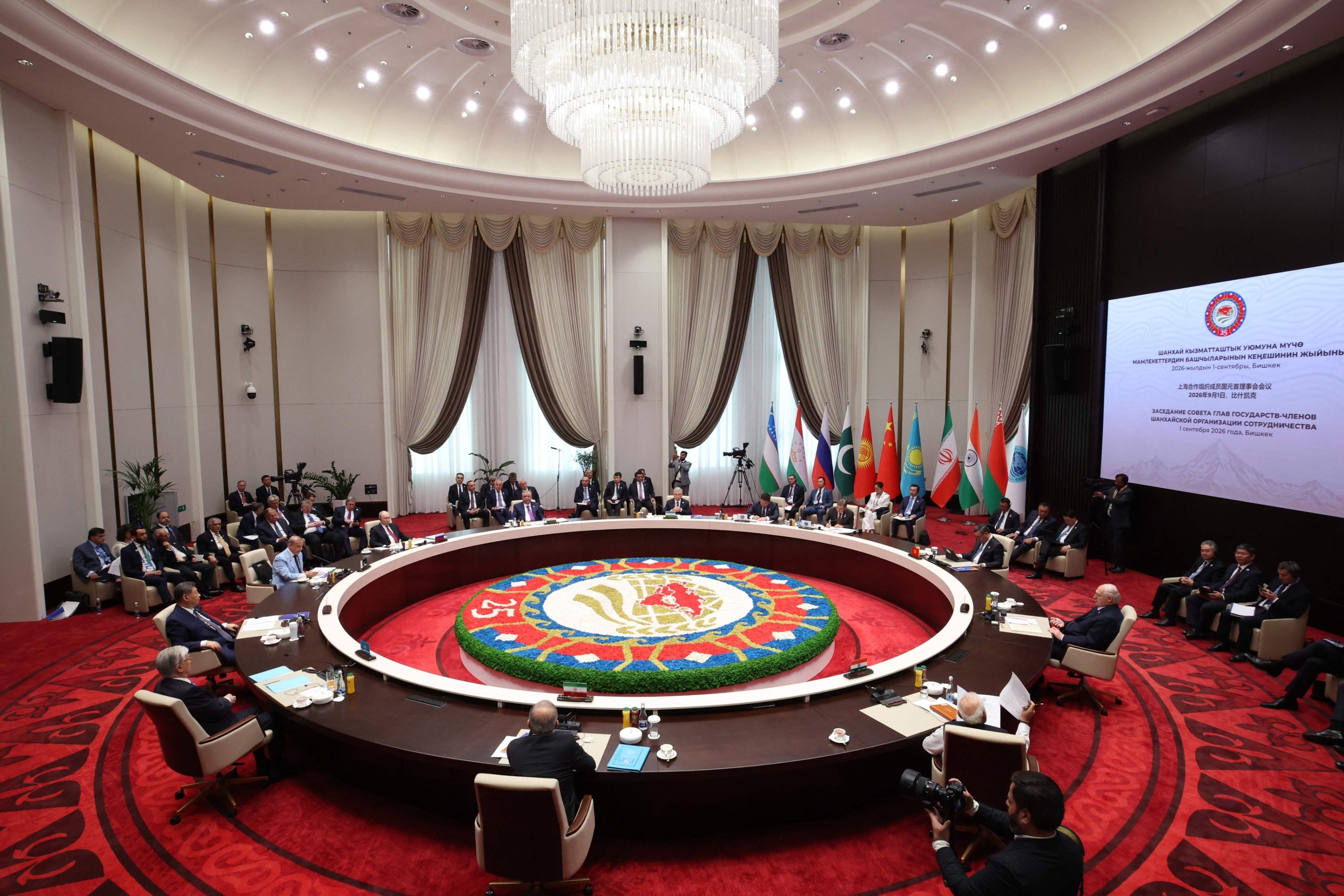
Russia’s major role in oil and natural gas, Kazakhstan and Uzbekistan’s hydrocarbon resources, Kyrgyzstan’s hydropower potential, Iran’s energy resources, and China’s high energy demand are increasingly converging within the same geography. This is bringing into focus the possibility of assessing energy resources within a more integrated regional structure, beyond bilateral agreements and existing pipelines. The Shanghai Cooperation Organization (SCO) summit held in Bishkek on Sept. 1 provided an important platform for this transformation. Türkiye’s participation as an SCO dialogue partner further increases the importance of this platform for Ankara, particularly for energy security and the future of energy corridors across Eurasia.
The Bishkek summit was a continuation of a process developing for more than a decade. The process took formal shape with the establishment of the Energy Club in 2013, which aimed to improve coordination among energy producers, consumers and transit countries. Russia, Iran, Kazakhstan and Uzbekistan are important energy producers within the organization, while China and India are among the world’s largest energy consumers. This creates a broad structure in which energy supply and demand meet on the same political platform. The SCO’s energy agenda, which for years focused on energy security, trade and infrastructure cooperation, gained a clearer framework in 2024 with the adoption of a strategy to develop energy cooperation through 2030. Work on a road map began in 2025. At the energy ministers’ meeting in June 2026, member states agreed to continue work on establishing an SCO Energy Consortium. The Bishkek summit continued this process. The best way to understand the potential of SCO energy cooperation is to examine the current energy balances of China, Russia and Iran.
Russia is the clearest example of this shift. After losing a significant share of its position in the European energy market following the war in Ukraine, Moscow accelerated its shift toward Asia in oil exports. Europe’s share of Russia’s crude oil and condensate exports fell from 51% in 2020 to 11% in the first half of 2025. Asia has become the main market for Russian oil. The shift in natural gas has been slower because gas trade depends heavily on pipeline infrastructure. Russia’s pipeline capacity toward Europe does not provide direct access to China and other Asian markets, so the volumes lost in Europe could not be redirected quickly. Moscow therefore focused on new pipeline capacity toward China. Natural gas deliveries to China through the Power of Siberia pipeline reached 38.8 billion cubic meters in 2025. The planned Power of Baikal pipeline is expected to provide up to an additional 50 billion cubic meters annually. Russia’s energy strategy therefore centers on establishing new access to Asian consumers, making new pipelines and long-term infrastructure investments strategically important for Moscow.
Iran presents a different energy picture. Although it has some of the world’s largest oil and natural gas reserves, it faces serious constraints in accessing international financing, technology and infrastructure needed to increase energy exports. Natural gas is the clearest example. Iran’s exports rely largely on pipeline trade with neighboring countries, and the country currently has no operational LNG export infrastructure. Projects such as Iran LNG and Persian LNG have been proposed but have not reached commercial-scale operation. High domestic consumption also limits gas available for export. Although long-term contracts with Iraq include high nominal capacities, actual deliveries often remain below those levels. China’s role has become increasingly central on the oil side. In 2025, China purchased more than 80% of Iran’s seaborne oil exports, making it the most important buyer in Iran’s oil export system. In 2026, clashes around the Strait of Hormuz and the U.S. naval blockade severely disrupted this model. Iran’s crude oil loadings fell from around 2 million barrels per day in March to between 220,000 and 255,000 barrels per day in August. This highlights the gap between Iran’s energy resources and its ability to transport them to global markets. For Iran, energy security also means strengthening export infrastructure, financial channels and regional connectivity.
China’s position differs from that of the other two countries. It is both one of the world’s largest energy consumers and a major buyer of Russian and Iranian energy. Beijing’s advantage goes beyond its large demand market. China is building a multilayered energy security system based on storage capacity, pipelines, LNG terminals, refining infrastructure and strategic oil reserves. On the natural gas side, China has rapidly expanded storage capacity. At the end of 2025, the working gas capacity of its underground natural gas storage facilities reached 31.5 billion cubic meters, according to China’s National Energy Administration (NEA). This provides significant flexibility in the event of pipeline disruptions or sudden LNG supply shocks. According to the U.S. Energy Information Administration (EIA), China’s strategic crude oil inventories reached approximately 1.4 billion barrels by the end of 2025. China therefore cannot be viewed simply as a major energy importer. Its storage capacity, refining system, LNG infrastructure and extensive supply network are strengthening its resilience to global supply shocks. Oil and natural gas from Russia and Iran are important components of this energy security architecture. The SCO’s energy agenda is therefore gaining importance for the future of physical and commercial links between Eurasian producers and major consumers such as China. However, the SCO still lacks a mechanism comparable to the energy market integration or joint infrastructure planning seen within the European Union.
An important institutional step toward addressing this gap was taken at the SCO energy ministers’ meeting in Bishkek in June 2026. Member states agreed to continue work on establishing an SCO Energy Consortium, while energy system interconnection, energy security, infrastructure protection and energy efficiency were also discussed. One of the consortium’s initial functions could be more coordinated regional infrastructure planning. Russia’s eastward-oriented pipeline capacity, Central Asia’s natural gas and electricity systems, China’s import infrastructure and Iran’s regional pipelines could be assessed within a common framework. Electricity trade could also become an important area. Developing regional electricity trade between Kyrgyzstan and Tajikistan, which have significant hydropower potential, and natural gas and oil producers could extend energy security beyond hydrocarbons. Energy storage could similarly gain prominence. China’s rapid expansion of natural gas and oil storage capacity could support experience-sharing among SCO countries on energy supply security and strategic reserve management. Another area is the financial infrastructure of energy trade. Restrictions on Russia and Iran’s access to Western financial systems are increasing the use of national currencies in energy trade with China. As a result, the future of energy trade and payment mechanisms is increasingly being considered together.
The energy systems of SCO countries differ significantly in production structures, pricing mechanisms, state intervention, infrastructure and foreign trade policies. China’s energy security approach, Russia’s export strategy and Iran’s sanctions environment cannot be assessed within the same framework. Establishing a common energy market or production quota mechanism in the short term therefore does not appear realistic. However, if the proposed SCO Energy Consortium develops into a concrete coordination mechanism, the organization could become a more visible actor in energy markets and play a stronger role in coordinating Eurasia’s energy infrastructure.