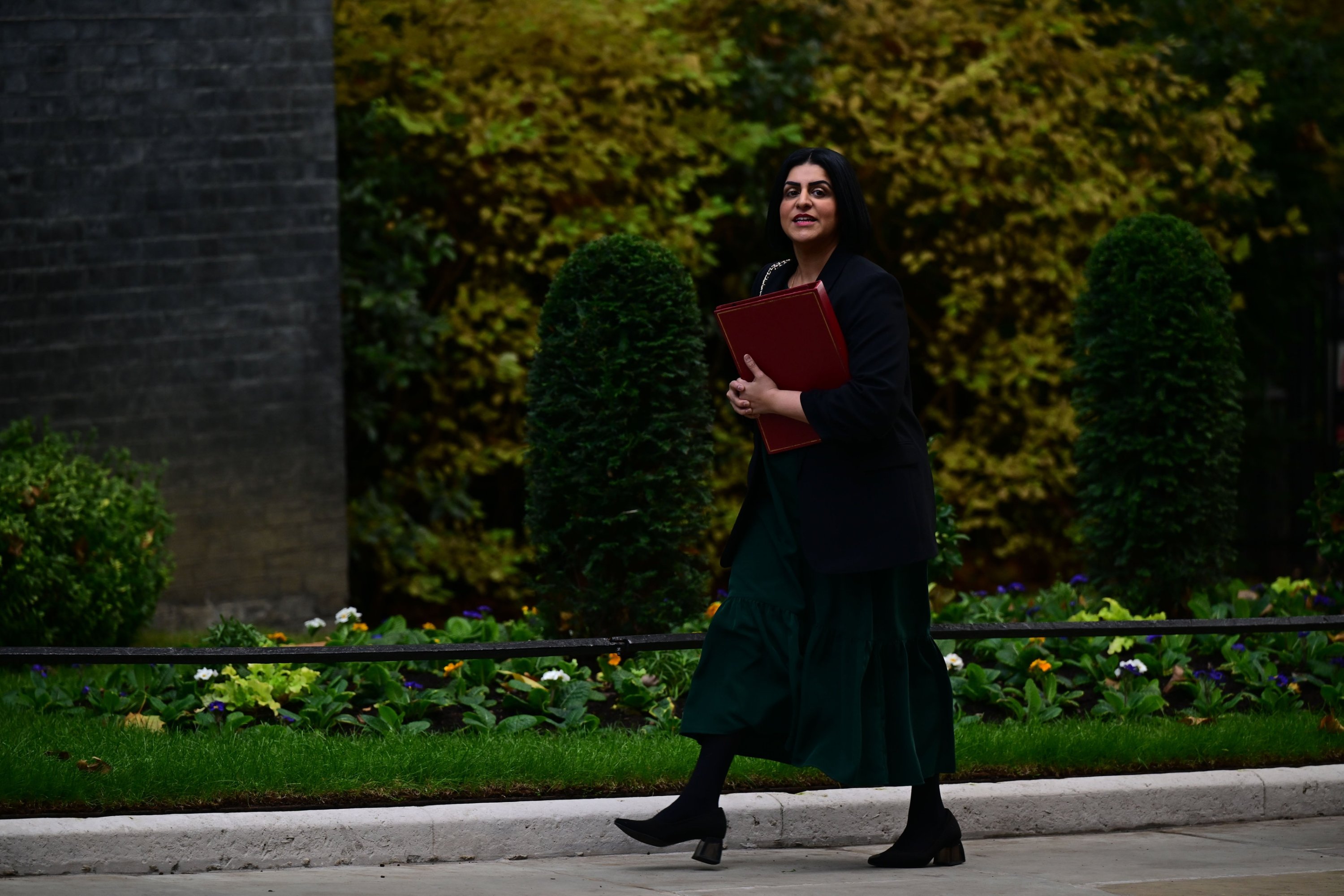
A couple of weeks ago, a sensational Sky News report titled “The X Effect” exposed how Elon Musk was boosting “right-wing content, extreme content and politicians Musk favors” on X, formerly known as Twitter. Had anecdotal evidence borne any relevance, many could attest to the conclusions of the analysis from personal experience. I, for one, have been bombarded on X with the content of the kind of politicians Musk seems to favor. What I did not expect, but then managed to make some sense of, was another recent “tweak in the algorithm,” this time feeding me countless posts praising British Home Secretary Shabana Mahmood, and in some cases even urging her to run for prime minister. Most of these posts were by people whom one would associate with a political species thought extinct, namely, the enthusiastic Labour supporter. There were also others, however, who seemed to be closer in their thinking to someone like Rupert Lowe, who, as an independent MP, positions himself to the right of Reform U.K.
Indeed, Mahmood’s latest announcements and her following discourse, regarding the prospective changes in the asylum system in Britain, earned Reform U.K. leader Nigel Farage’s praise. Farage was even asked in an interview whether he would welcome Mahmood as a member of Reform U.K. In the British Parliament, a prominent MP from that party, Danny Kruger, asked the home secretary when she would “fill in an application” to become a member. Though this would be admittedly too quick, given that Labour MP Mike Tapp, currently serving as parliamentary under-secretary of state for migration and citizenship, has been even more “right-wing” and “extreme” in his rhetoric, thus deserving of a prioritized entry into the club – in fact, he would easily fit in the category of “politicians Musk favors.”
Farage, Kruger and many other “right-wing” figures in Britain celebrated Mahmood, something she apparently takes no pride in. One could see why she is not overly excited about the endorsements, due mainly to the suspected insincerity in most cases. Kruger’s endorsement, for example, was naturally sinister, as it was designed essentially to draw attention to Mahmood’s hypocrisy, while at the same time affirming her policy proposal. It was certainly a “double-win” for Reform U.K. against a Labour government. And although the kind of “left-wing” that the likes of the Green Party represent today also targeted Mahmood, chiefly by juxtaposing her recent rhetoric and her earlier statements on the issues when she did not have a leading position in the government, they did not regard this development particularly as a “win” for anyone.
Perhaps Mahmood has had a genuine change of heart, and she is finally finding her political home. Is it not possible that someone “on the left” of the political spectrum takes a critical stance against Britain’s immigration policies? Can’t there be reasonable arguments to the effect that the current arrangement is not optimal? Of course, there can, but the real flaw of Mahmood and the people who appear to be entertaining the notion of her ousting British Prime Minister Keir Starmer has little to do with a meaningful difference in opinion with regard to policy. If it were, it would be very hard to imagine how Mahmood would reconcile her current position with her earlier advocacy for taking in thousands of refugees, following the example of Bangladesh. Mahmood would have to provide at least some explanation to the public as to the nature of her change of heart.
The apparent inevitability of such changes of heart can make people give up entirely. Is it possible to be optimistic, or is this predicament really inevitable? Starmer, before he was elected, had crafted a similar image, particularly in his leadership manifesto; yet any minimally attentive observer would know even back then what he really represented. His contradictory and seemingly aimless premiership was, in fact, predictable. With Farage, however, there is the “veil of authenticity.” Despite being in almost complete alignment with Starmer at heart, he seems to come across to many as a chap who, unlike Starmer, “speaks his mind” and “has gone into pubs, standing at the bar with a pint in one hand and a cigarette in the other hand, knowing he’s not supposed to smoke in pubs,” as one resident of Wheatley Hill described him. Perhaps that resident could also find a familiar image in the person of Mahmood.