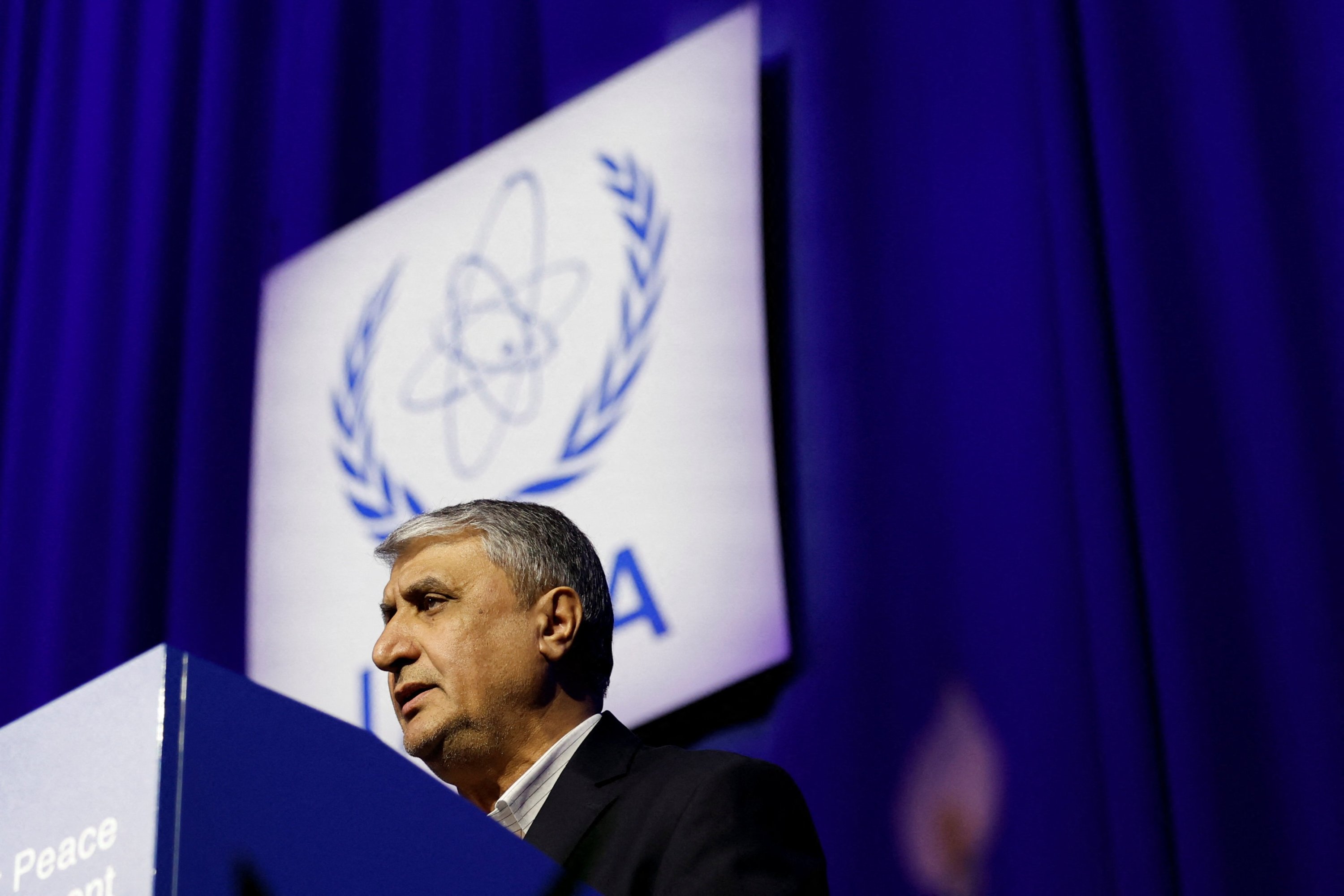
Iran’s uranium enrichment program remains one of the most dangerous issues in global politics, with military and diplomatic developments since 2024 signaling rising tensions in the Middle East. In response, Western countries have activated the “snapback” sanctions clause, marking a new phase in the security and energy crisis. The fallout spanning international relations, energy markets and global diplomacy is already a subject of intense debate.
Particularly escalating tensions following the 12-day war between Iran and Israel in June 2025, which later involved the United States, Iran's refusal to halt its uranium enrichment activities, the U.S. issuing ultimatums, the EU's request for additional military buildup in the region, and the protective stance of Russia and China reveal that this issue is increasingly turning into a complex global security and diplomatic crisis. Preventing nuclear proliferation has reached a critical point as Iran’s defiance meets U.S. pressure. Western states see the snapback mechanism not just as a sanction but as a tool to preserve global security and intensify diplomacy. The risks of Iran’s program to regional and global stability have put the world on high alert.
As is well known, since World War II, nuclear uranium enrichment activities have been one of the most important areas of capacity development competition on a global scale. This superpower tool has become an energy source that many countries have wanted to possess as a deterrent and protective element from then until now. According to current data from open sources, there are approximately 1,240 tons of highly enriched uranium (HEU) stockpiled worldwide, of which approximately 1,100 tons are directly linked to weapons programs. Furthermore, in terms of the distribution of global enrichment capacity among countries, Russia leads with approximately 40%, followed by China with 17%, France with 12%, the U.S. with 11%, and the Netherlands, the U.K. and Germany with lower percentages. China, which is advancing toward becoming a global power, has approximately 11-17 tons of HEU, followed by Iran, which has announced that it has approximately 408 kilograms of 60% HEU as of May 2025. Essentially, this amount rose to 440.9 kg by June 2025, which is very close to the level required for weapons production. As of September 2025, Iran agreed with the International Atomic Energy Agency (IAEA) to restore access to all nuclear facilities, though its uranium stockpile remains unverified.
These dynamics highlight the regional sensitivity of Iran’s expanding nuclear activities amid uncertainty over Israel’s capabilities. At this very point, the international community has put diplomatic mechanisms in place to prevent the proliferation of nuclear weapons and find solutions to potential threats. The most important of these mechanisms was the creation of the Joint Comprehensive Plan of Action (JCPOA), which until now has been known as the “Iran nuclear agreement” and covers the scope of the uranium enrichment program.
JCPOA, commonly known as the Iran nuclear deal, is a special agreement signed on July 14, 2015, between Iran and the P5+1 countries, defined as the five permanent members of the U.N. Security Council, the U.S., the United Kingdom, France, Russia, China and Germany. The main goal of this agreement was to prevent Iran from developing nuclear weapons and, in return, to ease the economic sanctions imposed on Iran. Under the agreement, Iran significantly limited its uranium enrichment activities, reduced the number of centrifuges, and allowed its nuclear facilities to be more closely monitored by international inspectors for a certain period.
The sanctions in question covered key areas such as finance, banking, energy, oil, petrochemicals and transportation. However, the agreement became largely ineffective and powerless when the U.S. unilaterally withdrew from it in 2018 and reimposed sanctions on Iran. Indeed, the U.S. decision dealt a serious blow to the Iranian economy, prompting the Tehran administration to retaliate by gradually increasing its uranium enrichment activities. Following this decision, Iran increased its uranium enrichment level from the 3.67% limit specified in the agreement to 60%, and most recently announced that it had raised this level to 70%, dangerously approaching the level required for nuclear weapons.
In response to this dangerous trend, European parties such as the U.K., France, and Germany have recently brought the “snapback mechanism,” which forms the basis of the agreement, back to the agenda. This new move is seen as a means of pressure aimed at forcing Tehran to comply with the agreement by reimposing sanctions.
The fact that the ongoing snapback mechanism will expire on Oct. 18, 2025, serves as a reminder that time is running out for Western countries. This is because if a permanent solution cannot be found by that date, the mechanism's extension period for Iran will expire and not be renewed, meaning that its legal use will cease. In this context, European countries are using this last diplomatic card to bring Iran back to the JCPOA negotiating table and are accelerating the legal disputes between the parties. This unresolved issue shows the world the fragile nature of the complex and delicate balance between diplomacy and sanctions in international relations.
However, diplomatic efforts to revive the Iran-EU deal have failed, with talks in Vienna, Oman and Geneva stalling due to mistrust and technical disputes. While Russia and China oppose the snapback mechanism, regional powers like Israel and Saudi Arabia support tougher measures against Iran. The reactivation of snapback sanctions could further restrict Iran’s access to global markets, heightening regional tensions and triggering energy price volatility.
The 15% rise in Brent oil highlights the risk that sanctions could pull 1.5 million barrels of Iranian oil a day from markets, burdening a global economy already strained by inflation. Inside Iran, the rial’s collapse and inflation above 50% threaten social unrest and political crisis. Tehran warns that renewed sanctions may push it to accelerate its nuclear program and use proxy forces against the U.S. and allies, while memories of Israeli sabotage on Iranian facilities remain fresh.
Consequently, with the termination of the agreement and the return of sanctions to the agenda in this conjuncture, it points to the possibility of a new wave of crisis in the Middle East. Indeed, the activation of the snapback mechanism could mark a turning point for the nuclear non-proliferation regime, while also initiating a new era of power struggles in the region. Finally, the diplomatic developments and U.N. Security Council votes planned for the coming weeks will be critical in determining the course of this crisis, and the international community's capacity to prevent a new wave of conflict in the Middle East will be tested once again.