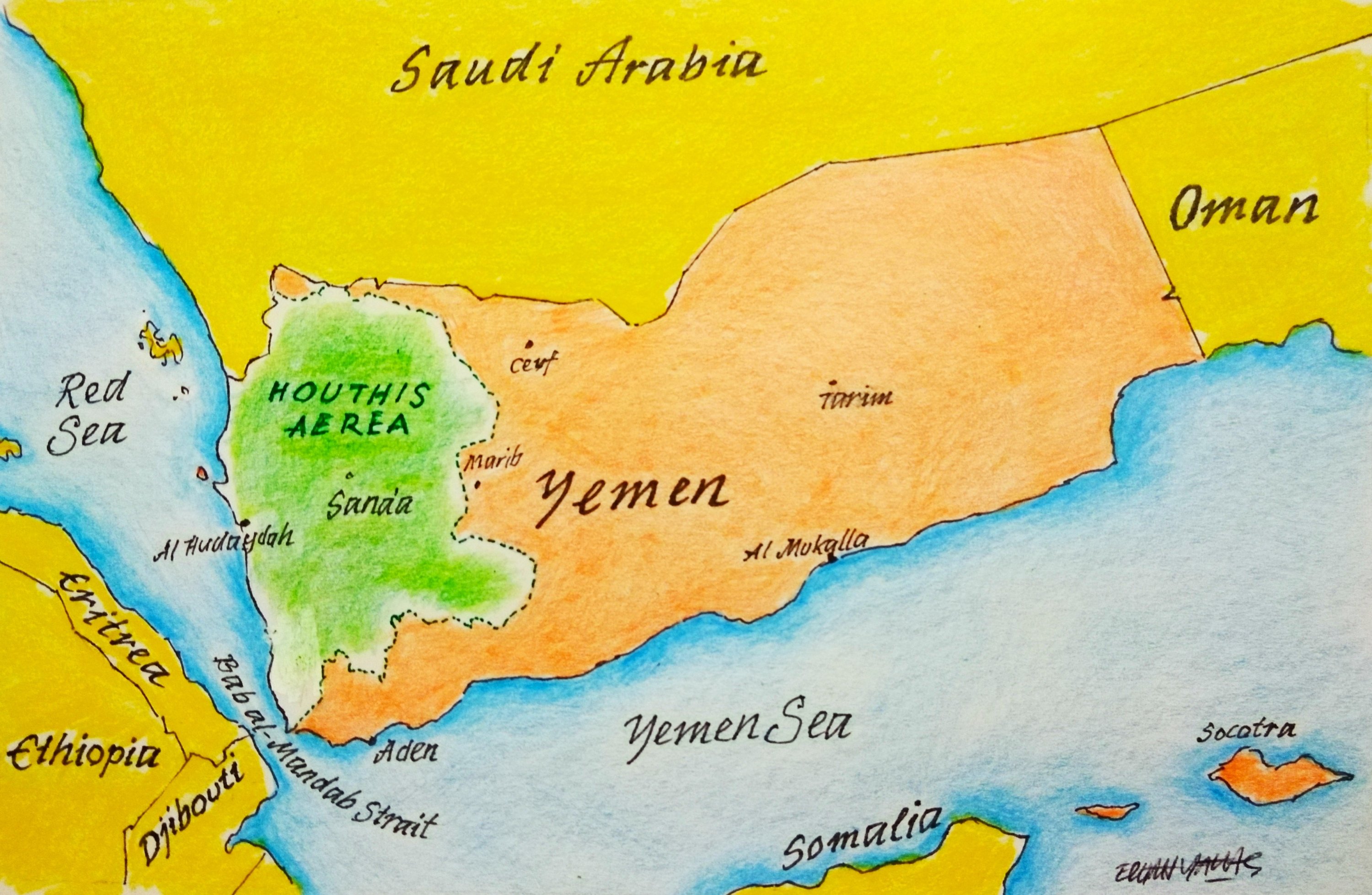
The black smoke rising from the fuel depots at King Khalid International Airport in Riyadh carries a clear, undeniable message. Saudi Arabia reported that the Houthis fired a ballistic missile at the capital, marking a major escalation in a long and complex war. The physical damage to the facility is entirely secondary to the broader strategic meaning.
However, interpreting this solely as a vulnerability for the kingdom misses the wider geopolitical reality. Saudi Arabia possesses a highly sophisticated defense apparatus and deep diplomatic reserves. The missile attack, instead of isolating Riyadh, serves as a catalyst for a broader, collective regional response. The kingdom is increasingly positioning the Houthi threat as a global security issue, demanding a unified front to protect vital economic and religious centers.
Despite the alarming imagery of a missile strike near the capital, the actual demands of the Houthis are quite practical. They want public-sector salaries paid, a guaranteed share of Yemen's oil and gas revenues, and the complete end of restrictions on their ports. They are using direct military pressure to force a favorable political agreement. By leveraging their recent successes in the Red Sea, the Houthis aim to secure a comprehensive deal while the Saudi-backed coalition is still trying to organize its next steps. The current instability in the broader Middle East gives them the exact leverage they need. They are actively using this temporary advantage to make permanent political and economic gains before the strategic situation shifts against them.
This approach is highly visible in their target selection, which reveals a strategic shift. For years, Saudi Arabia relied heavily on the East-West pipeline to move oil directly to the Red Sea in case the Strait of Hormuz was ever blocked by hostile actors. Now, the Houthis are targeting this exact alternative route. They have attacked critical Aramco facilities in Jizan and Yanbu. The kingdom successfully avoided one vulnerable point in the Gulf, yet it is now exposed at another crucial juncture.
Defending against this evolving threat involves economic realities. Saudi Arabia faces the inherent challenges of modern asymmetric warfare, a struggle shared by all major global powers today. The kingdom is heavily utilizing interceptor missiles to protect its skies and is currently asking partner nations for advanced air-defense support. Using highly expensive, sophisticated missiles to shoot down cheap, mass-produced drones is economically taxing over time. Furthermore, the reported loss of a Saudi F-15 over Marib proves that maintaining absolute air dominance is very costly. Nevertheless, this highlights a transition phase. Saudi Arabia is adapting by building an integrated, multilateral defense network with allies like Egypt, France, the U.K. and the U.S., transforming a unilateral defense burden into a shared international responsibility.
To understand the trajectory of the conflict, one must analyze the competing narratives driving the actors. At home, the Houthis base their political legitimacy on resisting a twelve-year Saudi siege. Because they consistently present themselves as victims of a blockade, they cannot appear weak in negotiations. Any perceived concession could fracture their internal support base. This dynamic explains why they demand more as they gain more military success.
The recent claims about an attempted attack on Mecca highlight this fierce battle over public opinion. Riyadh states it intercepted a drone aimed at the holy city, while the Houthis vehemently deny it. For Saudi Arabia, framing the conflict around the defense of Mecca is a powerful diplomatic tool. It helps gain the unwavering support of the broader Islamic world. Pakistan, for example, has already offered firm diplomatic support, pledged to defend Saudi sovereignty, and sent clear warnings to Tehran. By highlighting threats to the holiest sites in Islam, Riyadh successfully mobilizes a collective religious and political alliance that deeply isolates the Houthis on the global stage.
Behind these regional tensions, Iran's role remains critically important, though the relationship is complex. One senior Iranian official says Tehran does not control the Houthis, while another source claims Tehran explicitly ordered the recent attacks. Both statements reflect a broader truth about proxy warfare. Iran does not need direct, daily operational control because the strategic goals of both actors perfectly match. Tehran wants to use the ongoing conflict in Yemen as powerful leverage in its wider negotiations with Washington. As a result, Riyadh pays the price for a war that simultaneously serves Iranian geopolitical interests.
Looking ahead, three main dynamics define the situation and dictate the future of the conflict.
First, Saudi Arabia is actively reshaping its military strategy. A Saudi ground invasion of Sanaa is highly unlikely. There is no desire in Riyadh for an exhausting ground war, especially since the allied Yemeni government forces have lost important territory on the coast. Riyadh must carefully choose between the risks of military inaction and the high strategic costs of a full-scale intervention. Consequently, a limited, highly targeted air campaign remains the most probable military outcome, supported by intelligence and logistics from international partners.
Second, the response to the Houthi escalation will almost certainly be collective. Saudi Arabia understands that securing global energy markets and international shipping lanes is a global responsibility. By drawing in international stakeholders, Riyadh ensures that the Houthis face a unified coalition. This collective approach mitigates the direct pressure on Saudi forces and frames the Houthis as a threat to international stability, isolating them diplomatically.
Third, the war in Yemen is now inextricably tied to broader U.S.-Iran negotiations. Mediators from nations like Qatar and Pakistan are working tirelessly between Washington and Tehran. Any real, lasting peace in the Red Sea and Yemen will ultimately depend on a larger agreement established there. Local deals about public salaries and port operations will simply have to wait for this larger framework to take shape. When that time comes, the political cost for finalizing an agreement will be much higher, but it will likely be guaranteed by a coalition of global powers.
The 2022 truce was initially intended to be an exit strategy for Saudi Arabia. The underlying assumption was that the Houthis would accept financial concessions, consolidate their local power, and step back from regional aggression. However, the Houthis intend to be a permanent, unavoidable power in the region that Riyadh must formally accept. A ballistic missile soaring over the Saudi capital is their aggressive way of proving this point. In response, Saudi Arabia is proving that it will not face this challenge alone, shifting the battlefield from a bilateral border conflict into a matter of collective international security.