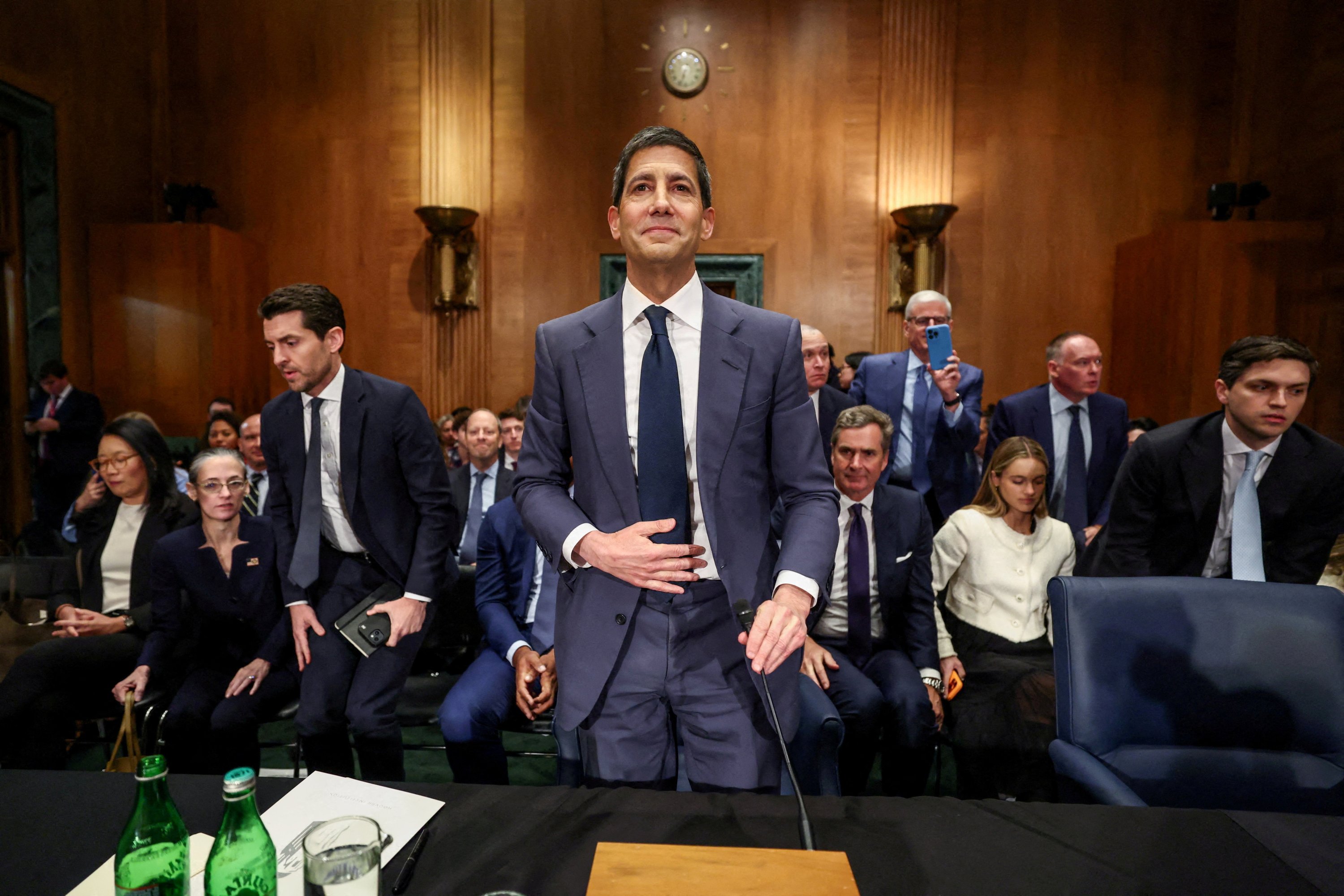
Kevin Warsh's appointment as chair of the Federal Reserve (Fed) is not merely a change in leadership. The real debate behind this appointment is whether the Fed's role, which has steadily expanded over the past 15 years since the Global Financial Crisis, will be redefined. Today, the modern central banking debate extends far beyond the level of interest rates, and a much more sophisticated question has emerged: while fulfilling its dual mandate, will the Fed continue to act as a supporter of public finances, or will it return to being an independent central bank primarily focused on price stability? This question is critical not only for monetary policy but for the U.S. dollar's status as the world's reserve currency and for the economic objectives of the Trump administration, too.
The Fed's dual mandate makes this balancing act even more important in this term. The central bank is responsible not only for controlling inflation but also for supporting maximum employment. Warsh assumes office in a highly complex economic environment. With the U.S.-Israel-Iran war ongoing, inflationary pressures remain elevated. At the same time, signs of slowing economic growth and tight financial conditions are prompting discussions about alternative policy approaches. In addition, potential pressure from the Trump administration regarding interest-rate policy remains a closely watched issue in financial markets.
As a result, Warsh's first challenge will be both deciding on interest rates and maintaining the Fed's independence while striking a delicate balance between price stability and economic growth. In other words, Warsh is expected to monitor unemployment, wage growth, consumer spending, and economic activity just as closely as inflation in the coming years.
The governor’s past statements and recent assessments suggest that a new policy framework could emerge in which interest-rate policy and balance-sheet policy are treated separately. Under this scenario, the Fed could gradually lower policy rates in response to signs of economic slowing while continuing its quantitative tightening (QT) program. With the ongoing war in the Middle East continuing to affect energy prices and inflation, the speed at which such a transition could occur remains an important uncertainty and rate increases are still on the table. The primary objective of this approach would be to support economic activity while reducing the Fed's footprint in financial markets.
One of the distinguishing features of Warsh's monetary policy approach is how he evaluates inflation. The Fed's primary reference measure has been the Core Personal Consumption Expenditures (Core PCE) Price Index, which excludes volatile food and energy prices. In April, Core PCE inflation rose to 3.3% year-over-year, its highest level since 2023, leading many Fed officials to argue that inflation risks are once again moving to the upside.
Warsh, however, places greater emphasis on "trimmed mean" inflation measures when assessing the underlying inflation trend. Calculated by the Dallas Fed, this methodology excludes the most extreme price increases and declines to capture the broader direction of price movements across the economy. In April, the measure fell to 2.3% year-over-year, suggesting significant progress on inflation. Yet there is an important debate on this measurement. In fact, recent tariff policies have caused price increases across a broad range of goods, but trimmed-mean inflation does not capture them. Hence, this divergence of views could become a defining feature of monetary policy debates during his tenure.
The U.S. federal debt has now reached approximately $40 trillion. In recent years, the Fed's expanded balance sheet has enabled the Treasury to borrow at relatively low costs. Yet this has fueled an important debate: Is the central bank safeguarding price stability, or is it facilitating government financing? So, what makes the Warsh era particularly significant is not interest-rate policy itself, but rather his approach to addressing the risk of "fiscal dominance."
The new governor’s position appears relatively clear. The Fed's role is not to finance government deficits but to maintain price stability. Although the dollar remains the dominant global reserve currency, alternative arrangements have gained increasing attention in recent years. Efforts to expand trade in local currencies, rising central-bank demand for gold, and growing interest in digital assets all reflect this trend. Yet the greatest threat facing the dollar is not another currency; it is the erosion of confidence.
If investors come to believe that the Fed is effectively compelled to finance persistent government deficits, the institutional trust underpinning the dollar's reserve-currency status could weaken. Consequently, the Warsh Fed may be willing to tolerate tighter financial conditions in the short run if doing so reinforces central-bank independence over the longer term. Paradoxically, the future strength of the dollar may depend not on more money creation, but on greater discipline.
The defining debate of the Warsh era is unlikely to center on interest rates and QT alone, as stated. Another issue attracting considerable attention is the potential productivity gains generated by artificial intelligence (AI). If the U.S. economy experiences a significant AI-driven productivity boom in the coming years, the traditional trade-off between growth and inflation could change. Economic growth could accelerate while inflationary pressures remain relatively contained. Under such a scenario, the Fed could potentially lower interest rates while continuing to shrink its balance sheet. This would open the door to a monetary policy regime very different from the post-crisis belief that sustained growth requires ever-expanding liquidity.
Ultimately, the key question concerns the Fed's priorities. Will it primarily respond to market expectations, the Treasury's borrowing needs, or the long-term purchasing power of the dollar? A stronger dollar tightens global financial conditions, increasing borrowing costs, capital outflows, and currency depreciation pressures, especially for emerging economies. For this reason, the policy direction adopted by the Warsh Fed will be closely monitored in Türkiye, where external financing conditions and exchange-rate dynamics remain important determinants of inflation and overall economic stability.
After all, the secret behind a reserve currency is not merely economic size but confidence in the institutions that manage it. The success of the Warsh era, which begins under the shadow of war, will ultimately depend on whether the Federal Reserve can preserve its institutional credibility by making decisions based on economic rather than political rationality, maintain a balanced approach toward global economic conditions, and successfully fulfill its dual mandate.