On Dec. 8, as opposition forces breached Damascus, Syrian regime leader Bashar Assad fled to Moscow, where he was granted political asylum by Russia. By the end of the day, Damascus fell to opposition forces, signaling the complete collapse of the Assad family after over 60 years.
This marked a significant geopolitical setback for Russia. Losing Assad as an ally not only compromised Russia’s foothold in the Middle East but also called into question its aspirations to maintain its image as a reemerging global power.
Russian President Vladimir Putin, who sees the fall of the Soviet Union as "the greatest geopolitical catastrophe of the 20th century," assumed power in 1999. This perspective has shaped his foreign policy agenda, which centers on reversing Russia's decline as a global power.
Putin embarked on an ambitious plan to restore Russia’s influence, both regionally and globally. He sought to repair Russia's weakened position in the international system after the Soviet collapse. Under his leadership, Russia engaged in various military conflicts such as Georgia, Ukraine and Libya. Each of these actions reflected a broader strategy to reclaim territories and spheres of influence that Russia views as integral to its historical identity and security framework. The 2015 military intervention of Russia in Syria was another key component of this strategy. Moscow sought to save the Assad regime, which was a pivotal ally, while simultaneously reinforcing its position as a decisive actor in the Middle East.
The Ukrainian and Syrian fronts are not comparable for Russia. Russia shares almost 2,000 kilometers (over 1,200 miles) of land border with Ukraine. Ukraine is an existential struggle for the Kremlin as Putin perceives Russians and Ukrainians to be “one people – a unified whole.” Therefore the geopolitical calculus for Russia shifted dramatically following its full-scale invasion of Ukraine in 2022.
The war is estimated to have caused over 700,000 casualties and a cost of $200 billion for Russia. The war’s high cost, in both human and material terms, has left Russia with limited capacity to sustain its commitments in peripheral theaters like Syria.
So why did Russia give Syria up so easily? As the Ukraine war consumes Russia’s strategic focus, some argue that Moscow’s reduced engagement in Syria may reflect a calculated trade-off. Some suggest that Russia may have secured implicit guarantees or concessions regarding the Ukraine conflict in exchange for ceding influence in Syria. This realignment underscores the centrality of Ukraine to Russia’s broader geopolitical strategy, as the Kremlin views the conflict as critical to preserving its domestic legitimacy and international standing.
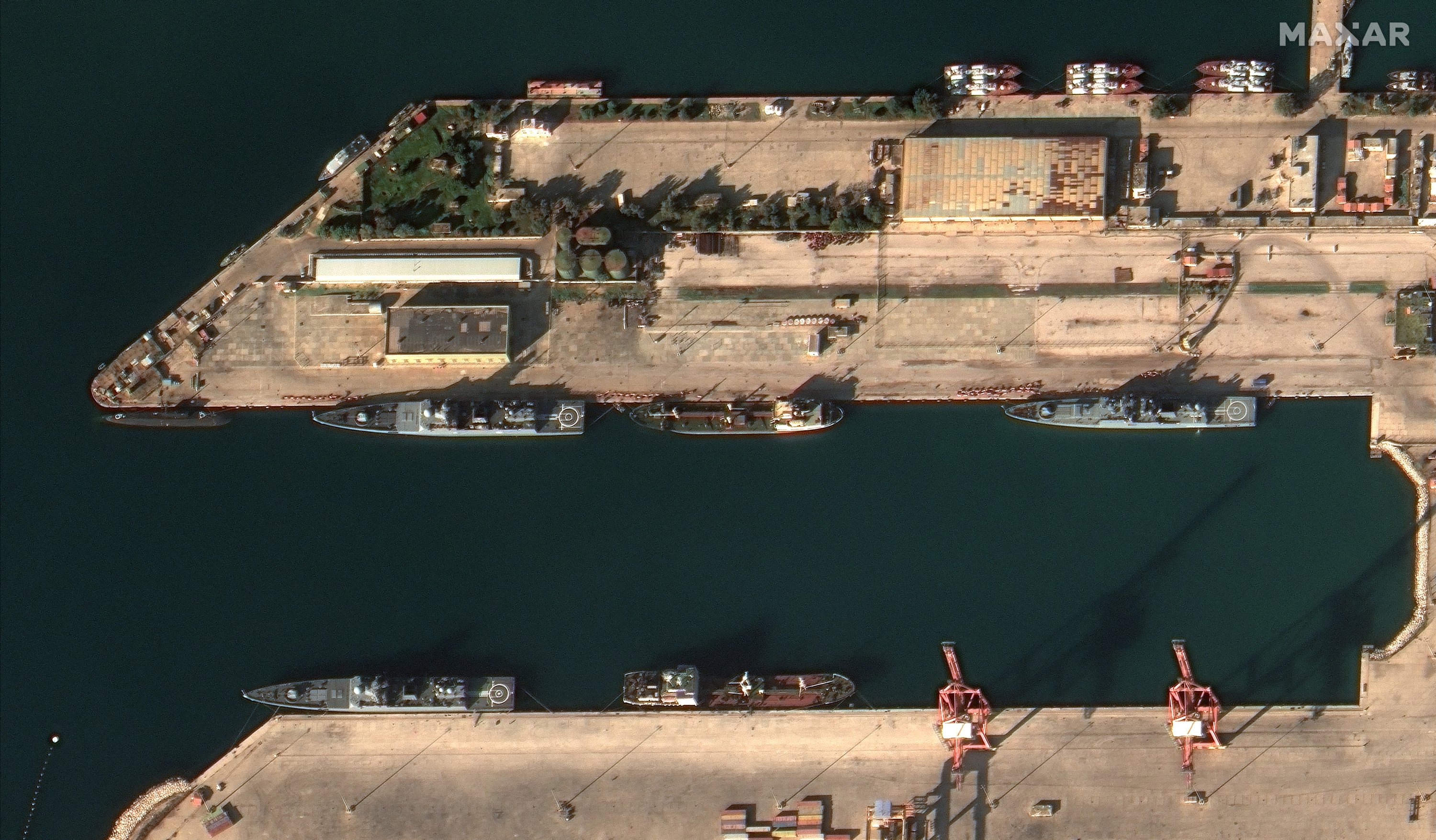
Syria has long held strategic significance for Russia, both as a geopolitical ally and as the site of critical military installations. The Khmeimim Air Base and Tartus Naval Base, the only overseas naval base, have been instrumental in enabling Russia to project power in the Mediterranean and maintain a foothold in the Middle East. These bases, established with Assad’s support, were central to Russia’s military strategy in the region. However, the collapse of the Assad regime has complicated Russia’s position in Syria.
Videos taken on the ground show that Russia is withdrawing its military forces from the front lines in Syria; however, it continues to maintain its presence at its two primary bases. Recent satellite images reveal at least two Antonov AN-124 aircraft, among the largest cargo planes globally, stationed at the Hmeimim base with their nose cones open, seemingly in the process of being loaded. According to the Kremlin, new leadership in Syria has guaranteed the security of Russian military bases and diplomatic missions on Syrian soil; however, their long-term viability is uncertain.
The opposition groups now in control of Syria include factions that were heavily targeted by Russian airstrikes during the conflict in Aleppo and Idlib. This fact makes it increasingly difficult for Russia to maintain its presence in the future. Furthermore, the loss of Russian bases in Syria would disrupt logistics to and from Africa in the future. Tartus, which has been Russia's only base in the Eastern Mediterranean so far and active since the Cold War, would likely be a significant loss, potentially undermining Russia's ability to maintain a consistent military presence in the area. Without securing an agreement with Syria's new leadership, Russia's capability to sustain its maritime presence in the Mediterranean would be significantly limited.
However, if Moscow were to lose Tartus, it might seek to negotiate an agreement for a new naval base with an unrecognized government in eastern Libya instead. Without Assad as a direct ally, Moscow has transitioned from being a dominant actor to only a participant seeking concessions. Having said that, the newly established Syrian government may seek to preserve its ties with Russia to balance global power dynamics and, in particular, to counter Israel's aggressive actions. Moreover, Russia might also leverage its strong relations with Türkiye, currently one of the most significant global actors, to address the situation in Syria.
In conclusion, Russia’s retreat from Syria underscores the shifting dynamics of its foreign policy. It indicates a diminishing effectiveness of Russia's approach to asserting itself as a global power capable of operating across multiple fronts. While the Kremlin continues to assert its presence in key theaters, the ongoing war in Ukraine has reshaped its strategic priorities. The implications of this shift are profound, not only for Russia’s role in the Middle East but also for its broader aspirations as a global power. However, a defeat in Ukraine could have more profound repercussions, potentially mirroring the Soviet Union’s withdrawal from Afghanistan in the 1980s, which marked the beginning of its end. Therefore, Russia may exhibit increased aggression toward Ukraine in the coming days, particularly before the inauguration of U.S. President-elect Donald Trump.