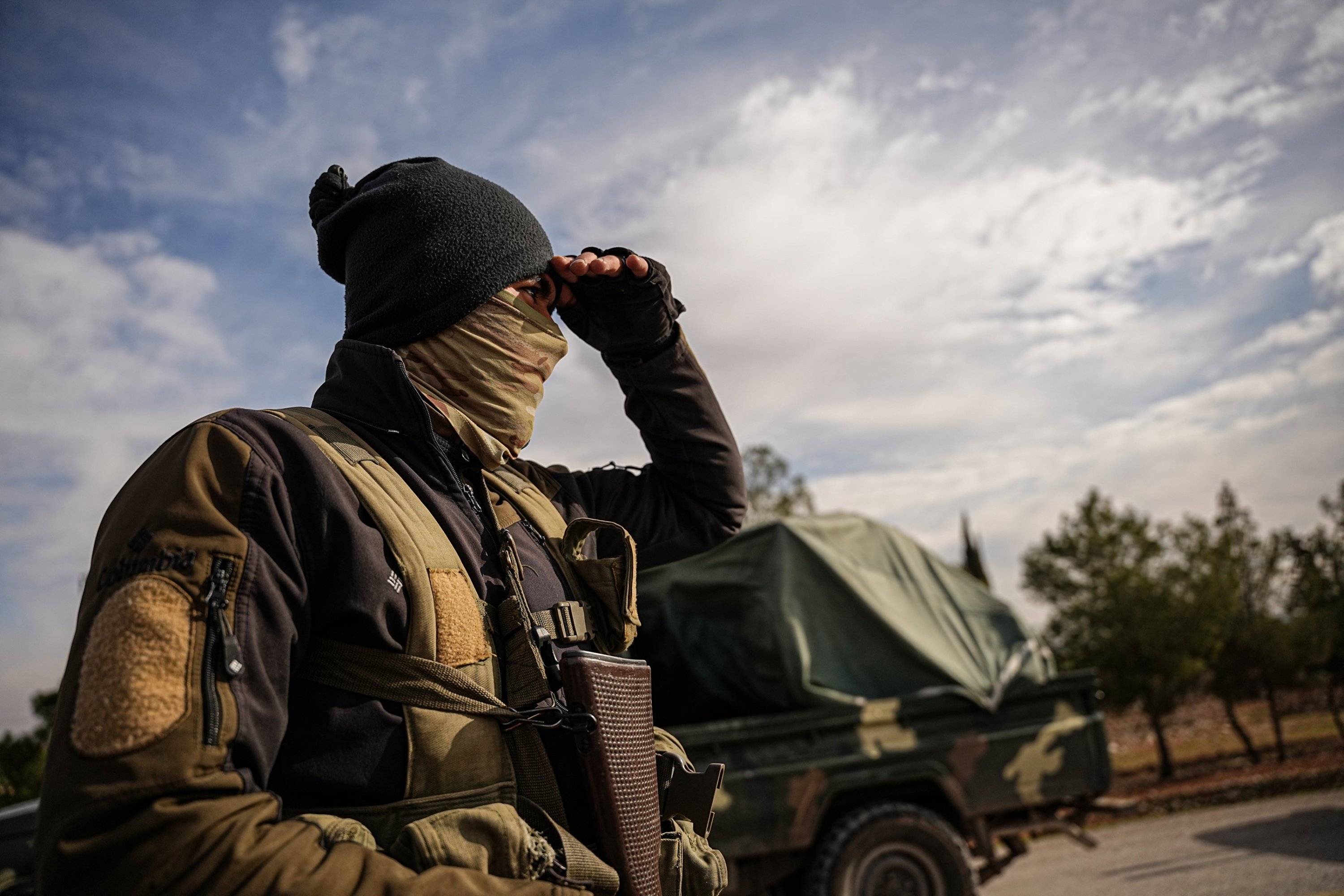
Syria is witnessing one of the fastest and most decisive changes of the last decade. The gains made by the transitional government led by Ahmed al-Shaara against the YPG terrorist organization, rebranded as "SDF," are not merely a change of territory. They represent a radical upheaval of the geopolitical equation that has characterized the Middle East for the past decade.
The new Syrian government, through operations launched at the beginning of January, has not only gained territory but has also established political dominance, bringing an end to the "de facto" autonomous structure in the northeast of the country. By uniting the country, Syria has successfully completed the second phase of the Dec. 8 revolution. Recent data from the field shows that Syria has not only moved away from the threat of civil war but has also solidified Türkiye's position as a regional actor.
The tension that began in the Sheikh Maqsoud and Ashrafiyeh neighborhoods of Aleppo in the first week of January 2026 culminated in the Syrian army gaining complete control of the area west of the Euphrates. The fall of strategic points like Deir Hafir and Meskene, followed by the capture of the Tabqa Dam and airport, signaled the end not just of a defensive line for the YPG, but of an era.
However, the most critical development occurred with the defection of Arab tribes. In areas with a high Arab population, such as Deir el-Zour and Raqqa, the tribes' coordination with Damascus ended the YPG's dominance in these regions within days. The Syrian army's regaining control of oil fields and strategic water resources also established Damascus' economic dominance.
Having lost 75% of the territory they controlled in an almost frantic retreat, the YPG's influence has effectively disintegrated, leaving it isolated in the Syrian theater. The U.S. withdrawal from Syria, leaving the YPG to its fate, has been a strategic turning point that has altered all the balances in the region. This move by Washington signifies not only a military withdrawal but also the failure of the "proxy war" strategy in the region and the end of dreams of autonomy in northeastern Syria.
The 14-point agreement announced on Jan.18, while presented to the international public as "integration," points to a process of liquidation between the lines: The complete transfer of all cities, including Deir el-Zour and Raqqa, to the central government signals full control for Damascus. The inclusion of civilian institutions in Hassakeh into the Syrian state structure means effective institutional integrity. The YPG fighters are to join the army on an "individual" basis, not as a military unit, and their being subjected to security checks means the end of the "SDF project" in Syria. These points signify the end of the autonomous command structure and political identity that the YPG has tried to protect for years. YPG leader Ferhat Abdi Şahin's explanation that they were forced to accept these conditions "to prevent civil war" is a diplomatic admission of military desperation.
The YPG has failed to understand the geostrategic transformation in the region. With the U.S. decision to withdraw from the region, the "autonomous structure" that the YPG had been trying to build for years has collapsed like a house of cards. However, the reason for this collapse is not only military, but also a structural governance and geostrategic collapse crisis.
The oppressive model established by the YPG in the areas it controls has created serious discontent among the local population, especially the Arab tribes. The non-transparent use of oil revenues and U.S. financial aid, prioritizing the organization's interests, has accelerated the cooperation of the tribes in the region with Damascus. This structure, unable to establish healthy governance, has lost popular support and is condemned to strategic isolation. This revealed that those portrayed as "freedom fighters" in Western media were in fact oppressive extremist militants alien to Syria’s social realities.
The Syrian army's gains east of the Euphrates and in the oil regions are of strategic importance. The Damascus administration has regained control of vital revenue sources such as oil, natural gas, taxes and customs, establishing the state's financial sovereignty. This situation has eliminated the possibility of federalism or an independent state within the borders of Syria, bringing the unitary state structure to an unshakable point.
In this new era, where the U.S.' role in the region has changed, and the mission of fighting Daesh is now being undertaken by Damascus, a critical process is also beginning for Türkiye. The military dissolution of the YPG and the control of the borders by the Syrian army are placing the discussions about the terror corridor in the region on a new footing.
Within this context, the recent gains of the Syrian army are not only a military success but also the embodiment of the claim of Syria's territorial integrity on the ground. However, the real challenge begins now: issues such as maintaining the constitutional rights of the Kurdish population, the return of refugees and the security of Daesh prisons will determine whether Damascus can transform this military victory into lasting social peace.
The clear winner of this process is undoubtedly Türkiye. The collapse of a "terror corridor" project in northern Syria has strengthened Türkiye's role as a regional actor. Ankara's rational approach with Damascus and its support for the transition process have transformed Turkish-Syrian relations from a dialogue between two neighbours into a model of normalization and cooperation for all Middle Eastern countries.
These developments are also a turning point for the PKK terrorist organization, of which the YPG is a wing. Having lost its logistical and political space in Syria, the organization now has no rational option but to abandon its regional ambitions and integrate into the peace process with Türkiye.
In conclusion, as Syria rapidly moves away from instability and fragmentation scenarios, the region is transitioning from an era of "proxy wars" to an era of "interstate diplomacy." In this new era, Türkiye's proactive stance will be a cornerstone of the future security architecture of the Middle East. This fundamental change in Syria has confirmed the strategic failure of the YPG, which was left unprotected by the U.S. withdrawal, while ensuring the preservation of Syria's unitary structure and solidifying Türkiye's position as a key player in regional stability.