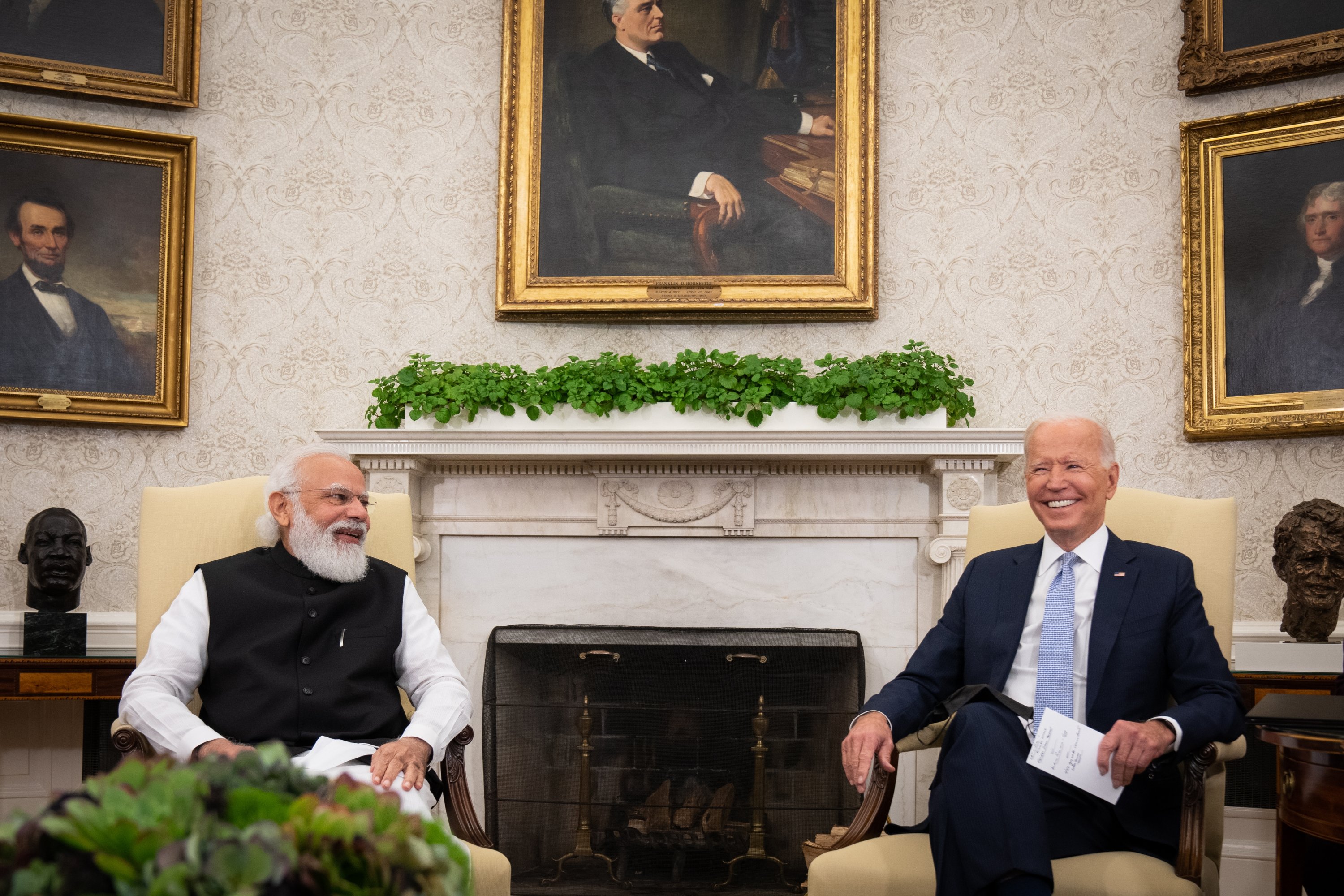
The international system is full of signs pointing to a new era. A regional conflict in the Middle East has begun to leave its first marks on the horizon. The ongoing war in Ukraine has reached a stalemate, yet mutual confrontations persist. Both the U.S. and China are announcing restrictive policies regarding commerce and bilateral relations. In the Pacific, the U.S. is elevating the Quadrilateral Security Dialogue (QUAD) between itself, Australia, India and Japan and AUKUS, the security partnership between itself, the U.K. and Australia, as bulwarks against China's expanding influence. On the other hand, China seeks to strengthen its relations with its neighbors, especially Indonesia and Malaysia. However, no one – intentionally or otherwise – can overlook what India is currently undertaking. As the world's second-largest country by population and the fifth-largest economy, India is preparing to assume a new role in the international system: “In an effort to become the dominant power in different sub-regional hierarchies."
In his recent op-ed in Foreign Affairs, U.S. Secretary of State Antony Blinken highlights a growing concern: the rise of China as a global power. Blinken pointedly claims that China is "weaponizing other countries’ economic and energy dependence" to assert its influence, particularly across the Global South. This assertion is supported by the dramatic increase in Chinese foreign aid, which soared from $631 million in 2003 to over $3 billion by 2023. Nearly half of these funds were directed toward African nations. According to the World Economic Forum, China has spent more than $1 trillion globally, underscoring its assertive stance in the economic sphere.
The U.S., acutely aware of this expansion, is striving to curb China's influence. Since 2018, U.S. trade with China has been in decline, following a peak of $418.2 billion in a negative trade balance. While the deficit remains, it has decreased by 33.2% in recent years, reflecting Washington’s concerted effort to reduce its economic reliance on Beijing.
In response, as one would expect from a declining power, the U.S. is seeking a suitable partner to counter China’s growing clout. To destabilize China’s position, Washington is eyeing an actor within China's geographic proximity. This ally must also have long operated under the radar, poised to emerge on the global stage. Although the U.S. boasts a vast network of alliances, one country stands out as meeting all these criteria: India.
India’s strategic location, coupled with its growing influence, makes it an ideal candidate for partnership in Washington's long-term strategy to contain China’s rise. With China growing increasingly assertive, the eagle's nest is actively seeking a Trojan horse – and India may well be the one.
India has long been celebrated for its rich cultural and religious heritage, often depicted in television series and films as a nation of warmth and hospitality. While its soft power is well known, India has historically been perceived as a large but passive actor on the global stage, lacking the ambition to assert itself. This view, however, is rapidly changing.
The U.S.' revival of QUAD aims to shape a new regional architecture in the Indo-Pacific. Within this alliance, Australia and Japan are tasked with securing a vast area, stretching from the East China Sea to the Tasman Sea, primarily to curb Chinese maritime expansion in the Pacific. Their contributions are largely military, aimed at maintaining a delicate balance in the region.
In this strategic equilibrium, India emerges as a "kingmaker." With its growing economic and military clout, India’s role extends beyond traditional alliances, positioning it as a decisive player in both the Indo-Pacific and Africa – a subtle yet increasingly effective force. According to the Indian Ministry of External Affairs, the Indian diaspora numbers around 32.1 million globally, with nearly 10 million people of Indian origin residing in Africa, and approximately 3.5 million of them having strong ties to East African countries. This widespread diaspora offers India a unique geopolitical advantage in countering Chinese influence, which has long been underpinned by economic power.
India is now crafting a grand strategy in Africa as a "connecting power," with a concerted effort to the U.S. project, seeking to outmaneuver China’s dominance. Recently, India forged a partnership with Somaliland, a breakaway region of Somalia, gaining access to the strategic port of Berbera. Once used by the British during the colonial era, this port provided India with a gateway to the interior of East Africa. Simultaneously, the United States' initiative to connect Angola’s port of Lobito with the Democratic Republic of Congo and Zambia presents new opportunities for India to act as a gatekeeper in Atlantic-Indian trade.
In addition to its African ventures, India is driving a game-changing project in the Middle East. Alongside the UAE and Israel, India has proposed the India-Middle East-Europe Trade Corridor (IMC) as an alternative to the Suez Canal. If realized, these corridors could transform India into a crucial hub for global trade, where routes converge like a spider’s web. This would allow India to strengthen its geopolitical leverage by exerting influence over key trade channels.
This marks a bold shift in India's foreign policy ambitions. No longer content to merely counter China’s influence, India is reimagining global trade routes, positioning itself as a pivotal player in reshaping the parameters of world politics. Despite these grand ambitions, India is strategically keeping a low profile, careful not to draw undue attention from its rivals. By maintaining this measured approach in the long haul, India is positioning itself for a steady rise. Should it continue this course, India is poised to emerge as a great power in the near future.