The recent Shanghai Cooperation Organisation (SCO) summit in China brought the shifting global reality into focus. In a move reflecting the shifting dynamics of the world order, Beijing marked the 80th anniversary of victory over Japan the next day with a massive military parade.
For centuries, Western hegemony rested on a foundation of conquest and colonization, later reinforced by technological and economic might. The Enlightenment and industrialization gave Europe liberty at home while expanding its empire abroad, eventually leading to an American-led order after World War II that claimed to deliver universal justice, human rights and development.
Vast populations are still underdeveloped and dispossessed, bearing the brunt of ecological disasters, social dislocation and inequality produced by a system they did not create. Built on hard power rather than equity, the world order’s instruments of globalization and democracy have failed to deliver justice, instead entrenching an economic model of production and consumption that has fractured societies, degraded the environment and deepened moral decline.
The ongoing genocide and human-made famine in Gaza starkly expose the moral bankruptcy of the current world order and the United Nations, which have failed to protect Palestinian civilians or hold Israel, the chief perpetrator, accountable.
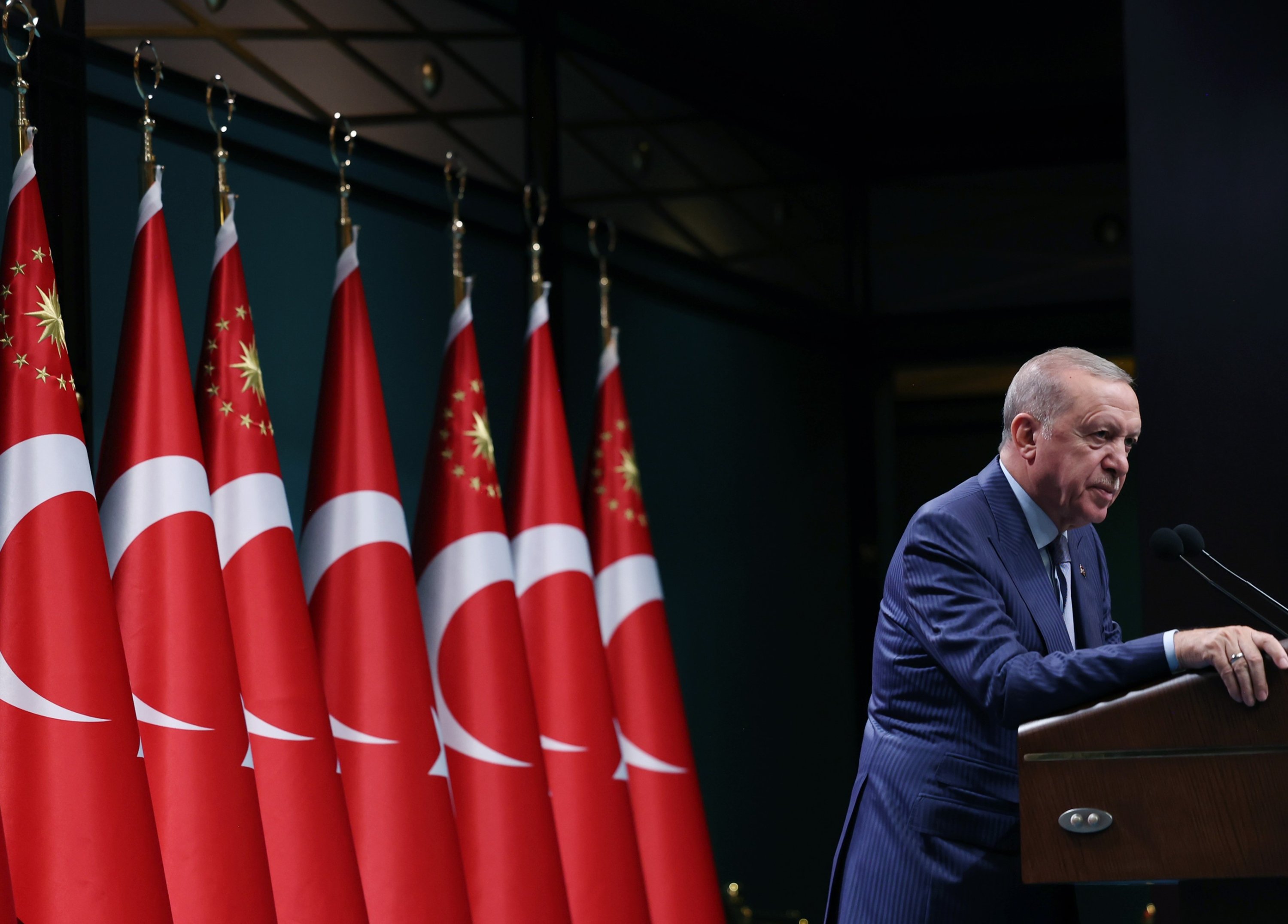
President Recep Tayyip Erdoğan emphasized this: “Our world is currently experiencing more numerous and complex crises than at any other time in history. Unfortunately, the current international system falls short in addressing these crises and in safeguarding the rights of the innocent. The events unfolding in Gaza, including the brutality and genocide committed by Israel, stand as some of the most striking examples of this reality.” At the SCO, he posed a sharper question: “There is no explanation for failing to stop the 23-month-long atrocity in Gaza, where babies, children and the elderly are dying of hunger.”
Western hegemony, through control of politics, economics and technology, has reinforced domination, marginalized Muslim societies and left them disempowered. Its economic model, driven by perpetual production and consumption, has devastated the environment, subverted conservation and reduced humans to extensions of machinery. Devoid of ethical meaning, it celebrates only materialism and power, creating a crisis for justice and survival.
At the SCO, with China emerging as a real challenger, the Atlantic order, both European and American, was increasingly contested. For dispossessed societies, this presents an opportunity to reclaim influence and help shape a more just, multipolar system. However, while challenging Western dominance, China’s rise offers little hope of restoring civilizational ethics; it seeks its place as a hegemon within the same materialist paradigm. What is needed is a true alternative: one that confronts globalization’s failures and the deficit of universal justice, fostering dialogue between civilizations to revive moral, social and environmental frameworks.
Gaza is irrefutably a watershed moment, a point at which the existing order is laid bare as incapable of delivering justice. Such tragedies must never recur, not in Palestine, nor anywhere threatened by expansionist ambitions, whether in the form of "Greater Israel" or other hegemonic projects. Preventing such atrocities requires a power capable of guaranteeing justice, equity and a rightful place at the global table. By fate and history, that role falls on Türkiye; a bridge between Asia and Europe, modernity and tradition, democracy and civilization. Türkiye is uniquely positioned to shape the future while remaining grounded in enduring civilizational values.
As Erdoğan noted on his return from the SCO: “We learn from the past, read the future correctly and advance with this vision.” Türkiye carries the legacy of a thousand years of statecraft while maintaining a modern outlook. Globalization unsettled Muslim societies, dividing them between one camp dazzled by Western promises, apologetic followers, and another rejecting modernity outright. With its civilizational depth and political capacity, Türkiye can reconcile these impulses: embracing beneficial aspects of modernity while safeguarding an ethical legacy that can guide the Muslim world toward dignity, justice and balanced progress.
As the Turkish leader stressed: “Türkiye and China, the world’s most ancient civilizations, have a responsibility to contribute to building this new system.” As both a modern state and heir to a visionary civilization, Türkiye can craft an alternative paradigm; reviving human dignity, restoring justice and anchoring the future in enduring moral traditions. Nonetheless, engagement with the West remains indispensable, for its reach – capable of shaping both progress and catastrophe – is unparalleled and navigating it is essential to safeguarding global peace and stability.
Türkiye is a civilizational state, carrying the weight of history and positioned to assert its rightful place among nations, not only as a provider of justice but as a guarantor of peace. This role is vital. For over a century, the Muslim world has remained disempowered, unable to assert its interests, defend occupied territories, or uphold its values on the international stage. Türkiye’s historic standing and glorified past thus stir the deepest longings for its rise among the dispossessed. However, this much-sought-after rise is not a matter of sheer sentiment; it is a geopolitical imperative. Western hegemony – cloaked in globalization, liberalism, and democracy, and anchored in economic dominance – ultimately rests on hard power. Everything else is idealism.
Precariously, Türkiye seems next in the line of fire and its leadership is acutely aware of the looming dangers. There is no alternative: if Türkiye is to defend its sovereignty, it must rise. In the unforgiving world of power politics, history teaches a hard truth. As Thucydides warned, “the strong do what they can and the weak suffer what they must.”