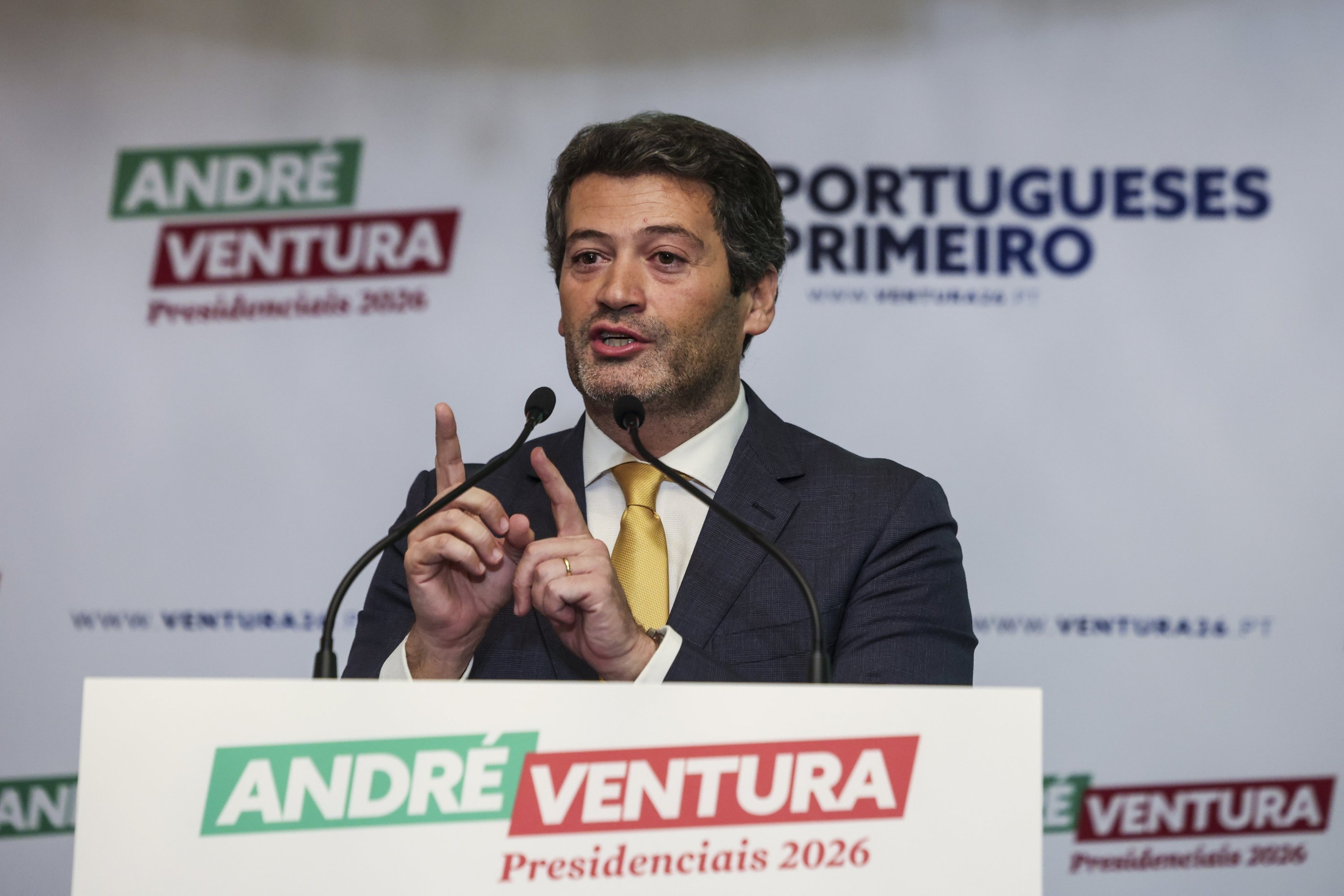
January 2026 has brought Portugal to the threshold of a historic test of its democracy. The far-right Chega party's success in forcing a presidential election to a second round has revived memories of the Salazar dictatorship that the country ended with the Carnation Revolution of 1974. That peaceful revolution, symbolized by carnations placed in soldiers' rifle barrels, created a deep sensitivity toward authoritarian politics. Yet today, democratic institutions and the educated middle class are watching the rise of the far-right with profound concern. This second round, the first in over 40 years, represents more than just the election of a candidate. It signifies an existential choice about the nation's future. In the immediate aftermath of the first round, the center-right and liberal forces declared they would not support Chega, drawing a democratic line in the sand.
To understand this moment, one must look at the powerful domestic currents fueling Chega's rise. The party has successfully channeled a widespread disillusionment rooted in political scandal and systemic failure. The resignation of Socialist Prime Minister Antonio Costa in 2023 over corruption allegations was a watershed moment that critically eroded public trust in the entire political class. This anger finds fertile ground in a severe, decade-long housing crisis that has priced young professionals out of cities and fueled a sense of generational betrayal. Furthermore, a tripling of the immigrant population since 2018, while economically vital, has been poorly managed, creating real social tensions and a perception of lost control – a narrative Chega exploits with precision. This perfect storm of discontent brewed in a political vacuum, where the left alienated its base with austerity and the center-right became synonymous with a stagnant status quo.
Chega's political style is a masterclass in translated Trumpism, a key ingredient in its appeal. Its leader, Andre Ventura, communicates not as a traditional statesman but as a provocative football commentator – direct, confrontational and proudly anti-establishment. This resonates with voters exhausted by political correctness. The global influence of Trumpism here is decisive. U.S. President Donald Trump normalized a new political grammar worldwide, making far-right rhetoric on "silent majorities" and "migration threats" a legitimate electoral option. Portugal's nationalist surge is not a product of direct U.S. pressure but of absorbing this global discursive shift. Trump’s rupture of political norms made Ventura’s imitation viable, even as the mainstream now resists it in the runoff.
The party’s strength is amplified by its role as a node in a coordinated transnational far-right network. Chega is no isolated phenomenon. Ventura maintains a strategic, "unbreakable" alliance with Spain's Vox, sits with Marine Le Pen of France in the "Patriots for Europe" group, and was welcomed at Trump's 2025 inauguration. These connections provide more than symbolic support. They offer a playbook of communication tactics, a sense of global momentum and reported financial channels through Portuguese-American circles. A revealing paradox lies in some domestic backing: sectors like intensive agriculture, which rely on immigrant labor, have financed Chega, suggesting that for some elites, anti-immigrant rhetoric is a tool for social control rather than a sincere policy goal.
This support is not merely ideological. It is a calculated component of a broader geopolitical design. For Trump and his allies, a politically aligned Europe – particularly nations like Portugal and Spain – is crucial for maintaining influence in Latin America, often regarded as the U.S.' "backyard." The rise of left-wing, anti-American movements in Latin America poses a significant challenge to U.S. economic and political interests. By strengthening the far-right in Europe, especially within the Iberian nations that share deep Hispanic cultural, linguistic and historical ties with Latin America, Trumpism aims to create a supportive trans-Atlantic network. This network, bolstered by influential figures like Elon Musk and various business magnates who fund and legitimize these movements, serves a dual purpose: it checks the rise of the left in Europe while simultaneously cultivating allies who can help project U.S.-aligned, capitalist-friendly policies southward. Thus, empowering figures like Ventura is part of a strategy to secure a pliable and sympathetic political sphere in Europe, which in turn facilitates uninterrupted American influence in Latin America. The Iberian Peninsula, as the historic cradle of Hispanic culture, becomes a strategic pawn in this game, a bridgehead for controlling the political narrative on both sides of the Atlantic.
The coalition behind Chega is complex, and understanding it requires looking beyond a monolithic bloc of extremists. Analysts discern three distinct voter profiles. An ideological core, roughly 10%-12%, genuinely embraces its nativist and authoritarian platform. More crucially, a larger group of protest voters, around 10%-15%, is not ideologically far-right but is instead expressing raw anger at corruption, the housing crisis, and a feeling of abandonment by the state. Their vote is a cry of despair and could be reversed. A final segment, security-anxiety voters, is driven by fears of rapid social change and disorder rather than deep-seated ideology. Conflating these groups misses the point: Chega’s rise is a symptom of legitimate grievances that the traditional parties have failed to address.
This national drama unfolds within a fragile European context. While Portugal remains more pro-EU than many peers, frustration with a distant, technocratic Brussels is growing. Chega wisely avoids advocating a "Portexit," instead championing a "Europe of Nations" aligned with Le Pen – a sovereigntist narrative strengthened by the EU's internal crises. The immediate future hinges on the stability of the democratic cordon sanitaire. The clear public refusal of mainstream parties to support Chega in the second round has created a critical barrier. Its collapse would represent not merely a political realignment but a fundamental rupture in Portugal's post-authoritarian identity.
The most likely trajectory is one of turbulent stabilization. Chega seems poised to consolidate a significant parliamentary bloc, perhaps 18%-25%, permanently shifting the political agenda on immigration and security. However, it faces internal weaknesses – organizational chaos and an over-reliance on Ventura’s persona. The greatest danger, therefore, is not an abrupt authoritarian takeover but the slow, insidious normalization of its extremist discourse within the mainstream, pulling the entire political center of gravity rightward.
Ultimately, Chega’s rise is a stark alarm for democratic institutions. Yet the public anger fueling it is not irrational. Corruption, unaffordable housing, and precarious living are palpable realities. The systemic failure to offer credible solutions created this opening. Merely denouncing Chega as fascist is an insufficient response. Portugal’s civil society retains strength, and its anti-fascist memory is still alive, as evidenced by the mainstream's second-round stance. Whether this democratic reflex endures depends on a capacity for genuine reform that has so far been elusive. Without it, the risk of normalization and eroded vigilance remains acute. Thus, the second round of Portugal's 2026 election is more than a choice between candidates. It is a referendum on whether the memory of carnations in rifle barrels can withstand the global tide of Trumpist politics.