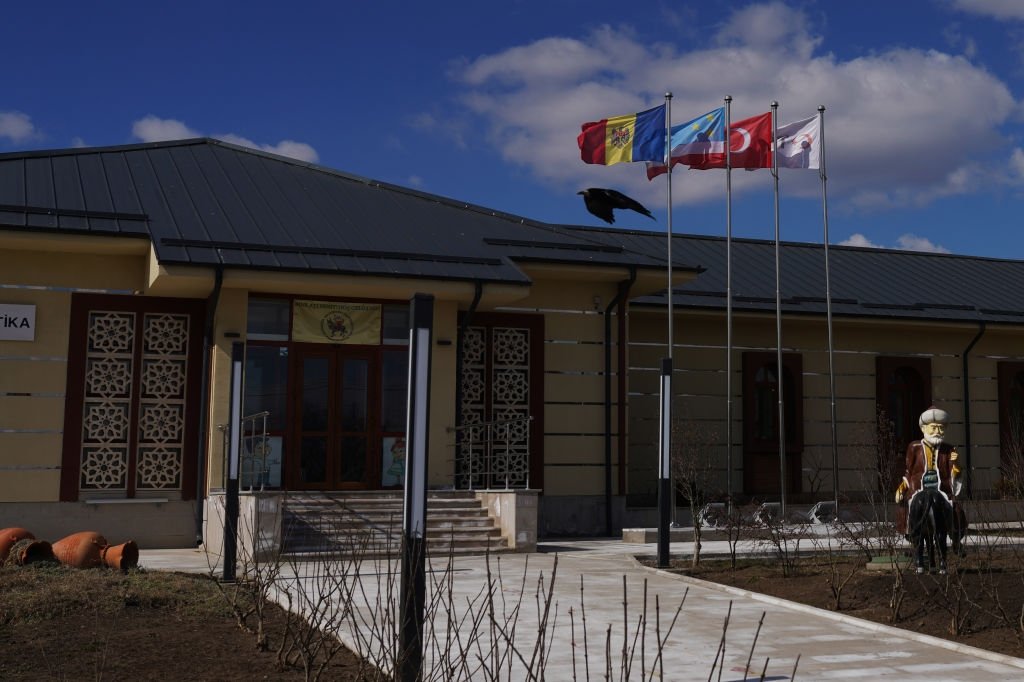
Established by Moldova in the early 1990s to support the preservation and revival of the local Turkic identity, Gagauzia has never achieved the initial objectives that its first political and cultural leaders envisioned for the inhabitants of the autonomous region.
Taking advantage of the context of the military aggression of the pro-Russian separatists from Transnistria against Moldova in 1992, Russian President Boris Yeltsin pressured Chisinau to increase the prerogatives of Gagauzia's autonomy.
This would not have been possible without the involvement of certain pro-Russian political circles from Comrat, the administrative center of the region, who knew how to exploit the regional context, even though Moldova had previously granted several concessions to the Gagauz region. These concessions were appreciated in Ankara, and Moldova was considered a model state of interethnic harmony and rights for national minorities throughout the entire ex-Soviet space. Türkiye has been firmly positioned in support of Moldova's territorial integrity and acted as a mediator between Chisinau and Comrat. Promises regarding Turkish investments also played an important role in consolidating peace in the region.
Among the main objectives that the founding parents of Gagauzia set at the moment of obtaining autonomy were the revival of Gagauz culture and traditions, as well as the education of the population in their mother tongue, the Gagauz language, a Turkic dialect very similar to the Turkish language.
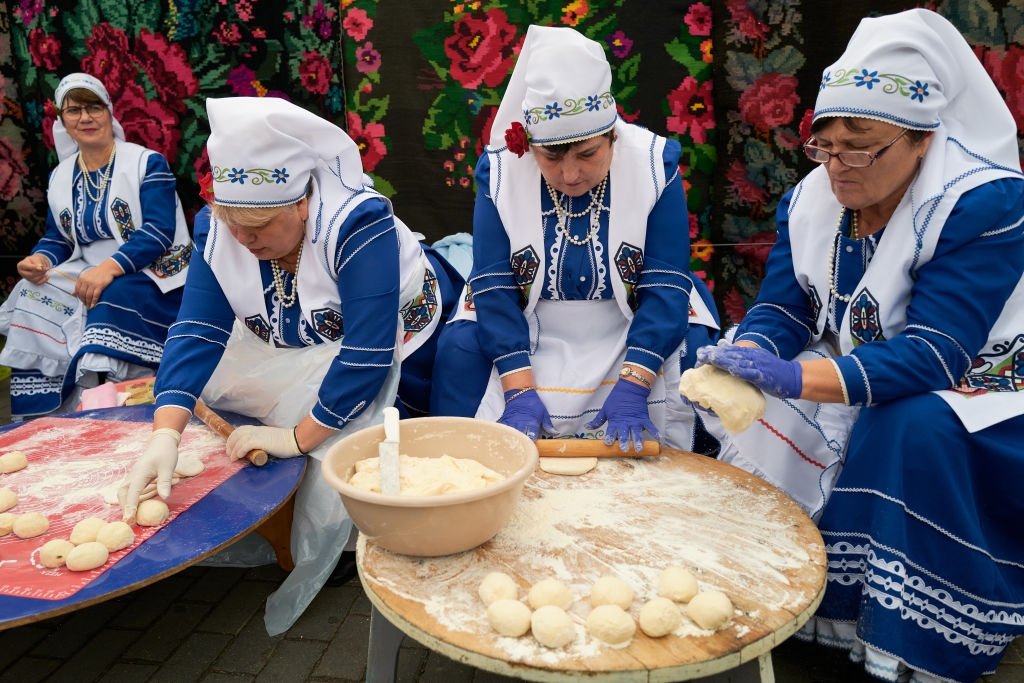
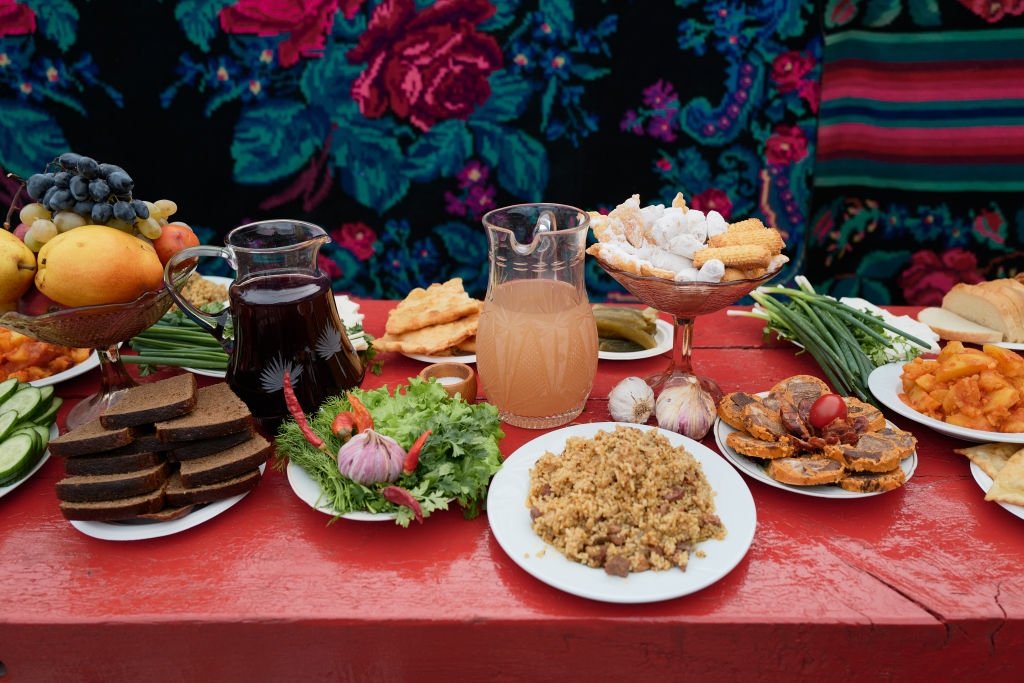
Although the first objective was achieved with the support of Chisinau and Ankara, the second never became a national goal for the political leaders in Comrat, mostly with pro-Russian views, so the Gagauz are the most Russified people in Moldova.
The Gagauz language continues to be a “kitchen language” among the citizens of the region, despite the efforts of Moldova and Türkiye to support the development, cultivation, research and even speaking of this language. It has become a habit for most residents to use the Russian language at the workplace, in public spaces, in interactions with authorities and local departments, while the new generations of Gagauz no longer speak the Gagauz language at all, not even at home.
The authorities in Comrat tolerate or even support the primacy of the Russian language and culture in absolutely all spheres of local life, including advertising, television and radio. Meanwhile, Russia continues to dominate the region, wielding aggressive propaganda against the center, Moldova, as well as against a closer relationship between autonomy and Türkiye and Turkish investments.
In recent years, the dialogue between Ankara and Comrat was stagnant, especially after Türkiye asked the people of the autonomy to assume civic responsibility as loyal citizens of Moldova, to learn Romanian, the state language of Moldova, and to gradually give up the consumption of Russian language and culture, focusing instead on studying their own local Gagauz dialect.
Although the Soviet Empire no longer exists, and with it the Russian occupation has disappeared, the Gagauz people continue to remain stuck in a state of Russification. And whereas during the Soviet period this Russification was imposed, now it can be called self-Russification or voluntary Russification.
This is evident even in the disinterest of parents to send their children to schools where the teaching of the Gagauz language has a higher coefficient. Moreover, to this day, no educational institution with exclusive instruction in the Gagauz language has been created in the autonomy, with Romanian and Russian as separate subjects of study. The situation is exactly the opposite – in most schools and educational institutions, the teaching of study subjects is done in Russian, while the Gagauz/Turkish language is a separate subject of study to which only a few hours are allocated.
Lately, high schools with instruction in the state language, Romanian, have become popular in the autonomy, reflecting parents' interest in their children succeeding in the Moldovan labor market. However, the identity issue does not disappear, but is perpetuated. Without knowledge of the Romanian language, it is very difficult for young Gagauz to build a successful career beyond Gagauzia, in the capital Chisinau, for example, even though Moldova is tolerant of the Russian language.
Türkiye's presence, including investment, should increase in the region, and it is more than necessary, including as a factor for maintaining peace and stability in Moldova. At the same time, the investments and support offered by Türkiye should be conditioned on Comrat's support for the process of a national revival of the Gagauz language and culture. New initiatives regarding the strengthening of local identity are vital.
In this regard, Türkiye should establish a Turkish-Gagauz High School in Comrat, modeled after the Moldovan-Turkish “Orizont” High School in Chisinau. Additionally, following the example of Bulgaria, which reorganized and created a Bulgarian Branch University in the Taraclia region that offers internationally recognized diplomas to the Bulgarian minority, Türkiye could do the same with the Comrat State University, contributing to the improvement of higher education for the Gagauz, and providing quality studies, including with the support of high-performing Turkish professors and specialists.
A greater Turkish presence in Gagauzia means strengthening Gagauz culture and language in the region, more investments, peace and security for Moldova.