What is conscience? Why has this concept, this fundamental part of our humanity, become so simplified in modern times? If we possess a common conscience that compels us all to respect life, why has it ceased to be our esteemed moral compass? Why do we collectively opt for the easy answers to difficult moral questions?
Here, then, is a brief, unsparing look at the conscience of this age.
Let us first examine morality, the framework we use to assign "right" and "wrong" to human behavior. In this framework, conscience is our most vital tool. It is our internal compass for navigating the shifting challenges of daily life, the very instrument that points us toward "true north" in the moments that define our own moral character.
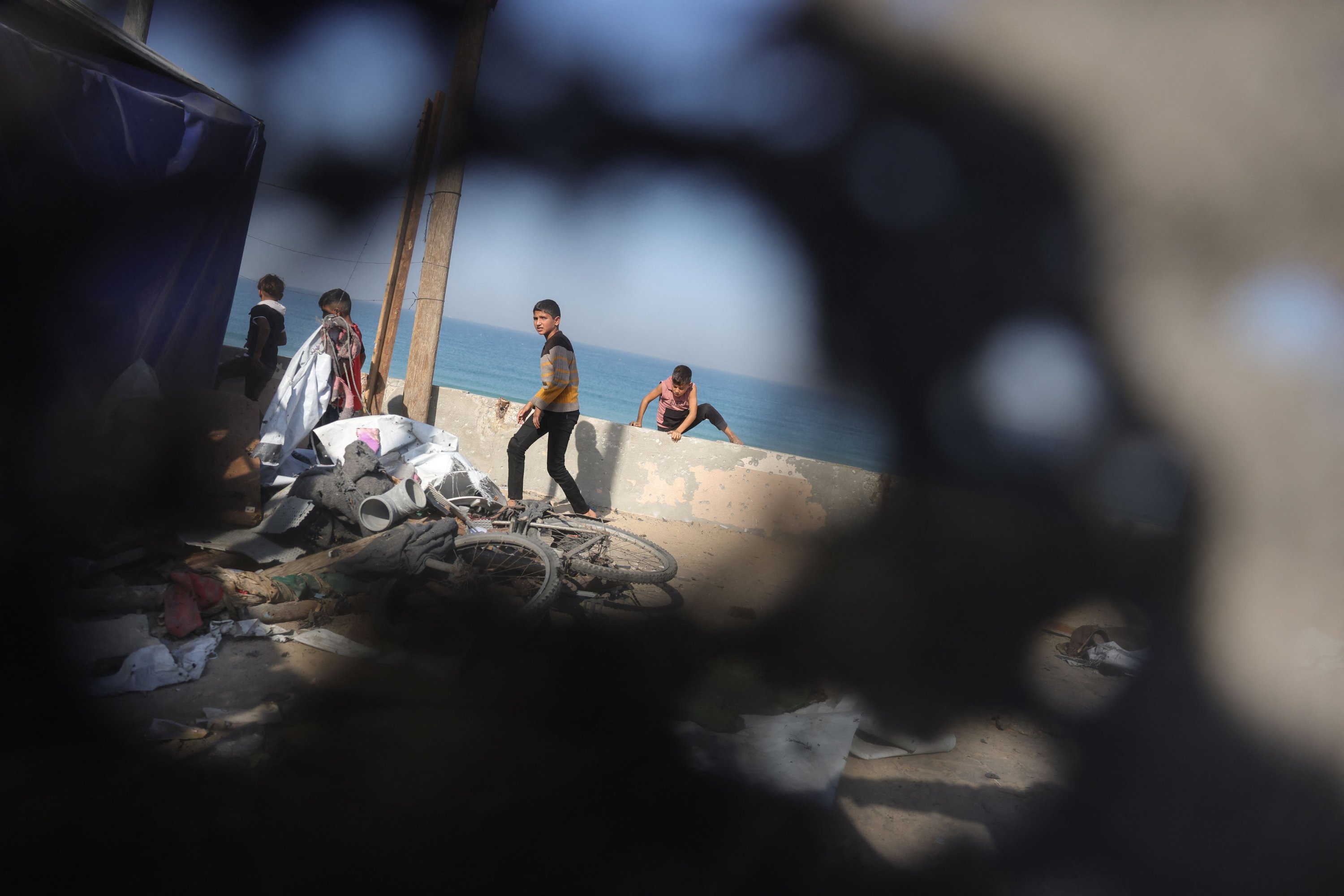
Today, while many regions test the limits of our collective conscience, Gaza stands as the most prominent. It is the most concrete, unfolding example of the normalization of cruelty. As we are confronted moment by moment with injustice, we witness the desensitization to atrocity in real time. Palestine is a region where the consciences that could once weep for a single death have been systematically silenced. Gaza is a region where all limits on the slaughter of civilians have been obliterated, a place where conscience itself is the target. Despite millions crying out, "There is a genocide," the dagger remains plunged deep into the world's conscience. And that dagger is in Gaza.
The Gaza Genocide is now a concept destined to lie at the foundation of modern humanity's moral reckoning for years to come. It is clear and plain: every supporter of this genocide, every enabler of Israel who refuses this moral reckoning, is a perpetrator of the massacre.
So, what is the nature of conscience? It is not a moral guide to be followed or ignored at one's convenience. If, while weeping for the deaths of children, you find yourself prioritizing the color of their eyes, then you must excuse the observation: There is a profound moral contradiction at play. No child in history has ever chosen their skin color, their eye color or the geography of their birth.
Can any child who dies today – whether in the United States, Russia, China or Gaza – be considered less or more valuable than another? On this matter, we have two choices: either we can be honest and admit the blatant hypocrisy, or we can all be liars together. If we are honest, we must point to the hypocrisy that reveals where the lie begins. We must state plainly that the Universal Declaration of Human Rights was apparently written with only some children in mind.
Yet, a true conscience is not a compass that prioritizes one group one day and another group the next. It encompasses everyone. It speaks for everyone. And every individual must live with their own. By this measure, every child has the right to life and the right to plan for a future. But for a faction of unconscionable individuals who regard ethnic cleansing as an "achievement," this right does not exist as a genuine reality within that vaunted declaration.
If we were to meet the survivors in Gaza, what could we possibly say to them? Life is not and will never be the same. They were already living in dire conditions, but what words can be offered to people now actively experiencing a systematic mentality that seeks to end their lives and treats them as corpses?
In truth, we all fall silent before this question. Our first instinct, tellingly, is to center ourselves. We view Gaza through the lens of "I." Thoughts like, "I boycotted some products," or "I chose not to be concerned with what happened there," flood our minds.
But what about them? Faced with the collective inaction of a world that owes them more, what can we say? What have we actually done for them?
We possess consciences that are mute in the face of these questions. We feel the guilt of not doing what we should have done when there was still time, and so we choose silence. We are at fault. Our fault is a profound lack of sincerity in our efforts to help. Even truly feeling their pain seems too difficult a task. For every single day we spend in comfort and security, Israel sets its sights on a new crime against humanity.
The U.S., meanwhile, is not merely a partner in this crime; it provides a level of support that makes it almost guiltier than the perpetrator itself. They are the reason the rest of the world stops and watches. With a silent, menacing posture, they warn, "Do not interfere." They are, in effect, speaking for Israel: "We do this because they have our backing."
And in that moment, a child dies simply for wanting to eat. A child with missing limbs waits in line next to his brother, hoping for medical aid. At the borders, soldiers block humanitarian assistance as a matter of official government policy, their own consciences terrifyingly silent. It is as if they are trapped in the contradiction of their own actions, knowing full well they are a black stain on the conscience of humanity.
This is the reality, and a learned helplessness has come to dominate the Middle East. The very states that should be actively opposing Israel have failed to intervene, and now they have nothing left to say. They are simply waiting for the years to pass, waiting for the safe moment to declare, "We could have stopped this human tragedy, but we did not."
This is the conscience of our age: the collective conscience of all who turn a blind eye. The situation is known by all but spoken by few; we see people capable of stomaching this reality, but we do not see conscience.
Will the murderers of Gaza's children be featured in our future films as prominently as the Nazis were after World War II? It is in our collective hands to decide. Yesterday's realities were shaped by the decisions of the past. Today's reality is being shaped by ours. The responsibility rests on us all.