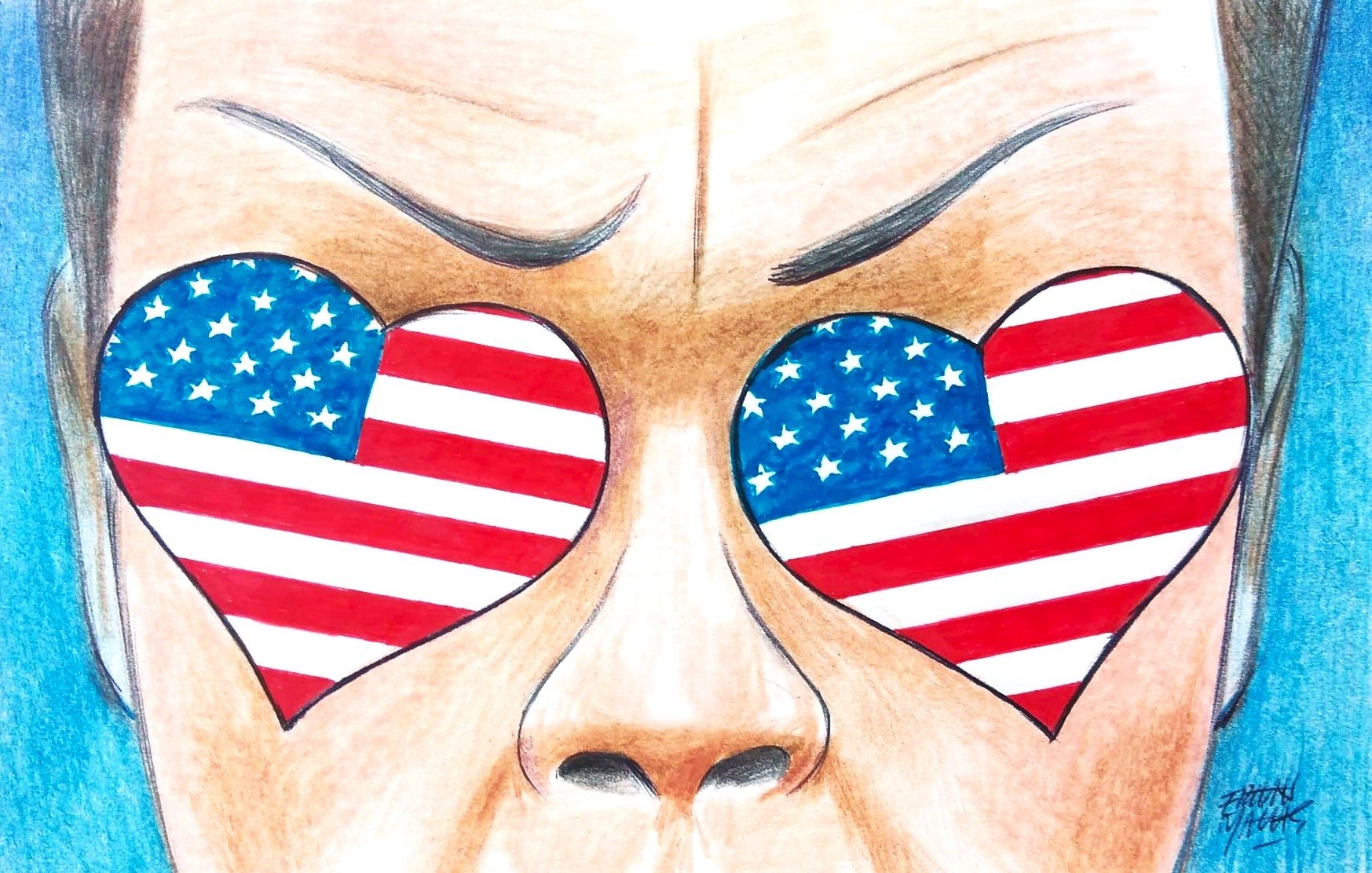
On July 4, fireworks will light up the National Mall, the grandest display in American history, or so the plan goes. Two hundred and fifty years of the American experiment, compressed into a single night of light and noise. A new poll, however, finds that only one in four Americans still believes their country stands above all others. The fireworks are being planned anyway.
I have spent years studying American cities, their bones, cracks and grand ambitions. As an urban engineer based in Chicago, what I see heading into this 250th anniversary is not a nation at its peak. It is a nation choosing spectacle over pavement.
On March 3, 2023, Donald Trump unveiled his vision in a campaign video: ten new "Freedom Cities" to be built on federal land by privately selected developers chosen through a national contest. Cities the size of Washington D.C., offering young Americans "a new shot at homeownership," new manufacturing hubs built from scratch, and, yes, flying cars. Trump said these cities would "reignite American imagination." The proposal rested on deregulation zones free from bureaucracy, rapid construction and private-sector-led urban renewal.
So where does the project stand today? According to PolitiFact's tracking report from February 2026, Trump has not mentioned "Freedom Cities" since 2023, when he first made the promise as a candidate. There is no legislation mentioning freedom cities anywhere in Congress.gov. The White House did not respond to questions about whether any progress had been made. Some think tanks continue drawing up conceptual blueprints, but no concrete steps have been taken.
Beyond that, Trump had promised a comprehensive urban policy to rebuild existing American cities. Two years on, what exists? According to a May 2026 analysis in Dame Magazine, the economic policies in place have created a "K-shaped" divergence in cities: tax cuts and corporate incentives pull incomes upward for the wealthy while the middle and working classes lose ground. Millions of city dwellers are still waiting for any tangible change.
Harvard University's Joint Center for Housing Studies published its "America's Rental Housing 2026" report in March 2026, and the numbers need no commentary. As of 2024, 22.7 million renter households spend more than 30% of their income on rent and utilities, roughly 49% of all renters in the country. This is the highest level ever recorded. Of those 22.7 million, some 12.1 million fall into the "severe burden" category: they pay more than half their income just to keep a roof over their heads.
Beyond that, home prices have risen 60% since 2019. The median home price has reached $412,500, exactly five times the median household income. Harvard researchers describe this ratio as nearly double the price-to-income ratio of three, which has historically been considered affordable.
So why is the market not correcting itself? Because construction is also stuck. The "Build America, Buy America" law requires that every material used in affordable housing projects receiving federal funding carry a "Made in USA" label, from heating, ventilation and air conditioning (HVAC) systems to ceiling fans. But the majority of these materials are simply not manufactured domestically. The result: projects freeze while waiting for approvals, and some are cancelled entirely.
Moreover, Keeanga-Yamahtta Taylor, Princeton historian whose work on housing policy and racial inequality has reshaped how scholars and policymakers understand federal urban programs, documents a striking paradox in her landmark study "Race for Profit: How Banks and the Real Estate Industry Undermined Black Homeownership": government-backed housing programs, built across decades of federal investment, have consistently protected not those most in need of shelter, but those positioned to profit from that need.
What we are seeing today is not a new crisis. It is the same paradox, still running.
The American Society of Civil Engineers (ASCE) assesses the country's infrastructure every four years using a school-style grading system, A through F. The report released in March 2025 announced a first: the overall grade reached "C," up from the previous "C-." ASCE presented this as an achievement. It is, technically. But is it enough?
As an engineer, I read this as follows: the country is standing right at the edge of the threshold where bridges reach the end of their design life. According to ASCE, the rehabilitation needs for the bridge system alone total $191 billion. Some 4.9 billion vehicle trips cross these bridges every single day.
Just at this moment, a promising step came from Congress: the BUILD America 250 Act proposes a $580 billion, five-year infrastructure renewal package with bipartisan support. But the bill has not yet reached the Senate. The number of working days left in the Congressional calendar is shrinking. The pressures of an election year carry the real risk of turning infrastructure, once again, into campaign rhetoric rather than concrete action.
According to the Associated Press-NORC poll, 44% of Americans under 30 believe there are better countries than the United States. Among those over 60, that number is 22%. Only 22% of adults under 30 say the American Dream still holds, compared to 46% of those over 60.
This is not a complaint; it is an observation. According to a U.S. Department of Housing and Urban Development (HUD) report published in May 2026, on a single night in January 2025, 745,652 people were homeless, a figure 27% higher than in 2013. The majority of young people living in large American cities are witnessing this reality firsthand, or living it themselves.
These young people grew up in cities that they cannot afford to rent in. They crossed bridges that were never repaired. They rode transit that was always late. They studied hard, worked hard, and still could not become homeowners. Their skepticism does not come from disappointment. It comes from lived experience.
Pipes are still broken
What Taylor's work reminds us is this: the housing crisis is not the product of bad actors. It is the product of systems that continue to make room for them.
Cities are a nation's conscience. Grand ideals live in the speeches of politicians. Real promises are buried in the streets, sidewalks, bridges and water pipes. As the 250th anniversary celebrations approach, the picture is clear: housing is out of reach, infrastructure is at the edge of its design life, and young people's trust in the system is at historic lows. ASCE's "C" grade means, by its own definition, "mediocre, requires attention." The Harvard housing report says the crisis has now spread to middle-income households. The AP-NORC poll summarizes the whole tableau most simply: great ideals are shrinking.
On July 4, the fireworks will go off. They will flash, they will scatter, and they will fade. When morning comes, the cities will still be there, with their bridges, their broken pipes, their residents who cannot pay rent. America's 250th year is not the moment of the fireworks. It is the morning after, when we ask what will actually be done for those cities and the people in them. There is time for a magnificent celebration. There is also time for an honest reckoning.