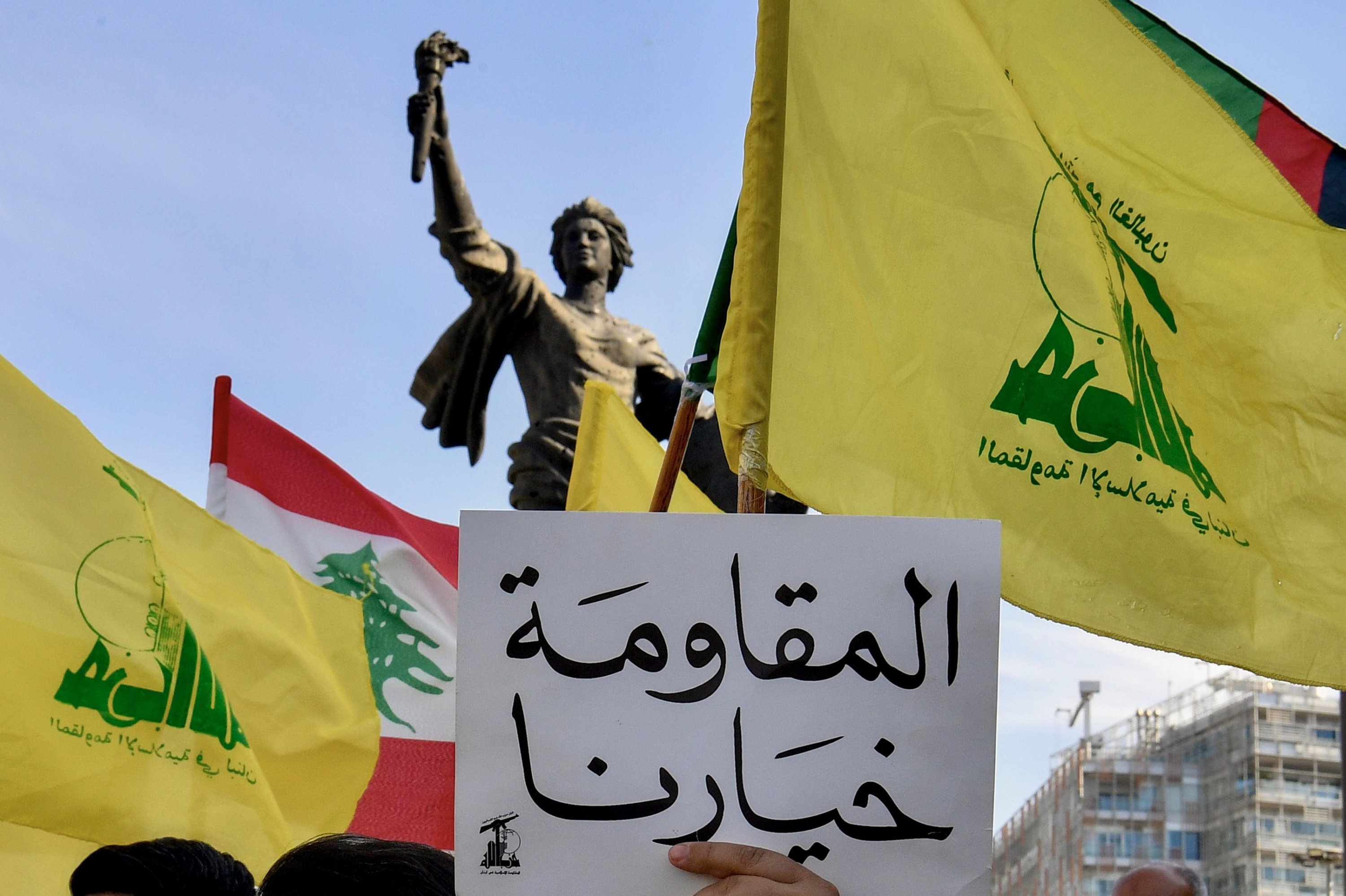
The legendary Lebanese singer Fairuz’s “Li Beirut” has long carried the sorrow, dignity and wounded beauty of a city that has endured war, loss and abandonment. It is not simply a song about Beirut. It is a memory of a country that has repeatedly been forced to turn pain into endurance. Today, Lebanon’s tragedy extends beyond the grief of its capital. It is unfolding in the south, where Israeli military pressure, civilian displacement, the destruction of border communities and the paralysis of the Lebanese state are converging into a new and dangerous reality. Under the language of cease-fire diplomacy, Lebanon is facing the gradual normalization of occupation and suspended sovereignty.
The current crisis can no longer be reduced to the familiar Israel-Hezbollah-Lebanese state triangle. The urgent question today is not simply whether Hezbollah will be disarmed or whether the Lebanese state is too weak to impose its authority. These remain important, but they are no longer sufficient. The deeper question is whether Lebanon’s sovereignty is being emptied of meaning while diplomacy makes this erosion appear technical and manageable.
The latest Washington talks reveal this paradox clearly. On June 2 and 3, the United States convened the fourth high-level trilateral meeting between Israeli and Lebanese representatives. According to the joint statement released after the meeting, Israel and Lebanon agreed to the implementation of a cease-fire. Yet this cease-fire was made contingent on a complete cessation of Hezbollah fire and the evacuation of Hezbollah operatives from the South Litani Sector. The statement also referred to the creation of “pilot zones” where the Lebanese Armed Forces would take exclusive control of territory, excluding all non-state actors.
On paper, this looks like an effort to restore Lebanese state authority. In practice, it raises a more troubling question: Can sovereignty be restored through externally designed security zones while Israeli military operations, territorial control and civilian insecurity continue?
Lebanon is being asked to behave as a fully sovereign state precisely when its sovereignty is being eroded on the ground, negotiated abroad and contested at home. The Lebanese government is present at the diplomatic table, but its presence in Washington does not automatically translate into authority over Lebanese territory. Beirut speaks through ambassadors and officials, yet many Lebanese citizens in the south experience the state as absent, hesitant or unable to protect them.
This is where the emotional song of “Li Beirut” becomes politically relevant. The song remembers a wounded city with tenderness and grief, but the current moment shows that memory alone cannot protect a country. The Lebanese state cannot survive only through symbols of resilience. It must be able to protect civilians, preserve territory and prevent foreign actors from deciding the fate of its border communities.
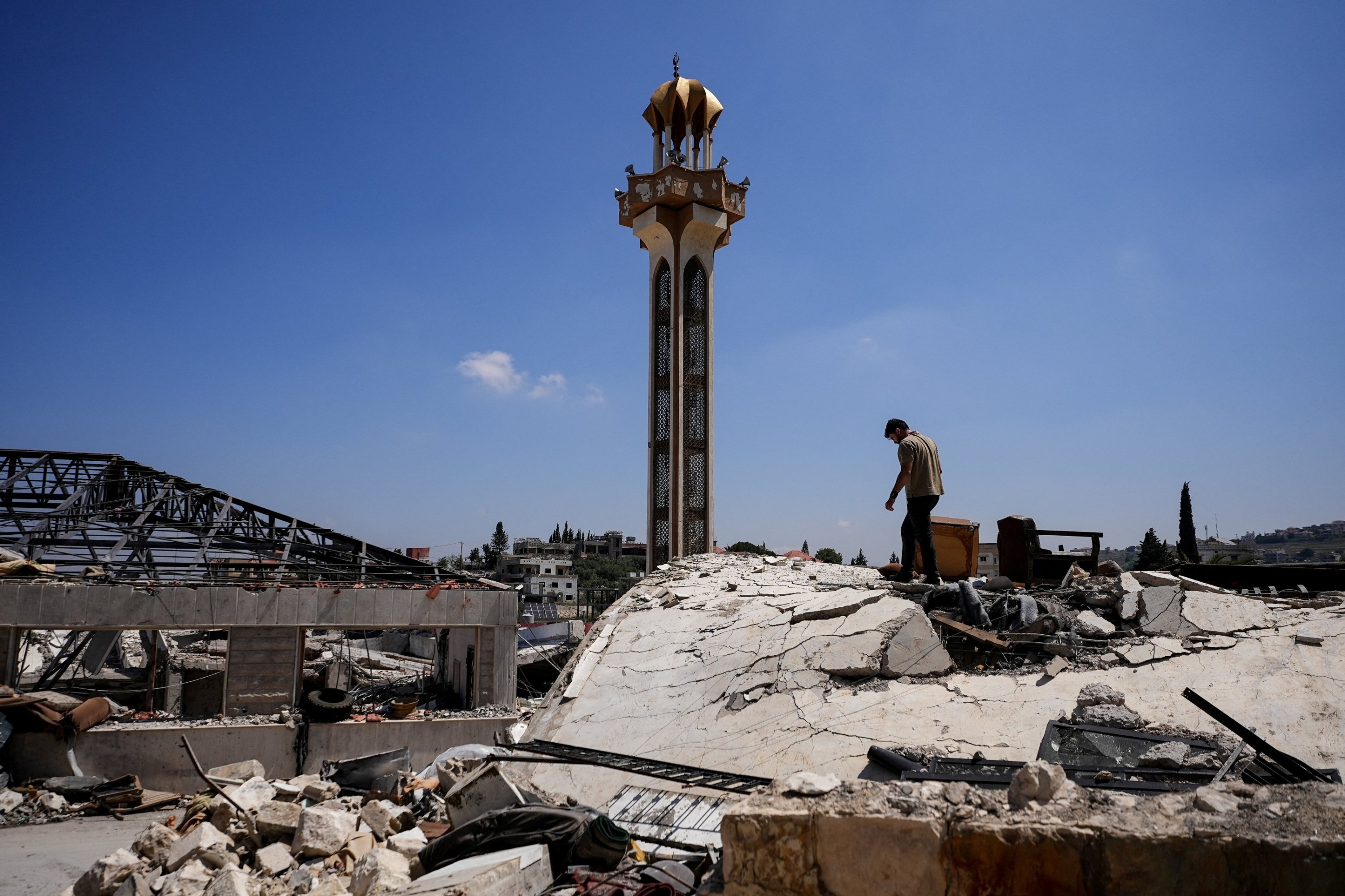
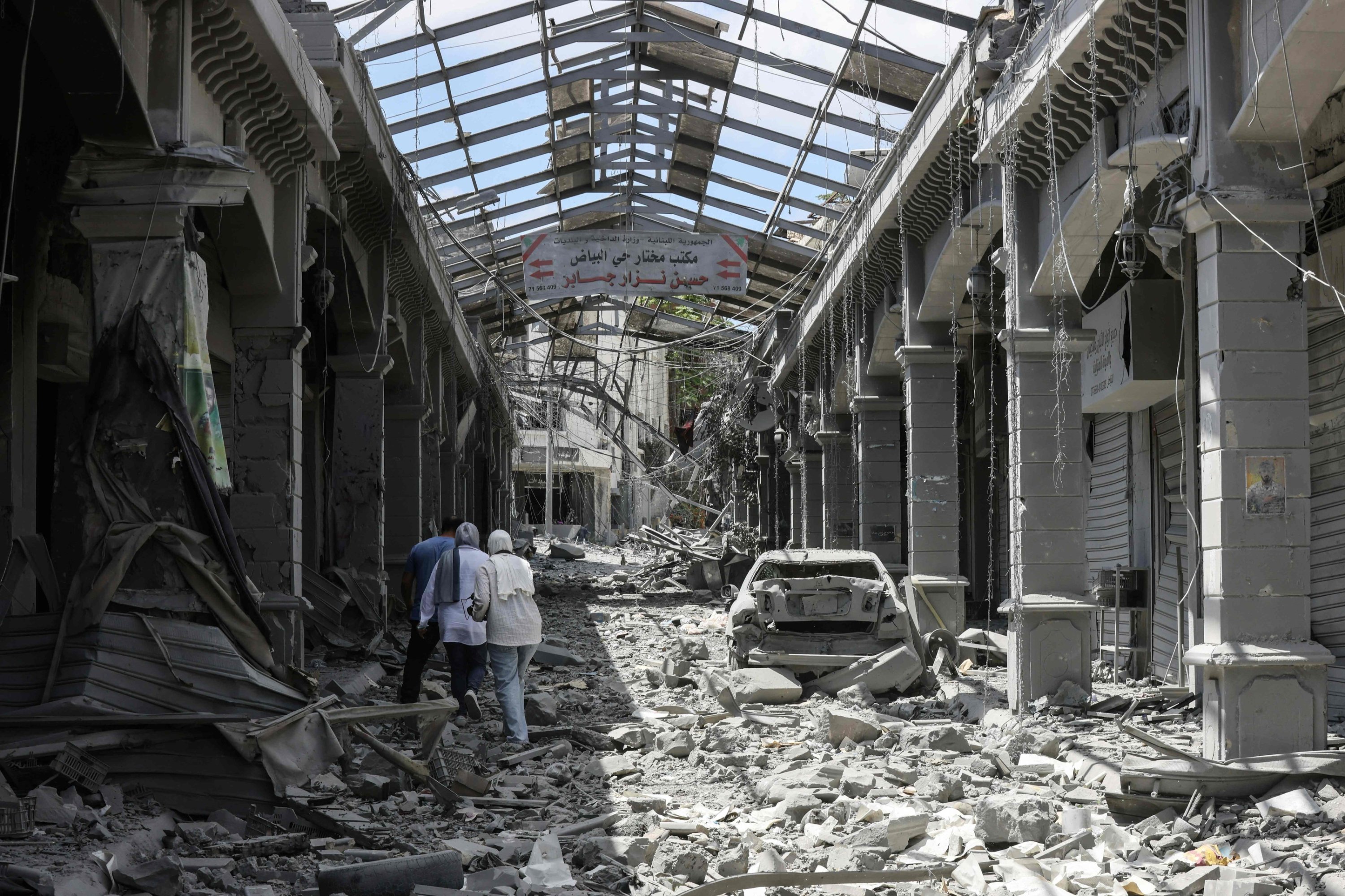
The Washington process is better understood as diplomacy under occupation. Le Monde reported in May that direct talks were taking place under extremely unfavorable conditions, while violence continued despite a declared truce. It also reported that the Israeli army controlled around 6% of Lebanon in a so-called security zone, turning parts of the border area into a no-man’s land, and that more than 10,000 homes had been destroyed or damaged.
The developments after the June statement deepened this contradiction. Reuters reported on June 4 that Hezbollah rejected the new U.S.-brokered cease-fire between Israel and the Lebanese government, while Israel said it would continue operations in Lebanon and would not withdraw its forces for the time being. This means Washington produced a cease-fire formula without a cease-fire reality.
A similar picture emerges from field-based operational monitoring. According to Dr. Imad Rizk, Director of Isticharia for Strategic Studies, a Beirut-based research center, June 8 was not marked by the heaviest volume of operations in southern Lebanon, but by a more selective pattern of targeting. He described the day as one of “logistics hunting,” with activity concentrated around the Yahmar al-Shaqif axis and focused on ammunition carriers, military vehicles, bulldozers and communications assets. This suggests that the confrontation is not only continuing despite cease-fire diplomacy, but also evolving into a struggle over mobility, supply lines and the ability to sustain forward positions.
The agreement may exist diplomatically, but the battlefield remains governed by Israeli operational freedom, Hezbollah’s refusal to accept exclusion and Lebanon’s inability to enforce commitments across all relevant actors. Israel’s security demands dominate the structure of the talks, while Lebanon’s demand for territorial integrity remains dependent on phased arrangements, U.S. mediation and Israeli calculations.
This does not absolve Hezbollah of responsibility. Its armed autonomy has long weakened the Lebanese state, exposed the country to regional wars and allowed Iran to treat Lebanon as a strategic extension of its confrontation with Israel and the U.S. No state can be fully sovereign while an armed party makes decisions of war and peace outside constitutional authority.
Yet reducing the present crisis to Hezbollah’s weapons alone misses the transformation now taking place. Israel’s actions are no longer limited to deterrence or reactive strikes. The expansion of security zones, the destruction of border villages, the prevention or delay of civilian return and the normalization of military presence point to a broader pattern of territorial management. Even when justified in the language of self-defense, this pattern produces a reality that looks less like temporary security enforcement and more like the institutionalization of suspended sovereignty.
The “pilot zones” idea captures the ambiguity of the moment. In principle, Lebanese army control over territory to the exclusion of non-state actors is necessary for any serious restoration of state authority. But when such zones are created under foreign guidance, after Israeli advances and without a clear, enforceable Israeli withdrawal mechanism, they risk becoming instruments of managed fragmentation.
Instead of restoring sovereignty across Lebanon, they may produce islands of conditional sovereignty, areas where the Lebanese state is allowed to function only after satisfying security criteria defined by others. In such a framework, sovereignty becomes less a national right than a staged performance monitored from outside.
This conditional sovereignty also has an economic and social dimension. As Dr. Rizk argues, the military situation in the south cannot be separated from Lebanon’s economic collapse in Beirut, Tripoli and beyond.
Poverty itself has become politically weaponized: where the state fails to provide health care, education, fuel or basic services, Hezbollah’s social networks gain coercive and political leverage over communities that depend on them. Brain drain and emigration further hollow out the economy and weaken the state’s tax base, while economic desperation makes vulnerable communities more susceptible to recruitment by armed actors. In this sense, the war in the south and the collapse of the Lebanese state are not two separate crises; they are mutually reinforcing dynamics that make sovereignty harder to restore.
A recent discussion hosted by the Washington Institute for Near East Policy, a U.S.-based think tank focusing on Middle East policy, also highlights this difficulty. The discussion noted that Hezbollah is not in the room, yet remains an ever-present source of pressure, and that Lebanon’s goal of ending Israeli occupation collides with Israel’s aim of removing an Iranian-backed armed actor from its northern border. This is precisely the trap in which Lebanon finds itself. It is expected to deliver outcomes it does not fully control, while enduring military pressure it cannot stop.
Therefore, the Lebanese government’s silence should not be read only as a moral failure, although it is increasingly experienced that way by many citizens. It is also the silence of a state caught between occupation and internal vetoes, between diplomatic dependency and military impotence, between the need to disarm non-state actors and the impossibility of doing so while foreign forces remain on Lebanese soil.
Lebanon cannot be asked to prove sovereignty while living under suspended sovereignty. Any serious peace process must begin from this simple principle: the Lebanese state cannot be rebuilt through formulas that treat occupation as a negotiable condition and civilian security as a secondary matter.
Fairuz once gave voice to Beirut’s wounds. But Lebanon today needs more than elegies for its cities. It needs a politics capable of protecting civilians, restoring territorial integrity and refusing to let occupation become normal. Without this recognition, international talks may not heal Lebanon’s wounds. They may only give new diplomatic language to the continuation of Lebanon’s wounds.