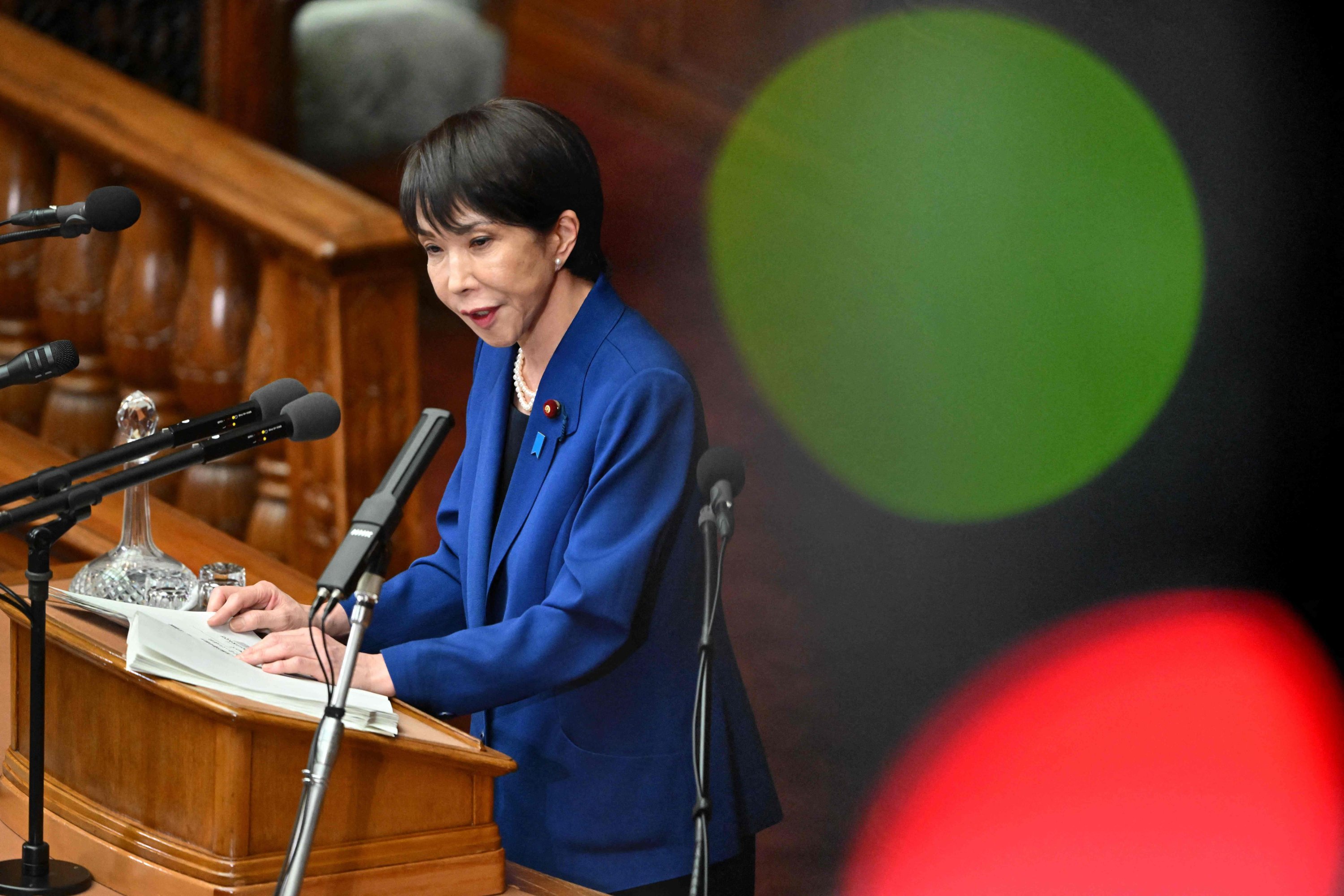
Recently, new Japanese Prime Minister Sanae Takaichi commented on hypothetical Chinese aggression on Taiwan, and with this comment, she sparked a diplomatic quarrel with Beijing. What did she say? In Parliament, Takaichi answered the question of an opposition lawmaker about what would be “survival-threatening situations” for Japan.
According to the controversial 2015 law, the military is able to operate overseas in case of survival-threatening situations as well as collective self-defense for allies. The 2015 law was an initiative of former Japanese Prime Minister Shinzo Abe, who is also known as the mentor of Takaichi. After a decade of Abe’s attempts to overcome the restrictions of Article 9 of the Japanese Constitution that prohibits the use of military force internationally, Takaichi stated that an attempt to bring Taiwan completely under the control of Beijing by use of force and a potential Chinese attack on U.S. warships sent to break any Chinese blockade on Taiwan could require Tokyo to intervene militarily.
As an initial response, China’s consul general in Osaka shared a very inappropriate remark. He wrote, and then deleted, on his social media account, “The dirty head that sticks itself in must be cut off.” During the last couple of years, we have witnessed a toughening of Chinese diplomatic rhetoric on the supposed “red-line” issues like Taiwan.
These kinds of impolite remarks from the Chinese diplomatic circles reflect Beijing’s strategy based on “deterrence by punishment.” Beijing claimed that Takaichi crossed the red line and attempted to shift the Japanese long-held posture on Taiwan. According to Beijing, Takaichi’s remarks violate the 1972 Agreement, in which Tokyo acknowledged that the People's Republic of China (PRC) is the sole legitimate government of China.
Actually, Japan has adopted strategic ambiguity on the Taiwanese issue and remains committed to the “one China” policy. On Nov. 13, a spokesperson of the Ministry of Foreign Affairs of the PRC stated that, “If Japan should dare to meddle in the cross-Strait situation, it would be an act of aggression and meet a firm response from China,” which reserves the right of self-defense. Please note that China has strategic uncertainty related to the first use of nuclear weapons if there is a direct threat to its territorial integrity and sovereignty.
Many ask why Takaichi commented on such a risky topic, just after the Trump-Xi meeting that led to limited de-escalation between the U.S. and China. Before the meeting, U.S. President Donald Trump made remarks indicating that he does not anticipate a direct invasion of Taiwan by China any time soon. Indeed, the Trump administration seems to downsize the importance of the Taiwan issue in the general framework of Beijing-Washington relations.
According to Trump, Taiwan is geographically very close to China and far away from the U.S. Hence, it would be costly for Washington to escalate the situation by shifting American strategic ambiguity on the Taiwan issue. Indeed, in war-like scenarios, it is expected that Beijing would have certain advantages in imposing a blockade around the island; hence, there would be no other option for the U.S. than escalation.
This is not a safe scenario for Washington because escalation among strategic nuclear parties may have the risk of miscalculation and misperception. All these imply that the U.S. prefers to stick to its long-standing strategy of deterrence by denial (of potential Chinese invasion) and the Trump administration hopes that a trade war would be enough to constrain China in the region. Besides, Trump wants to persuade Beijing to participate in the coming nuclear arms control and reduction negotiations.
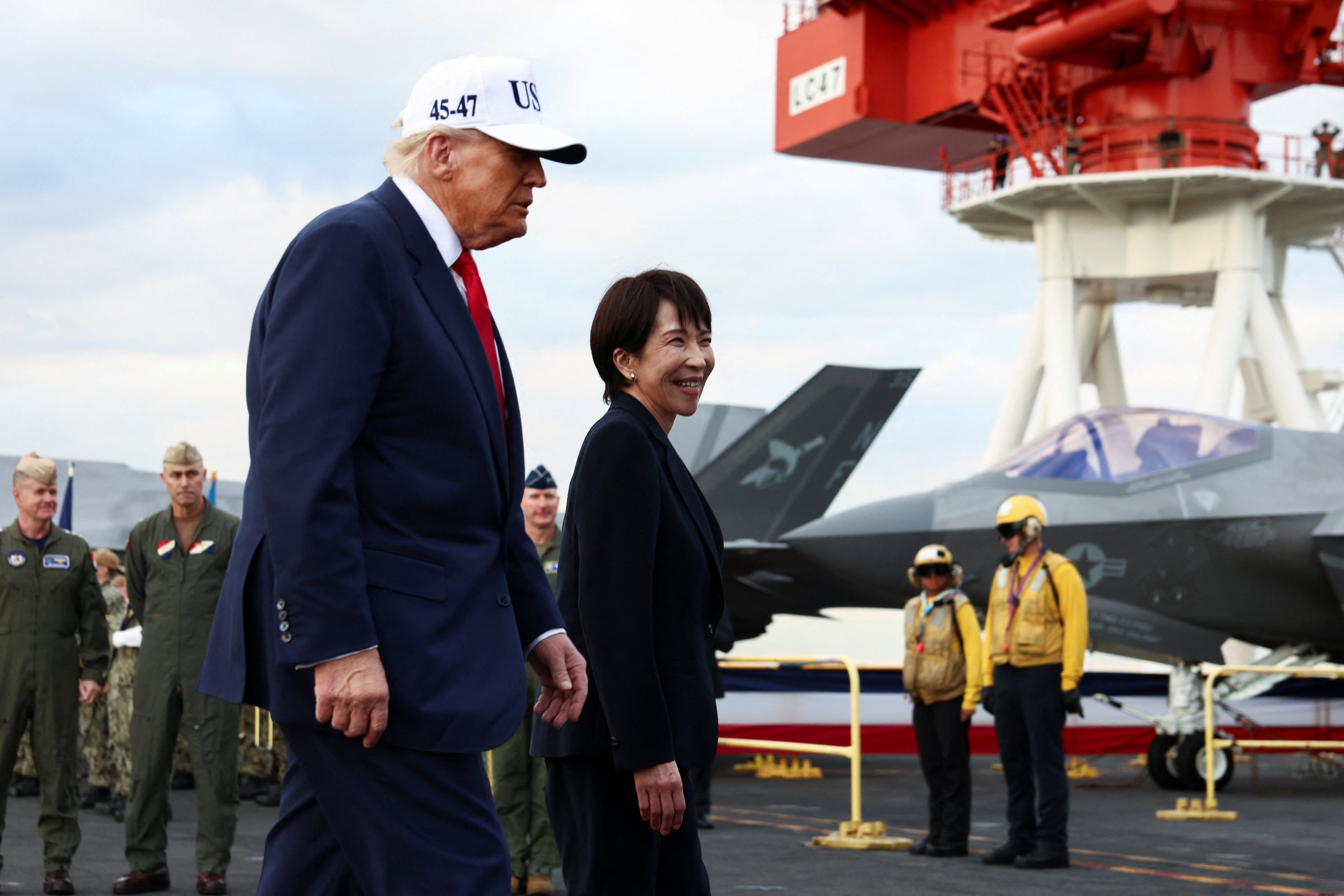
Some political analysts argue that Takaichi hopes to seize a political gain from the crisis. Indeed, she is a follower of Abe and needs to convince the public to increase defense expenses and to revise the Japanese Constitution. Her bet has seemed to have paid off. According to one of the latest public opinion surveys, Reuters reports, 60.4% of Japanese people support the plan of Takaichi to boost the country’s defense spending. This political gain, however, cannot be the sole explanation for Takaichi’s risky move. It is risky because Japanese military capabilities are not strong enough to challenge China overseas. The Trump administration may give a cold shoulder to Japan in an escalation due to fear of the possibility of unnecessary risk of being dragged into conflict.
Takaichi’s remark may be in support of some U.S. strategic circles that claim the necessity of change in the U.S. strategic planning from deterrence by denial to deterrence by punishment. That means increasing the U.S. strategic capacities (aircraft carriers, submarines, etc.) around the Taiwan Strait and Japan. Besides, following her Taiwan comment, Takaichi implied that Tokyo would revise its "three-no" principle (no ownership, no development, no hosting) about nuclear weapons. Many speculate that the recent crisis and Beijing’s threats of use of force may be an excuse for Tokyo to amend Japanese nuclear policy.
Some experts claim that instead of producing or owning nuclear weapons, the Takaichi administration would prefer hosting American nuclear weapons. Indeed, Takaishi’s remark came just after Trump announced nuclear cooperation and technology sharing with South Korea. However, Japan has also been known as a nuclear hedging state, which has the purpose of increasing Tokyo’s bargaining power vis-a-vis the U.S. Hence, abandoning such bargaining power would not be easy for Tokyo.
To cut a long story short, actors are restless, and a crisis is constantly brewing in the Far East.