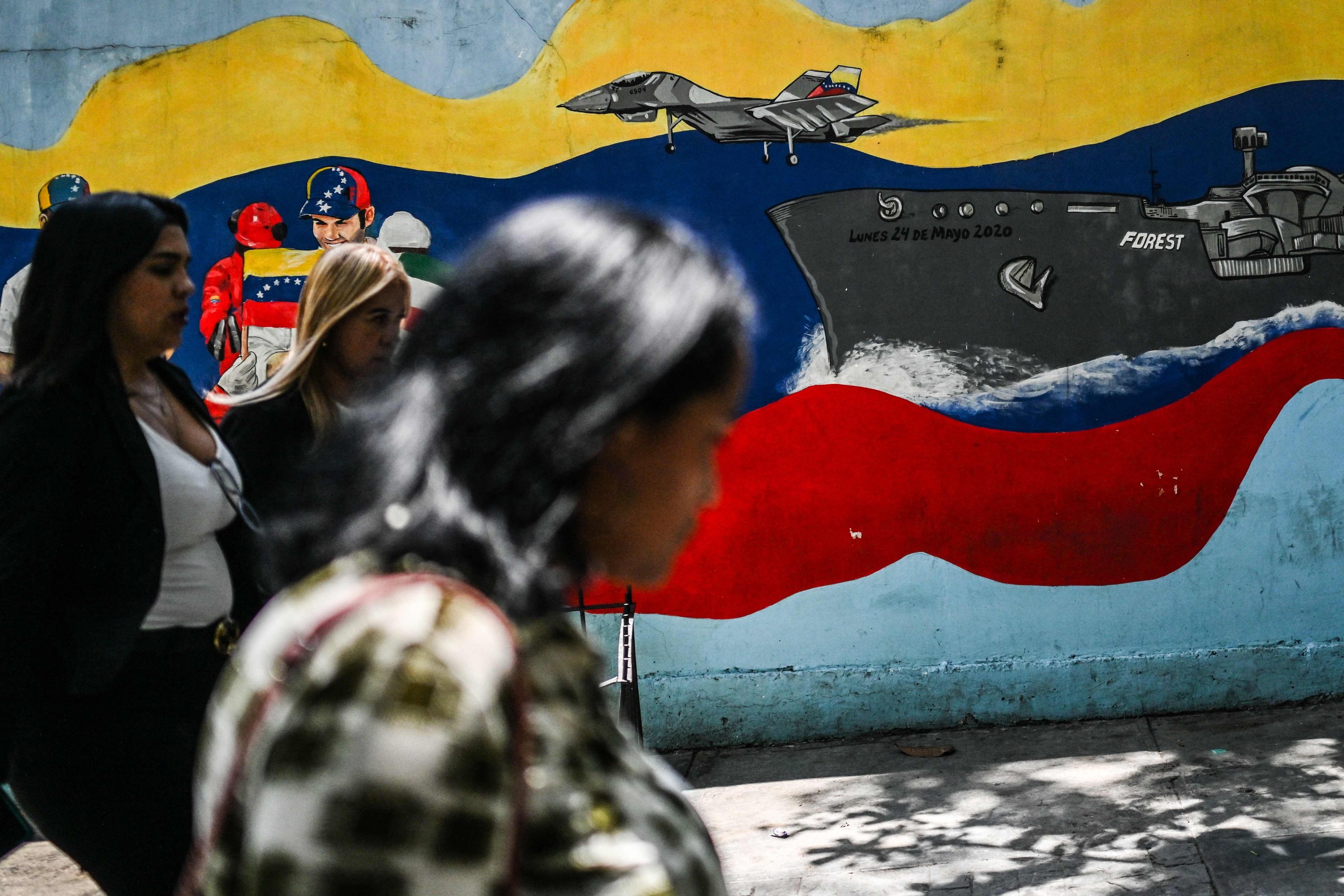
Following Canada, Greenland and Mexico, the world is now talking about Venezuela. The second coming of Trump as the U.S. president and the resurgence of MAGA ideology have introduced a new target: a country once under U.S. influence and home to vast oil reserves. Venezuela has become a pivotal nation not only in Latin America but also in the fate of Asia. This renewed global attention on Venezuela reflects a broader ideological struggle.
For most of the 20th century, Venezuela was defined primarily as the oil giant of Latin America and one of the United States’ most reliable suppliers of crude oil. Its economy and politics were closely tied to Washington, and its domestic development was often subordinated to external demands. In the 21st century, Venezuela has emerged as a symbol of the global transformation from unipolar dependence to multipolar engagement. The re-imposition of U.S. sanctions and the resurgence of global power competition have accelerated Caracas’s pivot toward diversified international partnerships. Far from being marginalized, Venezuela now occupies a central position in debates about sovereignty, energy security and the balance of power in the Americas and beyond.
Venezuela’s modern history is inseparable from its petroleum resources. Oil discoveries in the early 20th century attracted major foreign companies, particularly from the U.S. By the 1920s, Venezuela had become a crucial supplier for the U.S. market, and this strategic relationship deepened during World War II when Venezuelan oil fueled much of the U.S. military effort. Throughout the 1980s and 1990s, Venezuela exported between 1.5 and 2 million barrels per day to the U.S., ranking alongside Saudi Arabia and Canada as one of its top suppliers.
Approximately 90% of state revenues depended on these oil exports, structurally tying the economy to a single market. While oil revenues generated significant income, wealth distribution remained unequal, with poverty rates hovering around 40% by the late 1990s. Dependency theory explains this imbalance: the U.S., as the industrialized “core,” benefited from diversification, while Venezuela, as the “periphery,” provided raw materials without building a robust industrial or technological base. The resulting cycle of dependence left Venezuela vulnerable to external shocks. When oil prices declined in the 1980s, the economy contracted sharply, exposing structural weaknesses and the absence of diversified domestic production.
Hugo Chávez’s election in 1998 marked a clear attempt to address this structural dependency. His Bolivarian Revolution aimed to reduce reliance on Washington and to implement a sovereign economic and political model. Chávez directed oil revenues toward health care, education and social programs, benefiting millions of Venezuelans for the first time. Foreign policy also shifted toward South-South cooperation and engagement with non-Western powers in Eurasia, Africa and Asia. The strategy was both ideological and practical: U.S. hostility and sanctions necessitated alternative economic and diplomatic channels.
Despite these efforts, U.S. influence persisted. In 2002, a U.S.-supported coup attempted to remove Chávez but failed. In 2019, opposition leader Juan Guaidó, with U.S. and European backing, declared himself interim president. He conducted visits to Washington, Brussels, Madrid and Davos and even appointed a U.S. ambassador. Yet, the Venezuelan military and population largely rejected this externally backed political maneuver, enabling President Nicolas Maduro to continue his mandate based on popular elections.
During the second Trump administration, Venezuelan oil became a clear strategic target. The phenomenon of the “resource curse” manifested strongly: Venezuela’s abundant resources, instead of strengthening domestic development, attracted sanctions and external interventions. U.S. and allied measures seized Venezuela’s gold reserves and froze overseas assets, while prohibiting oil exports, the nation’s primary source of revenue. These actions disrupted public services, drove hyperinflation and caused widespread economic hardship. Venezuelans faced shortages of essential goods, deteriorating infrastructure and declining purchasing power. The country’s political leverage in international forums was also weakened, demonstrating how resource wealth can paradoxically increase vulnerability when foreign powers act unilaterally.

Venezuela’s survival amid these pressures has relied heavily on strategic partnerships with Russia and China. China became Venezuela’s principal lender and trade partner in the 2000s, providing more than $50 billion in credit between 2010 and 2015 under oil-for-loan agreements. Chinese funds were allocated to infrastructure, housing, energy projects and telecommunications. Chinese firms also supplied digital and surveillance technologies, creating a multilayered partnership extending beyond pure economic interests.
Russia played a complementary geopolitical role. Russian companies assisted in exporting oil through alternative channels to bypass U.S. restrictions, supplied military equipment and technology, and supported Venezuela diplomatically in international forums, particularly the United Nations. These partnerships provided both material assistance and political legitimacy, enabling Caracas to maintain sovereignty and navigate sanctions effectively.
Türkiye has emerged as another significant partner. Bilateral trade includes gold, agricultural products, machinery and textiles. High-level diplomatic interactions between Maduro and President Recep Tayyip Erdoğan have strengthened ties and reinforced a shared vision of a multipolar global order. Türkiye provides Venezuela with access to broader markets in Europe, the Middle East and Central Asia, while Venezuela offers Türkiye a strategic connection to Latin America. These relations exemplify how South-South cooperation can challenge traditional North-South hierarchies and foster diversified economic and political networks.
Venezuela has actively expanded its partnerships across the Global South. Interest in BRICS membership demonstrates Caracas’ commitment to aligning with emerging economies in Brazil, India, China, Russia and South Africa. Brazil, under President Luiz Inacio Lula da Silva, has restored strong regional cooperation, emphasizing solidarity over isolation. India has become a key consumer of Venezuelan oil, while Africa represents additional opportunities for energy, trade and technological collaboration. These engagements reduce vulnerability, diversify revenue sources, and create a broader coalition capable of resisting unilateral dominance by traditional powers.
The territorial dispute with Guyana dates to its independence from Britain in 1966, when unresolved border issues were left by colonial authorities. Venezuela has consistently claimed that the Essequibo region belongs to its territory. In 2015, the discovery of significant oil reserves in the area, operated by U.S. companies Chevron and ExxonMobil, heightened tensions.
The U.S., already treating Venezuela as a strategic energy backyard, views Guyana as increasingly important, intensifying pressure on Caracas. Nevertheless, the 2023 non-aggression agreement between Venezuela and Guyana demonstrates the cautious and pragmatic approach adopted by both countries. Even when U.S. naval forces are deployed in the region, Caracas and Georgetown have maintained restraint, signaling Venezuela’s strategic ability to balance sovereignty concerns with diplomatic engagement.
Venezuela’s economy remains heavily reliant on oil, which continues to be both a source of revenue and a target for external interference. The seizure of gold reserves, freezing of foreign-held assets, and prohibition of oil exports by the U.S. and its allies have had catastrophic consequences. Public infrastructure, health care and education have suffered, while hyperinflation has eroded household purchasing power. Nevertheless, Venezuela’s strategic management of oil production, combined with diversified international partnerships, allows it to partially mitigate these pressures. Energy diplomacy has become a central instrument for maintaining sovereignty and negotiating from a position of relative strength in global forums.
Venezuela serves as a laboratory for understanding the dynamics of contemporary global power. Its alliances with Russia and China illustrate the importance of Eurasian influence, while relations with Türkiye and the broader Global South show the emergence of alternative South-South networks. Engagements with BRICS and African states highlight the potential for coalition-building beyond traditional power centers. At the same time, Venezuela embodies the difficulties of economic restructuring, political polarization and external pressure, demonstrating both the risks and potential rewards of a multipolar strategy. The careful handling of the Guyana dispute exemplifies Caracas’ capacity for strategic diplomacy, balancing territorial claims with international stability.
Venezuela’s evolution from dependency to multipolar partnerships offers important lessons for the 21st century. Once heavily tied to the U.S. market, it has transformed into a nation cultivating alliances across continents. Partnerships with Russia, China, Türkiye and BRICS nations reflect both a survival strategy and an ambition to influence the emerging global order. For countries like Türkiye, which pursue greater autonomy and South-South cooperation, Venezuela is a strategic partner and a model for resisting unilateral dominance.
China, as a significant and reliable oil importer, provides Caracas with critical revenue streams that reduce vulnerability to U.S. economic pressure. In 2019, the U.S. attempted a diplomatic and political maneuver to remove Maduro from power, but this strategy, similar to earlier interventions, achieved limited success. Long-standing alliances, diversified international partnerships and China’s continued support enhance Venezuela’s resilience. Caracas’ experience demonstrates that carefully cultivated global relationships, particularly with major energy consumers like China, can bolster sovereignty, maintain political stability, and enable a nation to withstand external pressures, positioning it as a meaningful actor in a multipolar world.