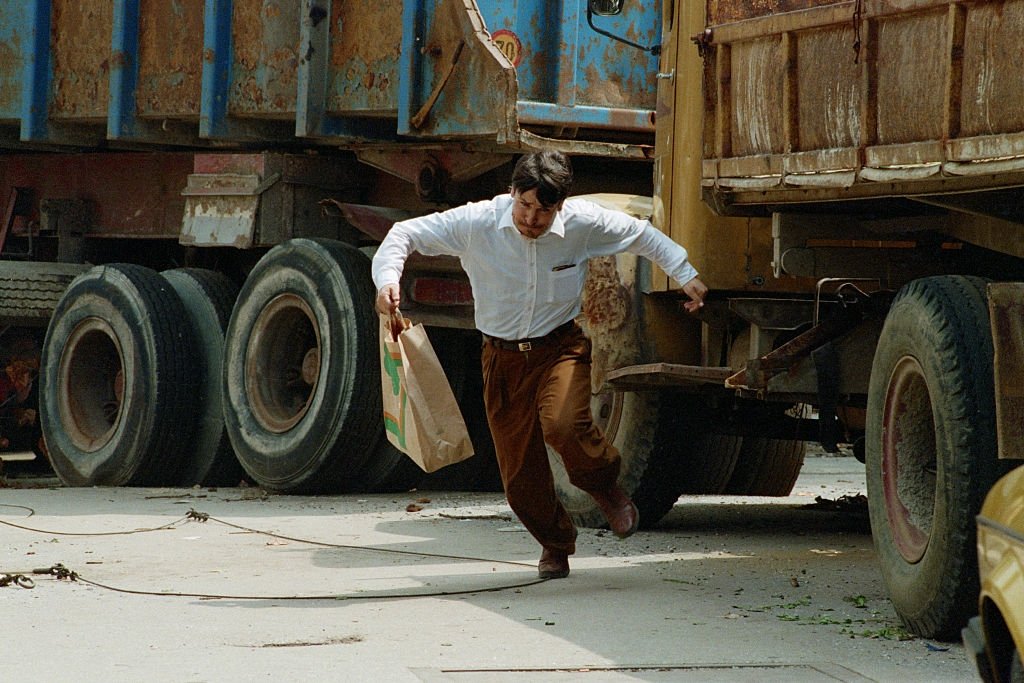
At the very beginning of this article, I would like to highlight the words of Emine Secerovic Kaslı, as they deserve to be fully recognized. Kaslı, a Bosniak writer who lived through the siege as a child and later wrote about it, recently expressed her pain once again on the social media platform X: “_I was literally a target. I was a 7-year-old child during the siege of Sarajevo. I would run to school in a zigzag to avoid snipers. As a small child, I had to escape not only Serb snipers, but also those so-called tourists from Europe who paid money to kill. These so-called modern Europeans killed for excitement._”
The breakup of Yugoslavia in the early 1990s resulted in the emergence of several new independent states, including Slovenia, Croatia, Bosnia-Herzegovina, what was then FYR Macedonia (or FYROM), and “Serbia and Montenegro,” also later Kosovo. The conflict grew around competing political visions, shifting borders and the rise of ethno-religious nationalism, which opened a door to some of the worst atrocities Europe had seen since World War II.
Among the darkest elements of that war was the siege of Sarajevo, together with the Srebrenica genocide, as well as the other dark spots of the war that formed the wider tragedy. Lasting from April 1992 until early 1996, the siege of Sarajevo became the longest siege of a capital city in modern times. The city was surrounded by forces of the secessionist Army of Republika Srpska, physically backed by what remained of the Socialist Federal Republic of Yugoslavia, positioned in the surrounding hills. More than 5,400 civilians lost their lives during the siege, within a total death toll of 13,952.
Sarajevo, a beautiful historic Ottoman city founded and built in 1461 under Isa Beg Ishakovic and later shaped by Gazi Hüsrev Bey, both governors, remained under Ottoman rule until its de facto loss in 1878 and its formal separation from Ottoman Türkiye in 1908, and yet long after these turning points, it endured unimaginable destruction during the war and the siege.
During the siege, daily life collapsed. Sarajevo’s residents lived without water, electricity or heating for long periods. Shells fell on streets, markets and playgrounds. Snipers targeted anyone who moved. The killing of children remains one of the most painful facts. This international armed conflict, which encompassed the prolonged siege, was characterized by the systematic use of rape as a weapon, a fact established by international court judgments.
Within this already brutal reality, one of the most disturbing revelations to reemerge today concerns the existence of so-called “sniper tourists.” According to various testimonies, affluent individuals from Italy and several other countries allegedly paid large sums of money to travel to Serb-controlled positions around Sarajevo and shoot at civilians. Some accounts describe a kind of depraved price system, with even children marked at a higher “value.” This claim, long whispered, reappeared through testimonies, old intelligence notes and new investigations.
The story became widely discussed after the documentary "Sarajevo Safari" was released in 2022 by Slovenian director Miran Zupanic. The film presented accounts from individuals claiming that foreign nationals were escorted to the hills above Sarajevo and allowed to fire on civilians in return for large payments. Some spoke of organized arrivals through Belgrade. Others mentioned that the visitors came from different countries, including Italy, Russia, Canada and the United States. One of the most shocking allegations was the existence of an informal “price list,” with higher amounts reportedly paid for shooting at children. Such claims, even if proven only in part, show a level of cruelty that words can hardly capture.
The Milan Prosecutor’s Office has now opened a formal investigation into Italian nationals suspected of participating in these acts. Reports mention organized travel routes through Belgrade and onward transport to positions above Sarajevo. There are allegations of involvement by elements of the Serbian State Security Service at the time. The inquiry focuses on intentional homicide with aggravated circumstances. It is a rare moment in which the law attempts to reach back across three decades to confront individuals who believed they could hide behind chaos and distance.
The legal dimension of this emerging case raises difficult questions: The International Criminal Tribunal for the former Yugoslavia (ICTY), which once tried senior political and military figures from the war in Bosnia-Herzegovina, has completed its mandate and no longer hears new cases. That leaves national courts to act, based on the principle that grave crimes such as deliberate killing of civilians can be prosecuted wherever suspects are found, regardless of where the acts occurred.
The allegations in Milan concern Italian citizens, which strengthens the jurisdictional basis. However, cooperation with Bosnia-Herzegovina remains essential for access to archives, witnesses and locations. The possibility of a complementary role for the International Criminal Court (ICC) is limited, since the ICC can generally act only for crimes committed after 2002. Yet the ICC’s broader framework, particularly its standards for evidence and the gravity of crimes, continues to influence how national courts interpret old atrocities that still require accountability.
Sarajevo’s story reminds us that war crimes are not only committed by armies or political groups. Sometimes they are committed by people who treat war as entertainment. The emerging investigations echo a larger truth: impunity is not guaranteed simply because years have passed. The siege of Sarajevo, besides being one of the defining tragedies of the 1990s, still has unanswered questions. The testimonies about sniper tourism, however shocking, fit into a broader pattern of cruelty documented throughout the war.
This discussion is not about reopening old wounds for the sake of it. It is about understanding the full picture of a conflict that shaped the conscience of a generation. It is also about reaffirming a principle that should matter everywhere: crimes committed against civilians, whether by soldiers or civilians who traveled for the thrill of killing, cannot be placed outside the reach of justice.