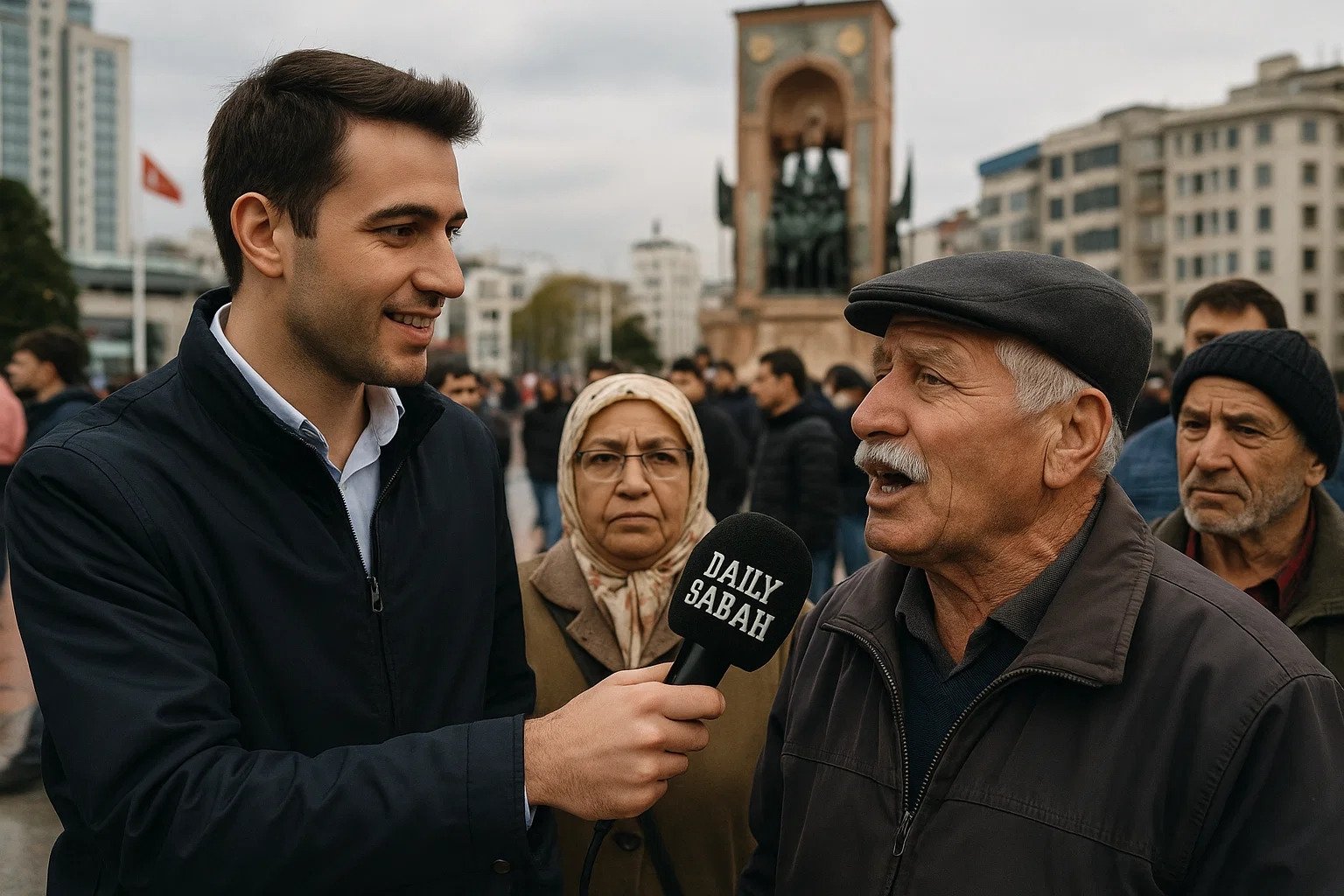
Imagine a face that blinks in sync with yours, smiles with familiar warmth and speaks of childhood memories. Now imagine that this face doesn’t exist. This illusion of intimacy is not born of memory, but from lines of code and AI-driven video technology. The boundary between fiction and reality is now limited only by our imagination.
Social media has turned into a digital hall of mirrors. Reality is distorted with each new reflection. Artificial intelligence adds a new kind of magic to these reflections: flawless yet entirely fabricated videos. No longer confined to entertainment, they have become potent tools of manipulation used in politics, advertising and even warfare.
Deepfake technology has come a long way since the early days of simple face-swapping tricks in the 2020s. Today, it’s possible to recreate a person’s expressions, tone and emotional cadence using just a photo, a voice clip or even a written text. Science fiction no longer lives only in cinema – it has invaded our news feeds. As the line between real and fake continues to blur, one fundamental question remains: How do we measure reality?
When Oxford Dictionary named "post-truth" the word of the year in 2016, the boundary between fact and feeling was already beginning to dissolve. Now, AI-generated videos are taking this erosion to a new level. A crisis statement from a fictional leader, a fabricated eyewitness account or footage of an imaginary conflict – these can be created in minutes and reach millions just as quickly.
This is not merely an issue of misinformation. It is a structural problem threatening democracy, individual judgment and collective psychology. Perception management is no longer reserved for media professionals; every citizen is now part of a digital information war. Tools like Runway, Synthesia and OpenAI’s Sora have turned every laptop into a potential propaganda machine.
AI-generated content can be mesmerizing, funny, beautiful and seemingly harmless. But the true danger lies in how effortlessly we get pulled in. Suspension of disbelief is becoming instinctive.
As I write these lines, a video of an AI-generated journalist “interviewing” people from the 1500s has surpassed 7 million views on X.
For generations raised in the digital age, visual evidence was the ultimate proof. “I saw it, therefore it’s true,” we used to say. Now, we are witnessing the collapse of that belief. AI videos don’t just bring falsehoods into our lives; they bring doubt. When listening to a public statement, our default reaction is now: “Is this real?”
Lately, I’ve come across several videos on Instagram that show AI-generated people giving street interviews. What struck me most was not just the content of their speech, but how the AI was able to mimic regional accents and cultural gestures. It wasn’t just about copying words; it replicated dialects, mannerisms and bodily rhythm. It felt like a real human.
Yes, it’s a technical marvel. But here’s the real question: What happens when we can no longer trust our eyes?
Escaping this digital chaos will take more than legal regulations. It requires informed individuals. Media literacy must go beyond evaluating sources; it must include analyzing how digital content is produced. We need generations with intuitive reflexes capable of detecting deepfakes and synthetic media.
In this context, integrating digital content analysis into national education curricula, offering verification tools on social media platforms and reinforcing transparency principles within media organizations are all essential steps forward.
We must recognize that this technological shift is not a passing trend. AI videos are reshaping not just our information landscape but also our understanding of culture, memory and truth itself.
Yet, not all AI-generated content stems from malicious intent. Reviving historical figures in documentaries, allowing artists to collaborate with digital avatars – these applications offer new possibilities for storytelling beyond cinema.
Just today, I watched a video where an AI-generated gorilla recorded a daily vlog. The language and gestures were so well-crafted that within minutes, I accepted it as just another content creator. It was then I realized: Reality is not merely a technical construct. It’s an emotional one, too.
AI-generated videos aren’t just illusions. They are a new narrative form capable of reflecting our very human emotions. Sometimes, meaning isn’t found in the truth itself, but in the impression it leaves behind. Perhaps what matters most is nurturing the intuition to recognize authenticity when we encounter it.
And perhaps our greatest responsibility is not merely to be passive observers of this era, but to be conscious witnesses. Because no matter how far technology evolves, the act of seeing still belongs to us. And how we look – just as much as what we see – has the power to shape the world.
If reality isn’t disappearing but simply shifting, perhaps finding it again is up to the way we choose to see.