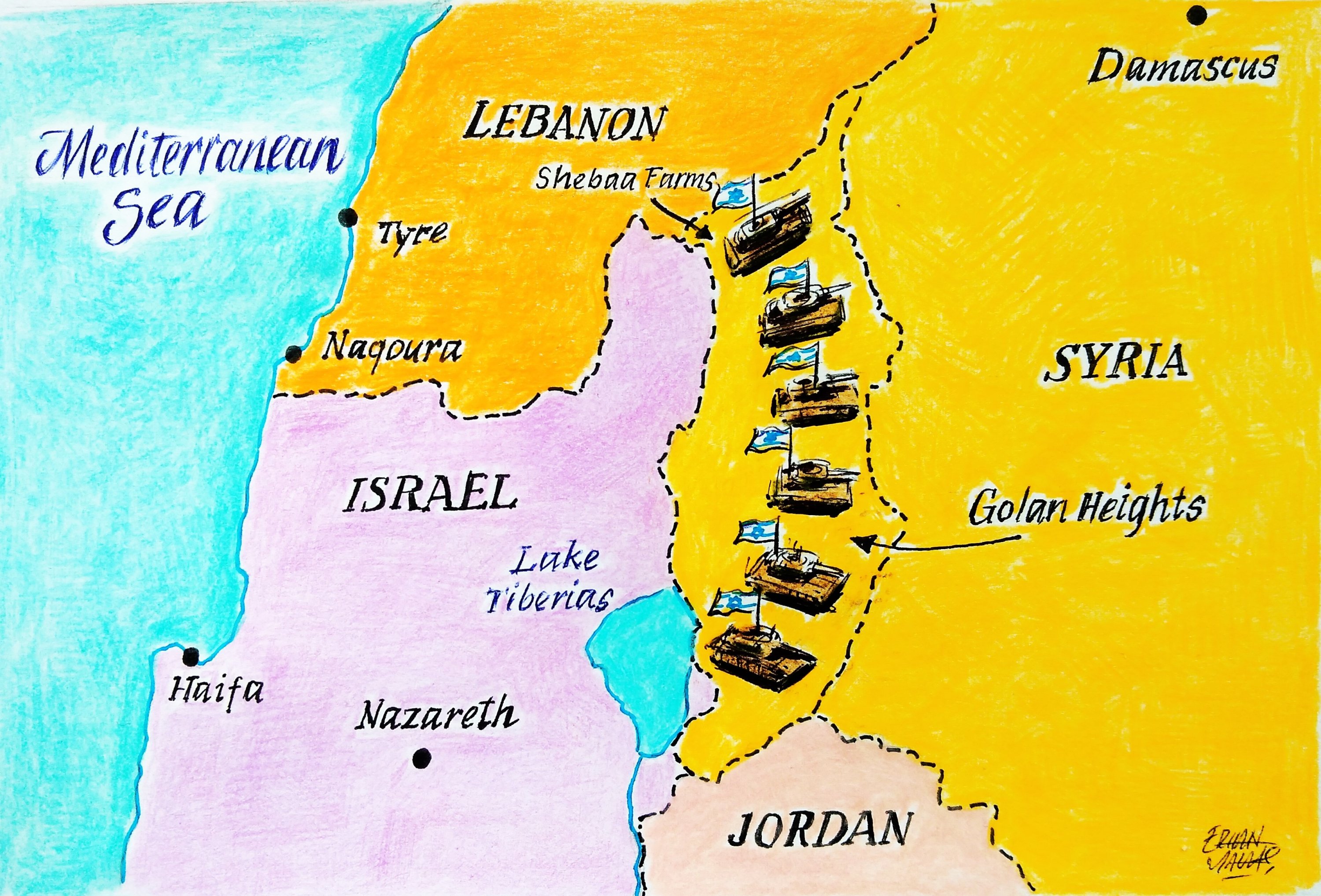
The fall of Bashar Assad’s regime in Syria has created a power vacuum with profound geopolitical implications. Israel, a key regional player, has swiftly moved to secure its strategic interests, from expanding potential settlements to countering Iranian influence. These actions reflect a calculated strategy aimed at ensuring Israel's security and maintaining its regional dominance.
Following Assad's downfall, Israeli troops and tanks crossed the border into Syrian territory, including the buffer zone established by the 1974 cease-fire agreement. According to reports from Israeli media, forces have taken control of a few villages in the buffer zone and warned residents to stay indoors. Israeli Prime Minister Benjamin Netanyahu has emphasized the temporary nature of these incursions while simultaneously announcing plans to double the population of Israeli settlers in the Golan Heights. The Golan region, occupied by Israel since 1981, remains internationally disputed, but Israeli leaders consider it critical for defense.
Netanyahu’s recent statement underscores Israel’s priorities: “We will continue to hold onto (the Golan Heights), making it flourish and settle it.” The Israeli government has committed $17.4 million to expand settlements, signaling its intention to solidify control over the area. This move comes despite the International Court of Justice and other global actors deeming such actions illegal under international law.
The Assad regime served as a linchpin in Iran’s regional strategy, facilitating the transfer of weapons to Hezbollah and other groups hostile to Israel. With Assad’s fall, Iran’s influence has been significantly curtailed. Israeli officials have celebrated this development as a blow to Tehran’s ambitions. However, the power vacuum also poses new challenges, including the risk of extremist groups gaining a foothold.
In response, Israel has escalated its military operations in Syria. Since Assad’s collapse, the Israeli Air Force has conducted hundreds of airstrikes targeting Syrian military bases, weapons depots and missile systems linked to Iran and its proxies. Israeli leaders have framed these actions as necessary to preempt an Oct.7-style attack, referring to the recent surprise assault by Hamas that rattled the nation.
“Israel will not permit jihadi groups to fill that vacuum and threaten Israeli communities on the Golan Heights with Oct. 7th-style attacks. That is why Israeli forces entered the buffer zone and took control of strategic sites near Israel’s border,” the prime minister's office said.
It seems Israel is trying to get the buffer zone under its control until a “responsible party” assumes power in Damascus. The chaos in Syria has also prompted Israel to strengthen its border defenses, with Netanyahu warning that no extremist group will be allowed to establish a presence near Israel.
Israel’s long-term strategy appears to involve using its presence in Syria as leverage in future negotiations. Netanyahu has expressed a willingness to engage diplomatically with any new Syrian government that demonstrates goodwill toward Israel. Analysts suggest that by controlling key territories, Israel aims to influence the eventual post-Assad settlement, potentially leveraging the situation to extract guarantees for its security.
The collapse of the Assad regime offers Israel an opportunity to reshape the regional balance of power. With Iran’s influence weakened, Israel seeks to reinforce its military superiority and ensure that Syria does not become a base for Iran’s backed forces. According to sources within the Israeli defense establishment, there is speculation about using captured Syrian territories as staging grounds for potential operations against Iranian proxies in Iraq.
Iranian media outlets, including Fars News Agency, have criticized Israel’s actions as “opportunistic” and “illegal.” Also, the Islamic Revolution Guards Corps (IRGC) has condemned the U.S. and Israel, criticizing their exploitation of Syria’s current instability to dismantle the country’s infrastructure. The IRGC's statement added the “astonishing silence” of international organizations regarding these acts of aggression. Despite these criticisms, Israel remains committed to its course, framing its actions as a necessity for survival in an unpredictable Middle East.
Israel’s actions in Syria highlight its proactive approach to securing its borders and asserting regional dominance in the aftermath of Assad’s fall. By solidifying its hold on the Golan Heights, countering Iranian influence and preempting extremist threats, Israel aims to safeguard its national security. While these moves have drawn international criticism, Israeli leaders remain resolute, viewing their strategy as essential in a volatile post-Assad Middle East.