Leaders and representatives from the BRICS alliance gathered recently in Rio de Janeiro for the group's 17th annual summit. The group signed a joint declaration encompassing 126 commitments covering global governance, finance, health, artificial intelligence, climate change and other strategic areas. The document sealed the group's commitment to strengthening multilateralism, defending international law, and striving for a more equitable global order. Yet, despite these strong declarations, recent developments on the international stage paint a more complex and uncertain picture.
The attack by the U.S. and Israel on Iran in June has revealed a critical weakness in the Global South: its inability to defend its members when challenged by Western powers.
Iran’s isolation during the crisis will likely prompt other BRICS and the Shanghai Cooperation Organization (SCO) nations to reassess the true effectiveness of these alliances. Without credible deterrence or mutual defense capabilities, the Global South’s aspirations risk appearing hollow.
In the 20th century, historical examples like the Warsaw Pact or the Sino-Soviet Treaty of Friendship demonstrated clear alternative military alliances, which translated into meaningful action.
The Middle East once maintained a balance, with the U.S.-led coalition supporting Israel and the Soviet-led coalition backing Syria, Egypt, Iraq and the Palestine Liberation Organization (PLO). Now, many of those former allies of the Soviet-led coalition have become failed states due to unchecked Western intervention.
The 21st century has seen unilateral interventions and invasions by the West, such as in Iraq, Afghanistan, Gaza, and now, Iran. These actions erode the credibility of international law, showing how major powers increasingly operate with near-complete impunity.
In this context, many looked to the concept of a multipolar world, not because they believe in it ideologically, but as a means of survival.
Following the fall of the Soviet Union and the end of the bipolar world, the world was dominated by a U.S.-led unipolar system and remained unchallenged for almost two decades. In the 21st century, global power has gradually shifted, with countries like China, India, Russia, Indonesia, Türkiye and the Gulf states gaining more economic and political influence.
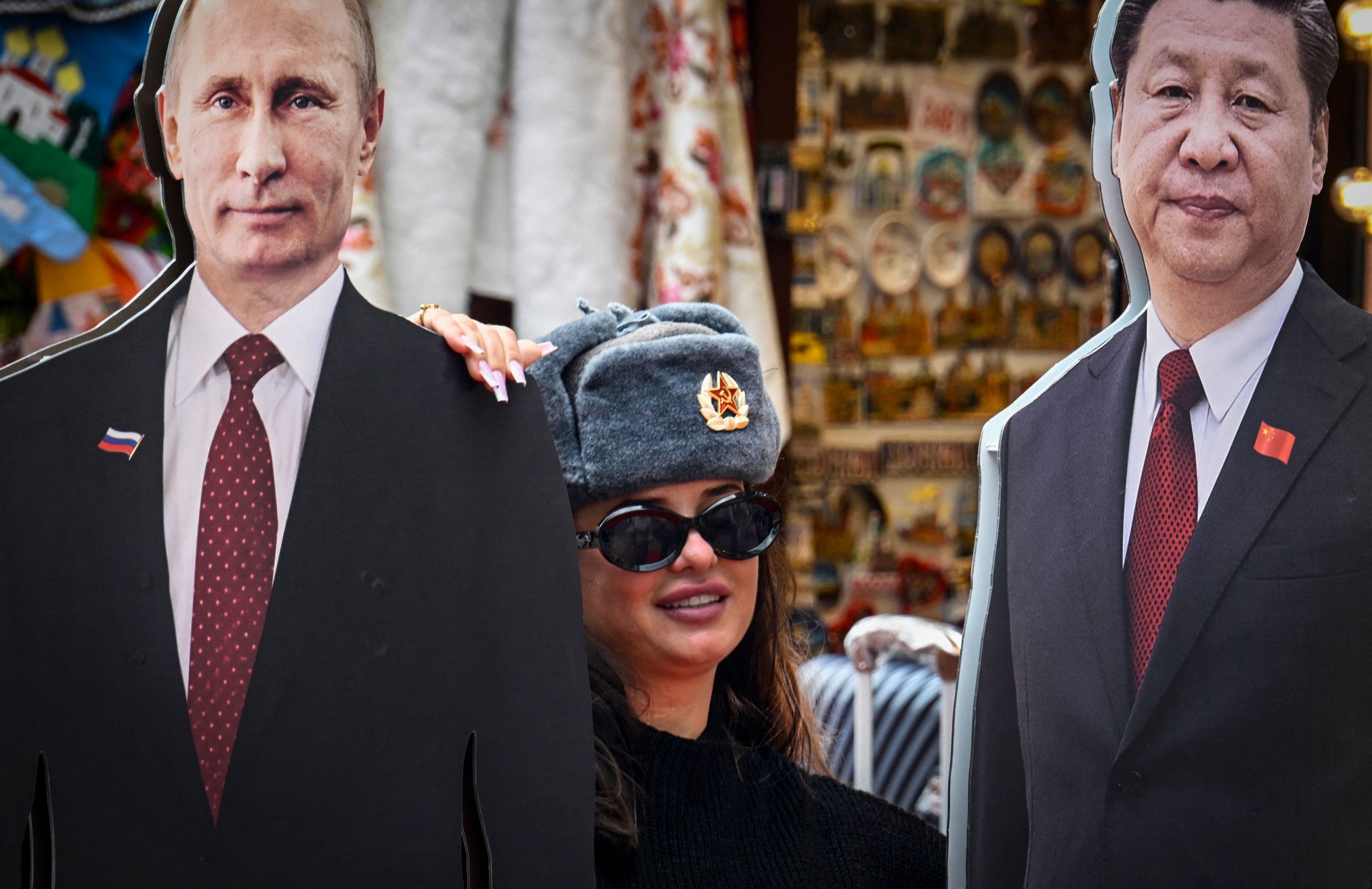
To adapt to this changing landscape, Russia and China have led initiatives like BRICS and the Shanghai Cooperation Organization (SCO) to challenge Western dominance and support a multipolar world order.
Iran, as well, has chosen to align itself with these efforts. Moreover, Iran has built closer bilateral ties with the members of both alliances, especially with Russia and China. Yet, at the most critical moment, these alliances did not result in the expected support for Tehran.
Interestingly, according to the Global Firepower rankings, three of the world's four strongest militaries are Russia, China and India, which are part of the Global South. All of them possess nuclear deterrence as well. Moscow alone holds more nuclear warheads than any other nation at an estimated 4,309, which is around 47% of global stockpiles. So, the Global South has the necessary muscle, it lacks only the collective will.
The issue lies in their divergent national interests and complicated ties with Western powers, which make swift and unified responses difficult.
Tehran supplied drones to Moscow during its war in Ukraine and afterward signed a strategic partnership agreement, yet when Iran was attacked, Russia offered only rhetoric. The partnership deal with Iran lacks any mutual defense provision – unlike its agreements with North Korea or Belarus.
Furthermore, with an ongoing rapprochement with the Trump administration, Russia preferred to remain focused on its own war in Ukraine and on preserving relationships with Gulf states wary of a stronger Iran.
Beijing, which had been enjoying a strategic partnership agreement with Tehran since 2021, again lacking a mutual defense article similar to Moscow’s one, was also hesitant to help one of its biggest oil suppliers.
Not long ago, striking a tariff deal with the U.S., China, for its part, maintained its long-standing noninterference policy. Its muted response may reflect its desire to conserve resources for a potential future conflict in its own backyard, the Pacific, particularly over Taiwan.
However, Beijing’s stance in the 12-day war did little to help shore up its ambition of becoming an influential player in the Middle East, and instead exposed the limitations of its clout in the region.
Hence, prioritizing their own personal agendas, Russia and China, offering only verbal condemnation, taking no action, reveal the hollowness of today’s so-called multipolar world.
Unlike the Global South, Western nations, including France, Germany, the U.K., and especially the U.S., rallied firmly behind their ally, with the U.S. even launching military strikes with B-2 bombers.
Moreover, the NATO alliance, with its “Article 5” mutual defense clause, adds further weight to this asymmetry. Any wider conflict risks pulling in all 32 member nations, reinforcing the dominance of the Western-led system.
Meanwhile, BRICS, and their allies offered only symbolic support. This imbalance starkly illustrates that global power still lies with the West – the so-called “golden billion” – while the rest of the 7 billion remains largely powerless.
Israel and the U.S.’s attack was more than a confrontation; it was a litmus test for the Global South, and they didn’t perform well, though there are valuable lessons to be learned from it.
The bloc’s own internal contradictions and their prioritized personal agendas are a big hurdle. For now, it lacks effective deterrence mechanisms and mutual defense agreements to protect its members, as highlighted by the recent U.S.-Israeli attack on Iran and the muted responses from supposed allies like Russia and China.
Unless the Global South creates its own “Article 5,” it will remain vulnerable, irrelevant and politically marginalized despite its economic and strategic potential.
Should they stand firm in the future, the multipolar world could emerge stronger, accelerating its push for the necessary mechanisms that may sidestep Western hegemony.