Daily Sabah logo

Politics
Diplomacy Legislation War On Terror EU Affairs Elections News Analysis
TÜRKİYE
Istanbul Education Investigations Minorities Expat Corner Diaspora
World
Mid-East Europe Americas Asia Pacific Africa Syrian Crisis Islamophobia
Business
Automotive Economy Energy Finance Tourism Tech Defense Transportation News Analysis
Lifestyle
Health Environment Travel Food Fashion Science Religion History Feature Expat Corner
Arts
Cinema Music Events Portrait Reviews Performing Arts
Sports
Football Basketball Motorsports Tennis
Opinion
Columns Op-Ed Reader's Corner Editorial
PHOTO GALLERY
JOBS ABOUT US RSS PRIVACY CONTACT US
© Turkuvaz Haberleşme ve Yayıncılık 2025

Daily Sabah - Latest & Breaking News from Turkey | Istanbul

  • Politics
    • Diplomacy
    • Legislation
    • War On Terror
    • EU Affairs
    • Elections
    • News Analysis
  • TÜRKİYE
    • Istanbul
    • Education
    • Investigations
    • Minorities
    • Expat Corner
    • Diaspora
  • World
    • Mid-East
    • Europe
    • Americas
    • Asia Pacific
    • Africa
    • Syrian Crisis
    • Islamophobia
  • Business
    • Automotive
    • Economy
    • Energy
    • Finance
    • Tourism
    • Tech
    • Defense
    • Transportation
    • News Analysis
  • Lifestyle
    • Health
    • Environment
    • Travel
    • Food
    • Fashion
    • Science
    • Religion
    • History
    • Feature
    • Expat Corner
  • Arts
    • Cinema
    • Music
    • Events
    • Portrait
    • Reviews
    • Performing Arts
  • Sports
    • Football
    • Basketball
    • Motorsports
    • Tennis
  • Gallery
  • Opinion
    • Columns
    • Op-Ed
    • Reader's Corner
    • Editorial
  • TV
  • Opinion
  • Columns
  • Op-Ed
  • Reader's Corner
  • Editorial

When words become crimes

by Ömer Kayacı

Dec 25, 2025 - 12:05 am GMT+3
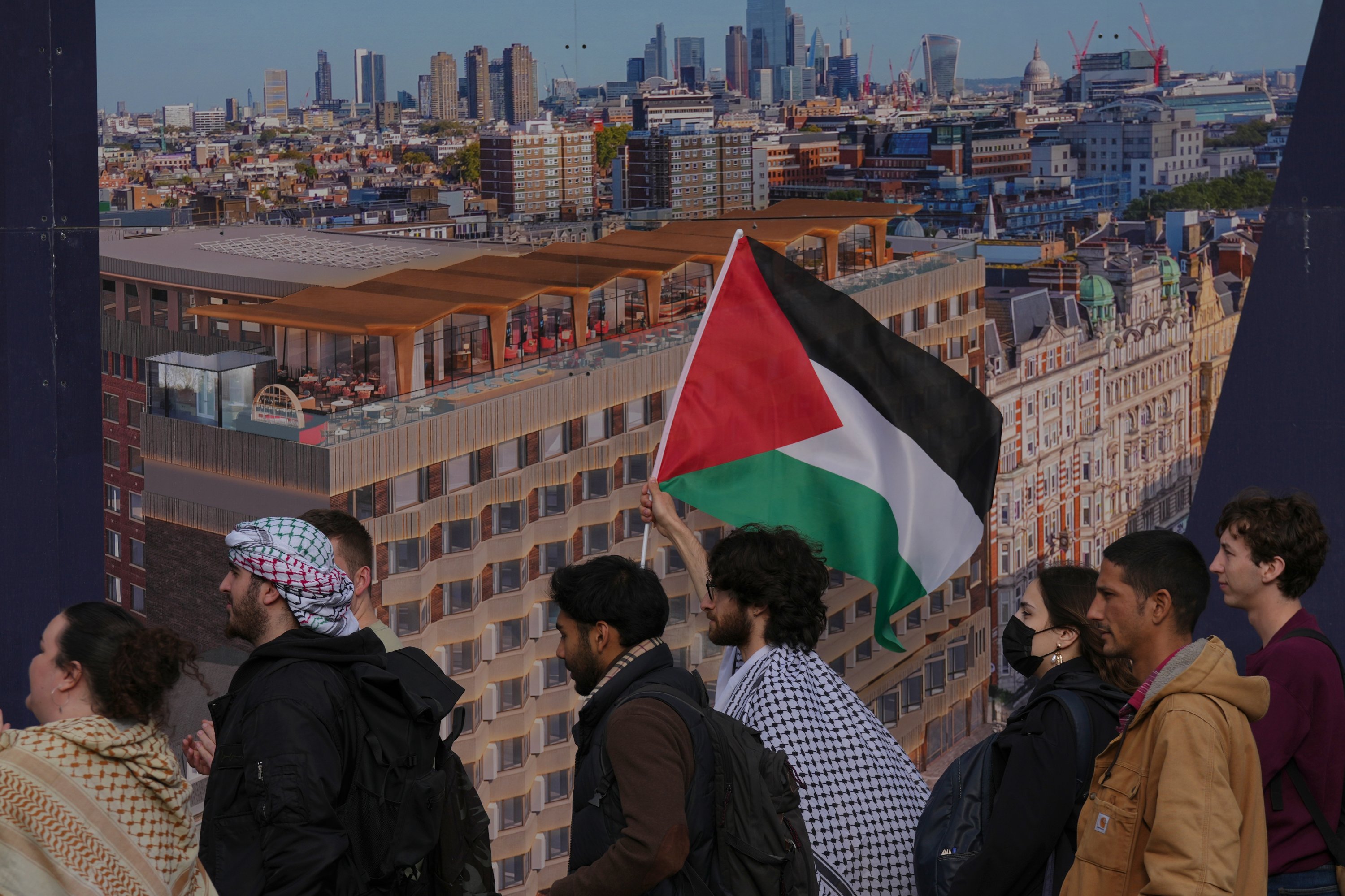
Students walk past a poster of the skyline of London as they take part in a demonstration holding banners, placards and flags during an Inter-university march for Gaza, London, U.K., Oct. 7, 2025. (AP Photo)
by Ömer Kayacı Dec 25, 2025 12:05 am

The word 'intifada' is criminalized not for its meaning, but for alarming Zionists

In response to the deadly attack at Bondi Beach in Sydney two weeks ago, Israeli Prime Minister Benjamin Netanyahu rushed to rebuke his Australian counterpart, Anthony Albanese, publicly reading from an earlier letter in which he had warned, once again, of “the danger of anti-Semitism.” What that danger was supposed to entail, however, was never really specified. Presumably, it referred less to a threat facing Jewish people in Australia than to a threat posed to Australia broadly were it to take steps Netanyahu opposes, such as recognizing a Palestinian state. Indeed, the source of this supposed danger appears to lie precisely in such acts, acts that conflict with Netanyahu’s preferred moral framework, which seems to rest primarily on the utter dehumanization and ultimate eradication of a people. Within this framework, implicating any Jewish person in morally questionable conduct is considered absolutely impermissible, even if that person clearly committed the most horrendous of crimes.

To prevent such dangers, then, various steps have been taken worldwide, including in Britain, where London Metropolitan Police and Greater Manchester Police recently announced that they would be arresting those who chant “intifada” – a term that had been subject to much controversy in the run-up to the last mayoral election in New York City when Zohran Mamdani refused to condemn its popular use. In London, however, at least two arrests have already taken place for “slogans involving calls for intifada” which were deemed “racially aggravated public order offences.” Of course, what exactly rendered those offences “racially aggravated” has not been specified either.

As the reader will know, the word “intifada” literally means “shaking off” or “awakening,” and it is usually translated as “uprising” in its historical and political context. Given that no one would be arrested for chanting “uprising” in the streets of London, one would assume that the alleged racial element lies in the selective and exclusive criminalization of a word of Arabic origin. Yet, the actual rationale was rather different: the term was regarded as racially aggravating because it would offend Zionists. And it would cause such an offence because it had been used for intimidation, notwithstanding its relatively benign literal meaning. Here, one is reminded of Austrian philosopher Ludwig Wittgenstein’s famous remark that the meaning of a word is determined by its use, not by its dictionary definition.

This is all well and good, but if this is the standard we are to adopt, we must address all sorts of extremely troubling questions. Take, for example, the English word “democracy,” routinely used to legitimize wars that have resulted in the killings of hundreds of thousands, if not millions, of innocent civilians. Or consider “freedom,” another term frequently utilized for ends certainly far more destructive than those associated with “intifada.” Should we then expect, for example, Iraqi police to arrest demonstrators chanting “democracy” or “freedom” in the streets of Baghdad? Should Western leaders receive letters of “warning” from offended Arab and Muslim governments, cautioning them about the “danger” posed by these words?

These considerations indicate that certain words are treated as dangerous not because of what they denote, nor even because of how they are ordinarily used, but because of the political claims they are perceived to support. “Intifada” is not prohibited as a call to violence (its English equivalents are widely tolerated), but as a refusal to accept a prescribed narrative. It is this refusal that attracts sanction, and it is this refusal that the likes of Netanyahu will always warn about. Perhaps the proper and consistent response, then, is to subject words like “democracy” and “freedom” to the same scrutiny, emphasizing the violence and destruction their use has long justified.


About the author
Researcher based in London
The views and opinions expressed in this article are solely those of the author. They do not necessarily reflect the editorial stance, values or position of Daily Sabah. The newspaper provides space for diverse perspectives as part of its commitment to open and informed public discussion.
  • shortlink copied
  • KEYWORDS
    zionism intifada palestine antisemitism israel israel-uk relations
    The Daily Sabah Newsletter
    Keep up to date with what’s happening in Turkey, it’s region and the world.
    You can unsubscribe at any time. By signing up you are agreeing to our Terms of Use and Privacy Policy. This site is protected by reCAPTCHA and the Google Privacy Policy and Terms of Service apply.
    No Image
    Repsol oil spill devastates fishermen's future in Peru
    PHOTOGALLERY
    • POLITICS
    • Diplomacy
    • Legislation
    • War On Terror
    • EU Affairs
    • News Analysis
    • TÜRKİYE
    • Istanbul
    • Education
    • Investigations
    • Minorities
    • Diaspora
    • World
    • Mid-East
    • Europe
    • Americas
    • Asia Pacific
    • Africa
    • Syrian Crisis
    • İslamophobia
    • Business
    • Automotive
    • Economy
    • Energy
    • Finance
    • Tourism
    • Tech
    • Defense
    • Transportation
    • News Analysis
    • Lifestyle
    • Health
    • Environment
    • Travel
    • Food
    • Fashion
    • Science
    • Religion
    • History
    • Feature
    • Expat Corner
    • Arts
    • Cinema
    • Music
    • Events
    • Portrait
    • Performing Arts
    • Reviews
    • Sports
    • Football
    • Basketball
    • Motorsports
    • Tennis
    • Opinion
    • Columns
    • Op-Ed
    • Reader's Corner
    • Editorial
    • Photo gallery
    • DS TV
    • Jobs
    • privacy
    • about us
    • contact us
    • RSS
    © Turkuvaz Haberleşme ve Yayıncılık 2021