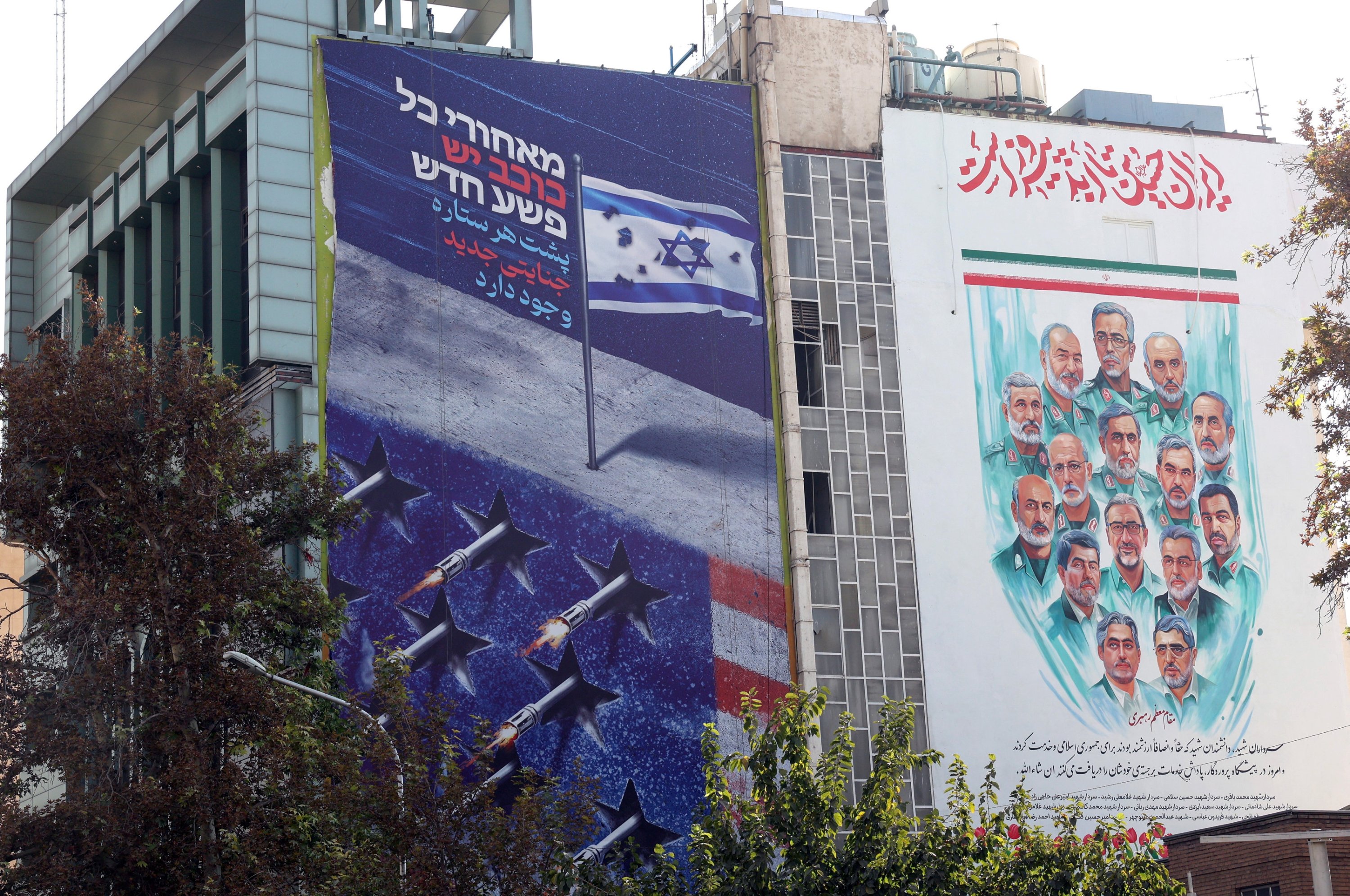
The military doctrine of the Islamic Republic of Iran has persisted since the 1979 Revolution, claiming to be based on a "defensive" framework. Tehran relies on asymmetric deterrence and regional influence politics conducted through proxy forces rather than direct warfare. However, by the mid-2020s, the sustainability of this model had come under serious question. Israel's intensive airstrikes throughout 2024-2025 exposed the limits of Iran's passive defense capabilities, while internal strategic divisions within the Islamic Revolutionary Guard Corps (IRGC) and the country's economic crisis brought the need for doctrinal revision to the fore.
These developments make the question of what military orientation Iran will adopt in the coming period important at both the regional and global levels. Can the Tehran doctrine really change, or will ideological and institutional constraints continue to limit this change?
Iran's military thinking has historically been built on a "defensive" discourse. According to Tehran, the Iranian army only engages in conventional conflict when under direct threat. This understanding is based on the "oppressed but determined resistance" rhetoric of Khomeinist ideology. Asymmetric warfare tools – fast attack boats, mobile missile systems, kamikaze drones and proxy forces – are the cornerstones of this defensive logic.
However, the line between "defense" and "passivity" is becoming increasingly blurred. Although Iran largely maintains its presence in the region through Hezbollah, Hashd al-Shaabi, Ansarullah and other proxy forces, the weakening of these structures in recent years may force Tehran into direct engagements. This network, defined as the Axis of Resistance, provides Iran with geopolitical flexibility on the one hand, while creating dependency and coordination problems on the other.
The pressure for change in Iran's military doctrine comes primarily from two directions: external threats and internal institutional tensions.
Externally, Israel's deep strike capability is forcing Iran to redefine its strategic defense. The 2025 wave of attacks exposed the inadequacy of Tehran's radar and early warning systems. This situation suggests that a "wait-and-see" passive defense approach may be replaced by more "pre-emptive and active deterrence" approaches.
Domestically, the generational divide within the IRGC is noteworthy. The conservative generation, shaped by the war experience of the 1980s, defends the status quo, while younger officers, who gained experience in Syria and Iraq, advocate for more aggressive, pre-emptive operations. This divergence has become one of the most significant internal dynamics shaping the direction of Iranian doctrine.
However, despite this pressure for change, there are powerful obstacles to doctrinal transformation in Iran. First and foremost, Iran's security philosophy is based on an ideological foundation. The founder of the Islamic Republic of Iran, Ayatollah Ruhollah Khomeini's concept of "protecting the revolution" established a sanctity that defines the limits of military strategy. Therefore, any revision of the doctrine must be consistent with the "revolutionary defense principles."
On the other hand, the Islamic Revolutionary Guard Corps (IRGC) is the biggest beneficiary of the current doctrine. With extraordinary power concentrated in the military, economic and political spheres, the IRGC is the guardian of the status quo. A radical change in doctrine would create serious internal resistance, as it would jeopardize this institutional power.
Iran's technological limitations must also be added to this picture. Iran is still dependent on external sources in areas requiring high technology, such as air force, electronic warfare and satellite surveillance. Although systems acquired from Russia and China provide some modernization, they are used within the limits of the existing doctrine and do not create a paradigmatic transformation.
Under these conditions, Iran's military doctrine could evolve in three main directions.
The first scenario is a reformist approach based on active deterrence. In this model, Iran maintains its defensive doctrine while increasing its missile, unmanned aerial vehicle (UAV), and cyber capabilities, thereby creating an "offensive threat capability" to deter the enemy. Young IRGC cadres support this line.
The second scenario is a shift from a proxy power strategy to a hybrid intervention doctrine. The attrition of proxy actors could push Iran toward direct engagement. In this case, IRGC ground and air forces would become more active and Basij paramilitary groups could be deployed in external operations. However, this approach would make Iran a more visible and therefore more targetable actor at the regional level.
The third scenario could be a shift to a "passive" doctrine in an environment of intensifying internal pressures. Economic fatigue, social discontent and diplomatic pressures could push Iran toward a more inward-looking, conciliatory defense posture. However, this scenario appears unlikely for ideological reasons.
Iran-Israel clashes subjected Tehran's military system to a kind of "stress test." Israel's high-precision strikes exposed weaknesses in Iran's air defenses, while Tehran's retaliatory capacity remained limited. This experience triggered adaptations in Iran in the following areas: reorganization of air defense networks, centralization of missile and UAV command, review of operational coordination of proxy forces and expansion of cyber and electronic warfare capabilities.
These changes do not represent a revolutionary break in doctrine; rather, they signify making the existing structure more agile and technology-responsive.
Today, Iran's military doctrine persists as both an ideological legacy and a strategic necessity. Neither the institutional nor the technological conditions exist to speak of a radical revolution in doctrine. However, the possibility of an "evolutionary" change, i.e., a transition to a more effective, pre-emptive and technology-based defense approach, is growing stronger.
This transformation could also reshape Iran's regional policy. The shift from asymmetric deterrence to hybrid deterrence could make Iran a more flexible and accountable military actor. However, this also means redefining the regime's internal power balances and ideological discourse.
Iran's greatest challenge lies in modernizing its security strategy without compromising its revolutionary identity. Developments in the mid-2020s have shown that it is no longer just a matter of defense, but also of strategically "redefining oneself" as a security issue.