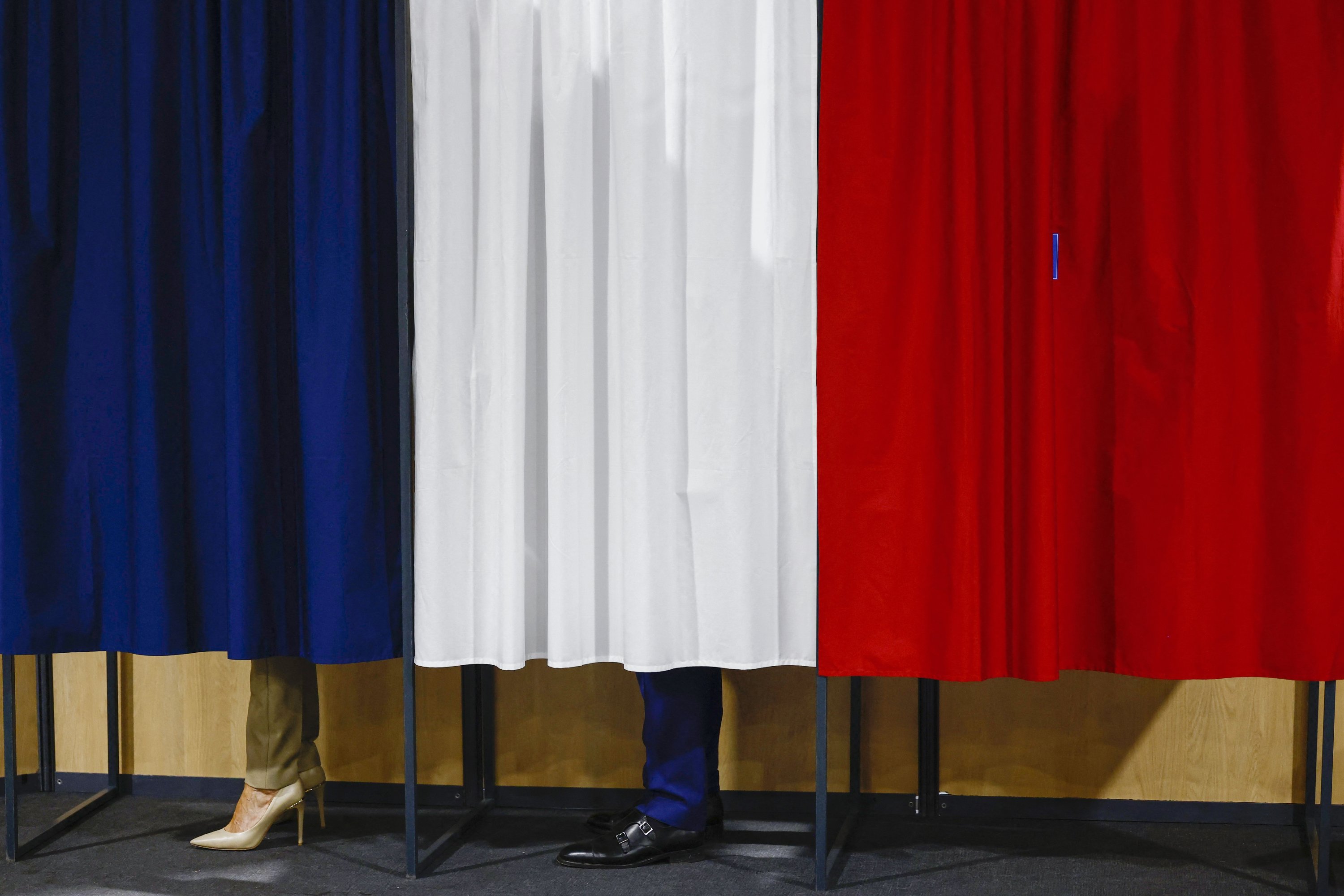
Following the European Parliament’s (EP) election in June, the rise of the far-right has been one of the most worrying and globally significant developments that Europe and the world have ever encountered in recent years. Although it has been known for a long time that the far-right is on the rise, it was surprising that they gained such strength within the EP. The vote losses of the left and liberal parties were followed by resignations and early election decisions.
While French President Emmanuel Macron dissolved the National Assembly and decided to hold early elections, Belgian Prime Minister Alexander De Croo announced his resignation.
Although there were no similar moves in Germany, criticisms of Prime Minister Olaf Scholz and his party, the Social Democrats, were brought to the agenda again. Macron's early election decision was originally thought of as a way to consolidate his power, but inversely, this decision strengthened the far right.
So, will the victory of the far right in France change the fate of Europe?
Political parties are the main actors in a country's political system. While the power of political parties increased in the system after the 19th century, their ideological aspects also began to become stronger. Especially the period before and during World War II is an essential example. For this reason, when dealing with extreme rights in political parties, we should remember that they seek a particular form of power with an ideological formation. Although many different versions of the far right exist, we encounter specific characteristics defining this approach, such as authoritarianism, xenophobia, nationalism, resistance to liberal democracy and anti-elitism. The neo-fascist approaches and increasing nationalism of the war period were nourished and strengthened by economic crises. Of course, when the distinction between "us and the other" is added to this, a support area that strengthens "us" emerges in both domestic and foreign policy. After the destruction and human rights violations caused by World War II, international actors took essential steps to establish global peace by blacklisting far-right movements.
Although the Cold War process began in the system, we did not see a process of military destruction in Europe. Thus, the far-right grabbed the opportunity by waiting to regain power and resume its activities. Naturally, due to the East-West divide in the system, the economic structure of the West, which was strengthened by the welfare state in the 1970s, also weakened an environment in which the far right could gain strength. However, after the 1980s, the effects of globalization, the demand for cheap labor and intense immigration to European countries significantly increased xenophobia. Finally, the end of the Cold War and accelerating waves of immigration, social mobility, international crises and political instability created the opportunity for far-right tendencies. The far right was turning a system of problems that began to feed "us" to its advantage. Hence, in the post-World War II period, the far-right gradually re-established itself through multiple waves.
As of 2014, there has been an increasing change in far-right support in Europe. The old rhetoric of the right wing in Europe was revised, and xenophobia merged with Islamophobia. The politics that exist through the other have been strengthened by unemployment and immigrant problems, as well as the rhetoric that those in power do not understand "us" and do not protect them against the "other." This situation is a big problem, especially for European societies experiencing a regression in their socio-economic gains. As a result, the increase in conflict areas that increased mass migration, such as the Arab Spring, the Syrian Crisis, the Russia-Ukraine war and the increasing number of immigrants, supported the rhetoric of the right wing instead of the center parties in Europe.
Parties with a liberal approach gave the extreme right the base it sought. The ruling parties in the center were weakened by their inability to solve the problems in their foreign policies, especially by internalizing the problems of conflict areas with weak socio-economic integration. Thus, chaos ensued in Europe as 21st-century versions of fascism and nationalism emerged in the far-right, reminiscent of World War II. The dramatic momentum in the rise of the far-right has been supported and instrumentalized, especially by Islamophobia.
The far-right in Europe used increasingly Islamophobic approaches after the 9/11 attacks in the United States. Terrorist attacks, especially in Europe, have become the most essential tools of this. Increasing migration from East to West and the economic crisis and increase in unemployment rates in Europe since 2008 have further strengthened the image of the "European People whose jobs have been taken away from them" as an extension of international terrorism in far-right discourses.
Like other right-wing examples in Europe, France has also been experiencing an increasing populism effect in recent years. In a process where all the tools of the right, such as anti-immigration rhetoric, nationalist policies and anti-EU sentiment, are used in France through Marine Le Pen and her party, the National Rally (RN), the increase in votes in the elections within the EP is significant. Le Pen is the daughter of former leader of the National Rally, Jean-Marie Le Pen. Jean-Marie Le Pen stands out as a determined person who is close to politics. Even though he was not in power, especially during the years he spent as a far-right representative, his power is undeniable.
When she was taking over the party from his father, the party's name was National Front. Marine Le Pen, an important representative of the far-right, came to prominence when she announced her candidacy for the 2022 presidential elections. Opposing Macron, Le Pen came in second with 23.2% of the votes in the first round, making the elections go to the second round. Ultimately, Macron declared victory, only to see that everything changed in 2024. It was unclear how the elections would unfold in France due to domestic political issues, such as inflation and farmer protests, amidst the ongoing Russia-Ukraine war.
This dissolution of France's National Assembly decision was made in response to the changing political dynamics and the need for a fresh mandate. However, after the first round of the early general election in France over the weekend, the RN received 34% of the votes. This means a huge loss of confidence for Macron. On the other hand, Le Pen is seeking support for RN leader Jordan Bardella to become prime minister.
Bardella, 28, is a notable figure among young French citizens. The leader of the far-right RN party, Bardella, who is highly active on social media, has announced that if he becomes prime minister, he will serve all French people. However, it is thought-provoking that there is no clear stance on "others" apart from the French populace. Given his anti-immigrant and anti-Islam positions, this issue could potentially create problems not only for France but also for Europe soon. It should not be forgotten, however, that this young far-right figure is himself the only child of a family of Italian origin.
Le Pen and the National Rally appeal to voters disappointed by the center and traditional parties with a nationalist agenda. It is also notable for its strict immigration policy focus and anti-Islam rhetoric. The most important thing is that he is Eurosceptic and, of course, his hesitant view on the Russia-Ukraine war in which Europe is dragged. Whether Le Pen's close relations with Putin will end France's support for Ukraine, it will change it, at least from a more optimistic view. Of course, the most significant development is that if the RN wins, this will be the first time that a far-right party has come to power in France since World War II.
Finally, the potential for a far-right victory in France is a significant possibility. If no party can secure an absolute majority, the country could face political paralysis. An interim government may be necessary to run basic day-to-day affairs. In short, Macron's power play attempt to restore self-confidence may result in a significant shift in France's political landscape.