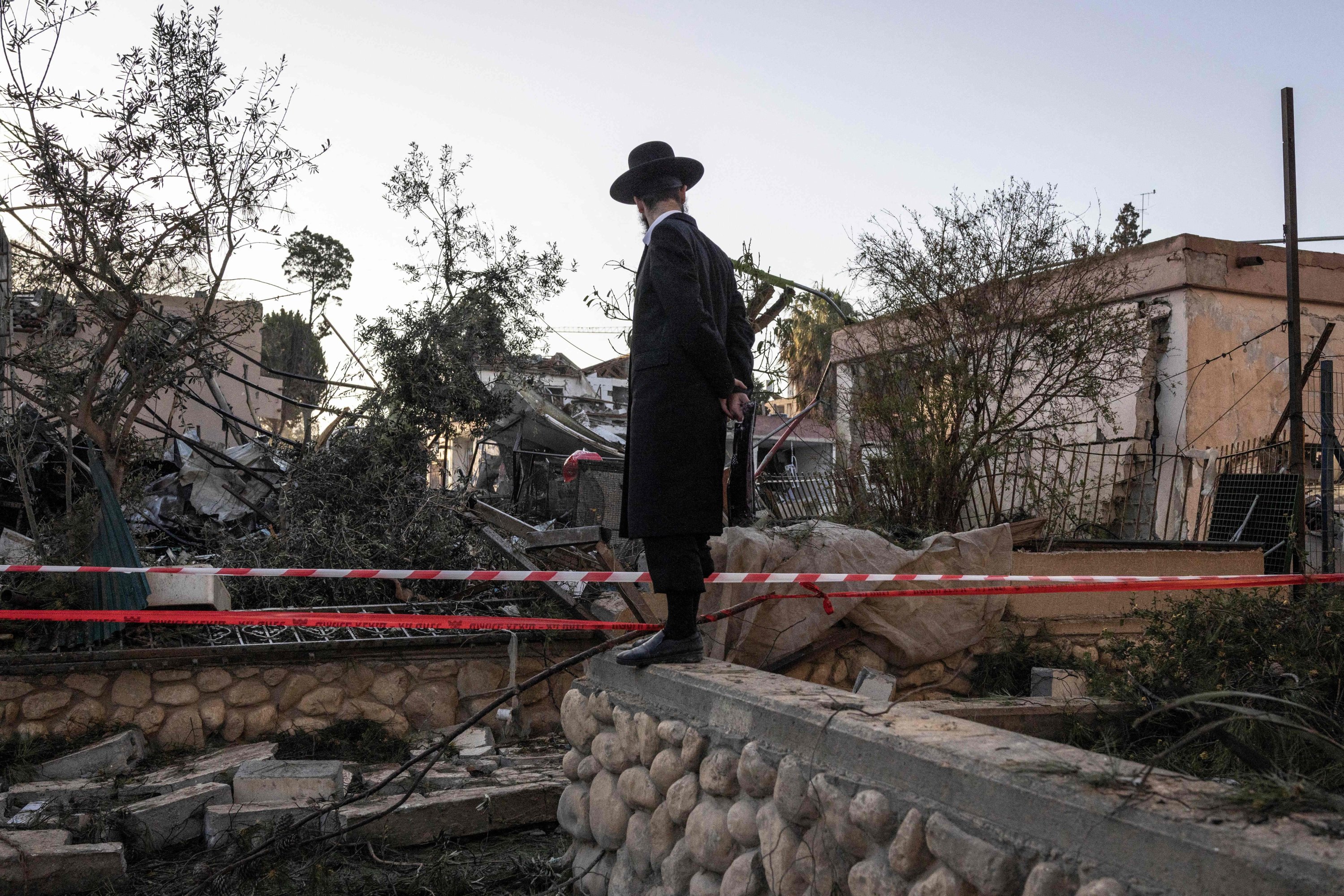
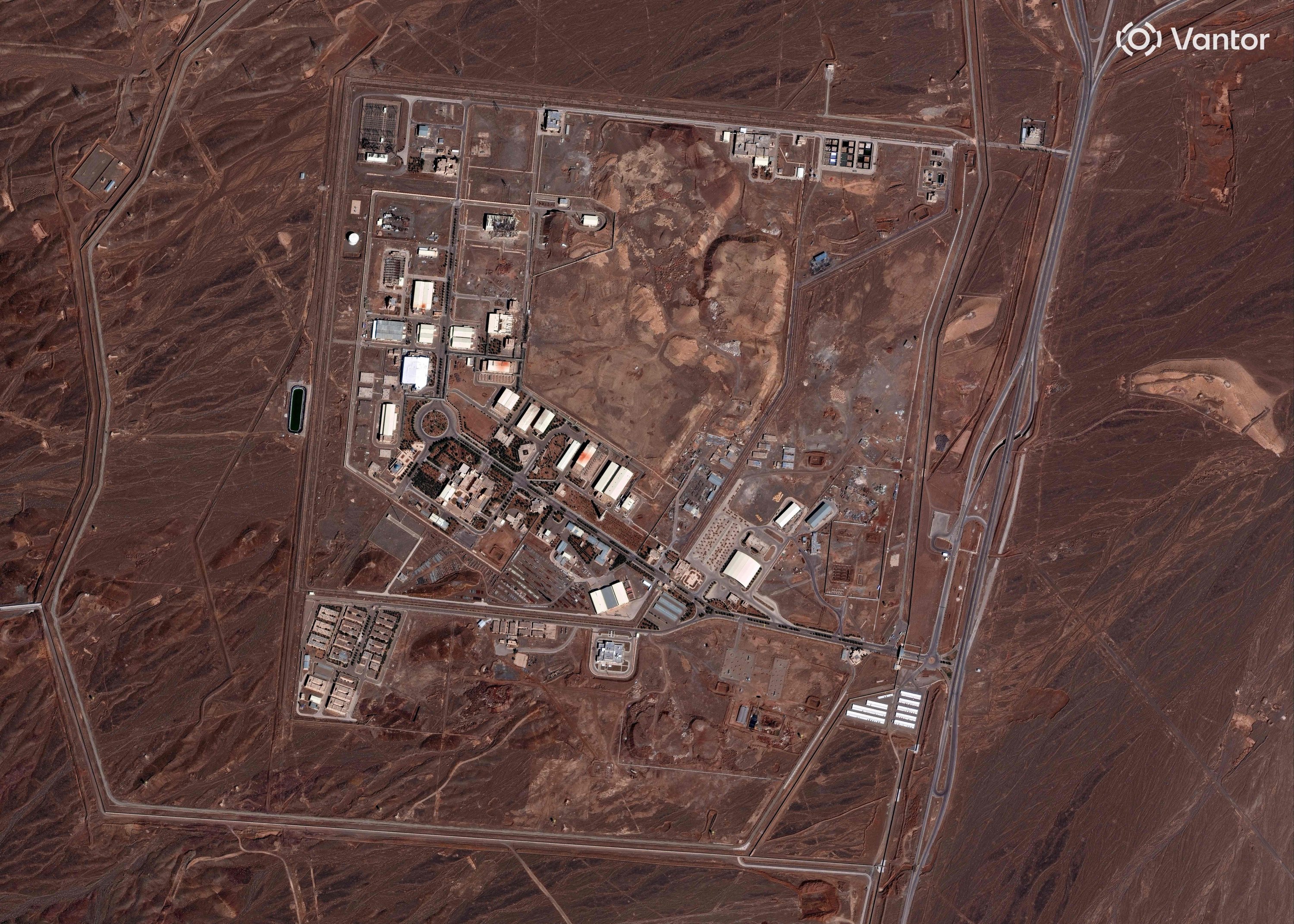
The recent attack on Iran's Natanz nuclear facility, as we enter the fourth week of the war, as well as the attacks on Natanz, Isfahan and Fordow nuclear facilities during the 12-Day war last summer, have reminded us of a reality. In modern warfare, the targets are no longer just military bases or missile launch pads. Today, the real objectives are undermining the predictability of energy systems, destabilizing their control mechanisms, disrupting the very nervous system of markets, and instilling fear and chaos across the international arena. The greatest danger lies not only in radioactive fallout, but also in the potential for such circumstances to prompt the erosion of arms control and harsher nuclear decisions in the future.
The war in the Middle East has sparked both a security and an energy crisis. The repercussions have already extended beyond military risks, manifesting as oil prices, tanker routes, insurance premiums and inflation. Every tremor around Iran shakes not just the map but the market as well. Because the battlefield and energy arteries now overlap on the same map.
That is why evaluating attacks on nuclear facilities solely by whether they were physically hit is insufficient. Even more critically, reducing the issue to whether a radiation leak occurred is a serious misjudgment. The real issue is the loss of verified information, the spread of disinformation, and the resulting rise in fear. As fear grows, markets begin to price in the worst-case scenario. Ultimately, energy costs climb, inflation rises and political pressure intensifies.
Recent developments in Iran demonstrate exactly this. Damage to nuclear facilities may not always result in radiation, but it almost always creates uncertainty. That uncertainty, in turn, erodes confidence in maritime shipping, drives up insurance costs, strains the supply chain, and makes trade routes more vulnerable. Ultimately, the economic impact is far broader than the physical damage itself.
This is precisely why we must take Iran’s nuclear issue seriously.
What the United States and Israel have consistently argued is that Iran poses a nuclear threat to its regional adversaries, but that claim demands clearer context and scrutiny.
Indeed, Iran is not merely pursuing an ordinary nuclear program mentioned in the footnotes of technical reports. A significant accumulation of capabilities is at play that affects regional balances and alarms the international community. Iran’s nuclear energy infrastructure is not limited to research alone. It operates a nuclear power plant, has new reactor projects, research reactors, fuel cycle capabilities, uranium conversion facilities, and an advanced centrifuge infrastructure. In other words, the issue is not confined to a single centrifuge facility, but extends to a broad nuclear ecosystem, spanning energy production to research, and fuel technology to enrichment.
Furthermore, what makes Iran’s case particularly noteworthy is its stockpile of highly enriched uranium. Among nations without nuclear weapons, Iran stands alone in enriching uranium to such high levels, and that cannot be dismissed. This capability signals that the technical threshold for a nuclear weapon is dangerously narrowing.
However, it is essential to draw a clear distinction at this point. Possessing a strong nuclear capability is not the same as possessing an actual weapon. The debate today is not over a verified, ready-made bomb, but over the unsettling reality that the path to one has become significantly shorter, both technically and strategically.
Precisely for this reason, it is not accurate to give a definitive "yes" to the question, "Has Iran built a nuclear bomb?" at this time. There is no publicly verified Iranian nuclear weapon. But this does not mean the risk is small. In fact, the real danger begins here. The problem lies less in today’s snapshot than in the trajectory toward tomorrow. When high-level enrichment capacity, weakening oversight, diminishing transparency, and the harsh psychology of war converge, they can push the region toward a far more fragile state.
So, is this capacity a threat to the world? It is essential here to define the nature of the threat accurately.
We consider the greatest danger to be a sudden global nuclear apocalypse set to begin tomorrow morning. But the fact that it has not happened until now does not mean that today’s developments – the acceleration of the regional arms race and the erosion of arms control – are not pushing us in that direction. The reality is that Iran, along with all other nuclear-armed countries, could adopt a harder-line strategic stance in response to these attacks. It is also the conclusion that other actors might reach: that only nuclear deterrence can ensure their protection. History has demonstrated this time and again. War, in many cases, accelerates precisely the threat it seeks to prevent.
Will this war turn into a classic nuclear war in the near term? Given the current situation, such a possibility seems low. However, the likelihood of a growing nuclear risk is certainly serious.
The most likely scenario in the short term is not that the parties will launch nuclear warheads at each other. What is more probable are new attacks on nuclear facilities, a further breakdown of the safety chain, an increased risk of a radiological accident, and, over the longer term, other countries entering a nuclear arms race and the rise of factions within Iran advocating that the country must now pursue a bomb. In other words, the most immediate threat is not necessarily an atomic explosion, but the collapse of the nuclear safety line.
We need to be more explicit about another fact: a nuclear war is not the same as a nuclear accident. If civilian nuclear facilities in a region become targets in a conflict, such as an attack on a power plant or a research reactor, the consequences could be far more severe than conventional military damage, posing a major security risk to the entire world. For this reason, the public must focus its fears not on the wrong target, but on the right issue.
So the question we face today is not whether a nuclear war will break out tomorrow, but whether the nuclear safety chain is collapsing, and what countries must do to prevent this.
In the coming period, the nations that will remain strong will not be those that succumb to panic, but those that manage nuclear security with strategic foresight, advocate for robust oversight, and treat the preservation of the energy order as an integral part of national security.