The Syrian government and the PKK terrorist group's Syrian wing, YPG, signed a memorandum on March 10, 2025. Following a meeting between YPG leader Ferhat Abdi Şahin and Syrian President Ahmed al-Sharaa, an agreement was signed accepting the dissolution of the YPG and the integration of the SDF, primarily dominated by YPG forces, into the Syrian Armed Forces. The two sides agreed to create a united national government in Syria.
However, the YPG remained hesitant to take any concrete step. It failed to implement any requirements of the agreement. On the contrary, the YPG was often accused of violating the agreement. Still, the new Syrian government continued to urge the YPG to abide by it. Meanwhile, the YPG expected external intervention in its favor, but this expectation never materialized. Neither the U.S. nor Israel attempted to prevent the Syrian government from proceeding against the SDF forces and control much of the regions once controlled by them.
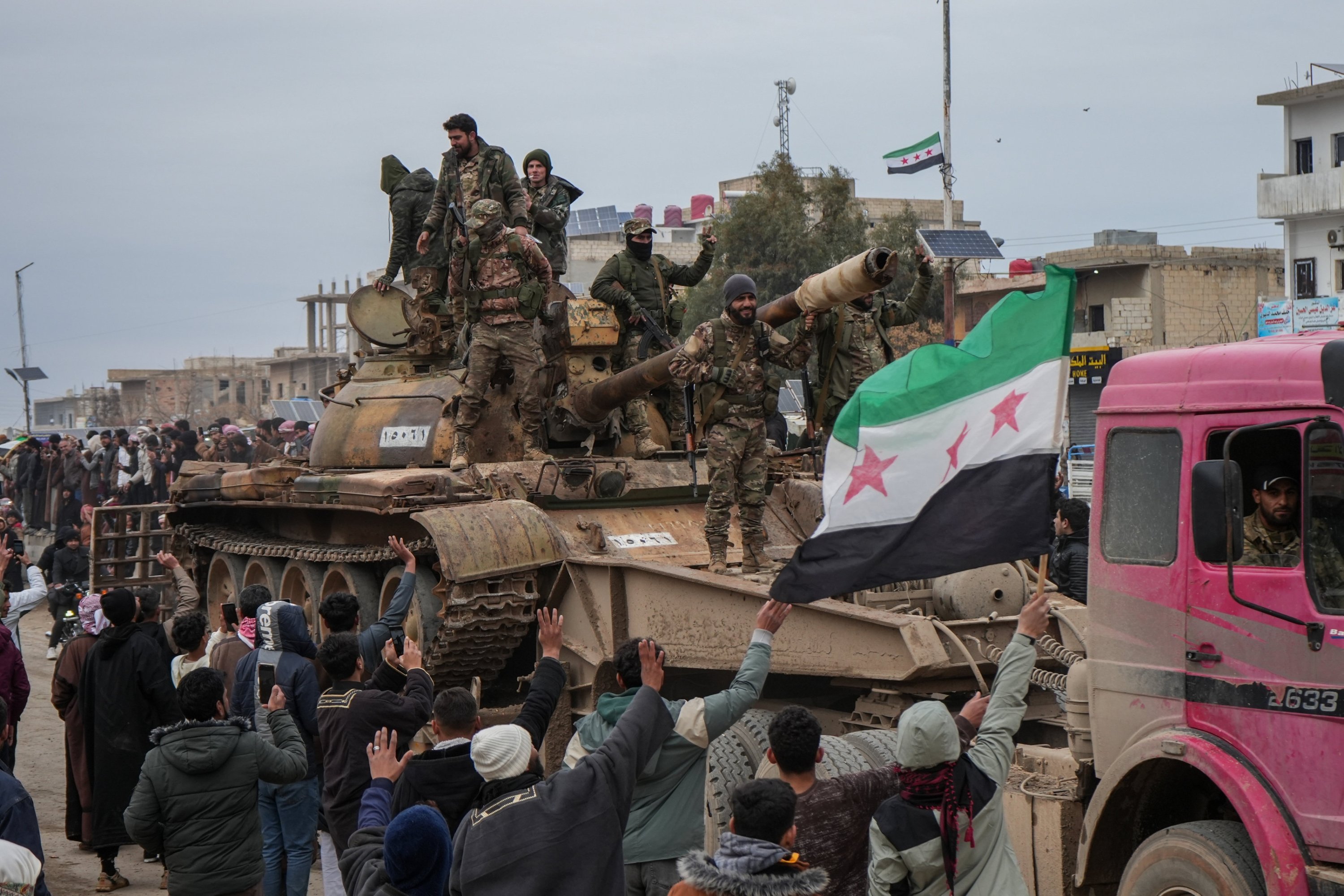
After the deadline for implementing the March 10 memorandum on Dec. 31, 2025, the conflict between the central government and the SDF forces erupted on Jan. 6. The Syrian army took control of the SDF strongholds in Aleppo, namely the Ashrafiyeh and the Sheikh Maqsoud neighborhoods, thus taking full control of the Aleppo city center. This was the first step of retaking the territories from the SDF forces. In the second step, the Syrian army cleared the west of the Euphrates River of the SDF. The Army forced the SDF forces to withdraw from the west of the river without much armed conflict.
Then, the army turned its attention to the country's natural resources, especially its oil-rich areas. The Syrian army has begun to regain control of major cities previously held by the YPG one by one. First, Tabqa was captured by the army. When the local Arab tribes allied with the YPG realized the power and determination of the central government, they defected from the SDF and joined the government forces. The Syrian army, further strengthened by the participation of Arab tribes, captured Raqqa and Deir el-Zour, two major cities of the northeast region.
Finally, the Syrian government and the YPG agreed on a cease-fire on Jan. 18. Thus, the renewed conflict between the two sides ended in 12 days. According to the agreement signed between the conflicting sides, the Syrian government will take administrative and military control of both Raqqa and Deir el-Zour provinces. Furthermore, it will control all oil and natural gas fields and international border crossings.
The YPG, the most important component of the SDF, was hoping for an external intervention. It expected that the Western states would provide the necessary support to maintain the semi-independent political entity in Syria. It misinterpreted international developments and global dynamics once again. Neither the U.S.nor any other Western country came to its aid. On the contrary, both the U.S. and Western European countries have been trying to improve their relations with the Syrian government.
The YPG also misinterpreted the internal political developments and dynamics in Syria. They expected to establish a semi-independent political entity in northeastern Syria, similar to the Kurdistan Regional Government (KRG) in Iraq. However, they failed to take into account that the two states have different characteristics and dynamics. The situations of Syrian and Iraqi Kurds are very different.
While the Iraqi Kurds have been struggling against the Iraqi central government since its establishment, the YPG have been in close relations with the Baath regime in Syria. As a matter of fact, the Baath regime was the PKK/YPG’s most important patron and protector. In general, the YPG did not fight against the Assad regime throughout the Syrian civil war. Naturally, it always refused to collaborate with any group of the Syrian opposition forces.
On the other hand, the YPG did not historically defend the rights of Syrian Kurds against the Assad regime, its main regional supporter. Hundreds of thousands of Kurds were not even citizens of the country. Although the PKK/YPG was mainly recruiting its militants from these Kurds who have been deprived of all their rights, it has never voiced concerns about the disadvantages faced by them.
Furthermore, many Kurdish political groups were struggling against the despotic Baath regime. These groups were mainly coming from a traditional and conservative background. After the establishment of the so-called YPG's political wing, PYD, in 2003, most of these Kurdish political actors were neutralized. With the help of the Assad regime, the PYD established a power monopoly among the Kurds in the region. The PYD maintained its power monopoly throughout the Syrian civil war, largely thanks to the U.S. military and financial support and with its collaboration with the Assad regime.
In addition, unlike the KRG region, the political entity controlled by the YPG was artificial. On the one hand, it was entirely dependent on U.S. military and financial support. Most observers recognized that sustaining this de facto political entity without U.S. backing was impossible, and that the YPG-controlled administration would collapse as soon as American support was withdrawn. On the other hand, the political system that was created was totally alien to the Kurds and to the Middle Eastern region. Many Kurds had to leave their homes to escape this system and to save their children from this ideological entity.
Lastly, unlike the KRG region, the political entity established by the YPG was based on an ideological foundation, not an ethnic basis. A large portion of the regional population was not even Kurdish. The establishment of a socialist/communist political entity in a mostly religious social environment was not sustainable. The political discourse employed by the leaders of the political entity was alien to a large portion of the population.
In conclusion, the political and social contexts of Iraqi and Syrian Kurds are quite different. The realities of Kurdish communities and the realities of the central governments of these two states are different. Within the two weeks, a new balance of power and a new political equation emerged in Syria. It seems that the central government will prioritize rational political moves and successfully integrate the Kurds within the Syrian political system. Considering the articles of the decree issued by Ahmad ash-Shaara last Friday, the Syrian government will grant cultural, linguistic and civic rights of the Syrian Kurds.
The decree underlines that Syrian Kurds are an authentic and integral component of the Syrian nation and the state. The government recognizes Kurdish as a national language. It promises to protect cultural and linguistic diversity. It allows the Kurdish language to be taught in Kurdish-majority areas. It abolished the 1962 census in Hassakeh province, which left thousands of Kurds stateless. Lastly, the decree designates Newroz, a festival marking the first day of the spring semester, which is widely celebrated by the Kurds, as a national holiday.