As global trade patterns continue to evolve and regions reorient their logistics priorities, the spotlight has increasingly fallen on the South Caucasus. In this context, the Zangezur Corridor is quickly gaining attention – not just as a transport route, but also as a strategic lifeline linking East and West. Anchored at the crossroads of the Middle Corridor and China’s Belt and Road Initiative (BRI), this emerging connection carries the potential to reshape both the regional economy and broader geo-economic alignments.
The corridor’s roots lie in a historically fraught geography. It aims to reestablish direct land access between Azerbaijan and its Nakhchivan exclave – a connection severed decades ago after the Zangezur region was handed to Armenia following Soviet intervention in 1920. While the separation was negligible during Soviet times, Armenia’s subsequent blockade of transport routes turned Nakhchivan into an isolated pocket. The proposed corridor seeks to change that, breathing new life into a passage that some have dubbed the “Turkic Gate.”
For Azerbaijan and its regional partners, this route represents more than just a restored connection. It’s a chance to reconfigure the logistics map, offering an uninterrupted trade route from Türkiye across the Caspian and into Central Asia to fasten transport connectivity among Turkic states and between East and West in general. In a time of shifting alliances and disrupted global supply chains, the appeal of a neutral and resilient trade corridor has never been stronger.
The Zangezur Corridor is increasingly seen as a natural extension of the Trans-Caspian International Transport Route – better known as the Middle Corridor. With traditional northern routes through Russia and southern routes through Iran facing geopolitical headwinds, interest in alternatives has soared. Notably, between 2021 and 2024, cargo traffic on the Middle Corridor surged dramatically, underscoring the appetite for dependable and politically safer supply chains.
A key piece of this evolving network is the Baku-Tbilisi-Kars (BTK) railway. Major upgrades have already boosted its annual capacity from 1 million tonnes to 5 million, with ambitious plans to more than triple that by 2030. According to estimates, if infrastructure gaps are addressed, trade flows across the corridor could see a double-digit percentage jump. The Zangezur segment, once completed, is expected to handle an additional 8 to 10 million tonnes of cargo per year – a significant volume by any standard.
An important milestone came in September 2023, when the presidents of Türkiye and Azerbaijan signed off on a new railway project: the Kars-Iğdır-Aralık-Dilucu-Nakhchivan line. Stretching 224 kilometers (139 miles), this planned connection will directly link eastern Türkiye with Nakhchivan, strengthening the backbone of the broader corridor.
Construction has already begun, signaling the urgency and mutual commitment to seeing the corridor through. Once operational, the line will open up a seamless rail route from the heart of Anatolia to the Caspian basin. It’s expected to shorten delivery times, lower transportation costs, and unlock new regional value chains. For Türkiye, it further cements its status as a transcontinental logistics hub. For countries across Central Asia and the Caucasus, it creates a faster, more stable passage to global markets.
The corridor’s potential isn’t confined to cargo volumes or train schedules. It has the capacity to reshape the economic makeup of the South Caucasus and neighboring regions. Creating alternate trade paths allows countries to bypass bottlenecks and reduce reliance on volatile routes.
In 2024 alone, Azerbaijan Railways moved 18.5 million tonnes of freight, with over 7 million tonnes categorized as transit cargo. That figure is expected to climb steadily once the Zangezur link becomes fully operational. The East-West corridor already accounts for a notable share, and the new link will only strengthen this trend.
Perhaps most importantly, the corridor could serve as an economic catalyst for historically underserved regions. Provinces in eastern Türkiye and southern Azerbaijan, which are often sidelined in major infrastructure projects, stand to benefit from increased investment. Plans for dry ports, industrial clusters and logistics hubs along the corridor aim to localize value creation and create jobs where they’re most needed. Central Asian landlocked countries, too, are likely to gain faster and cheaper access to global supply chains.
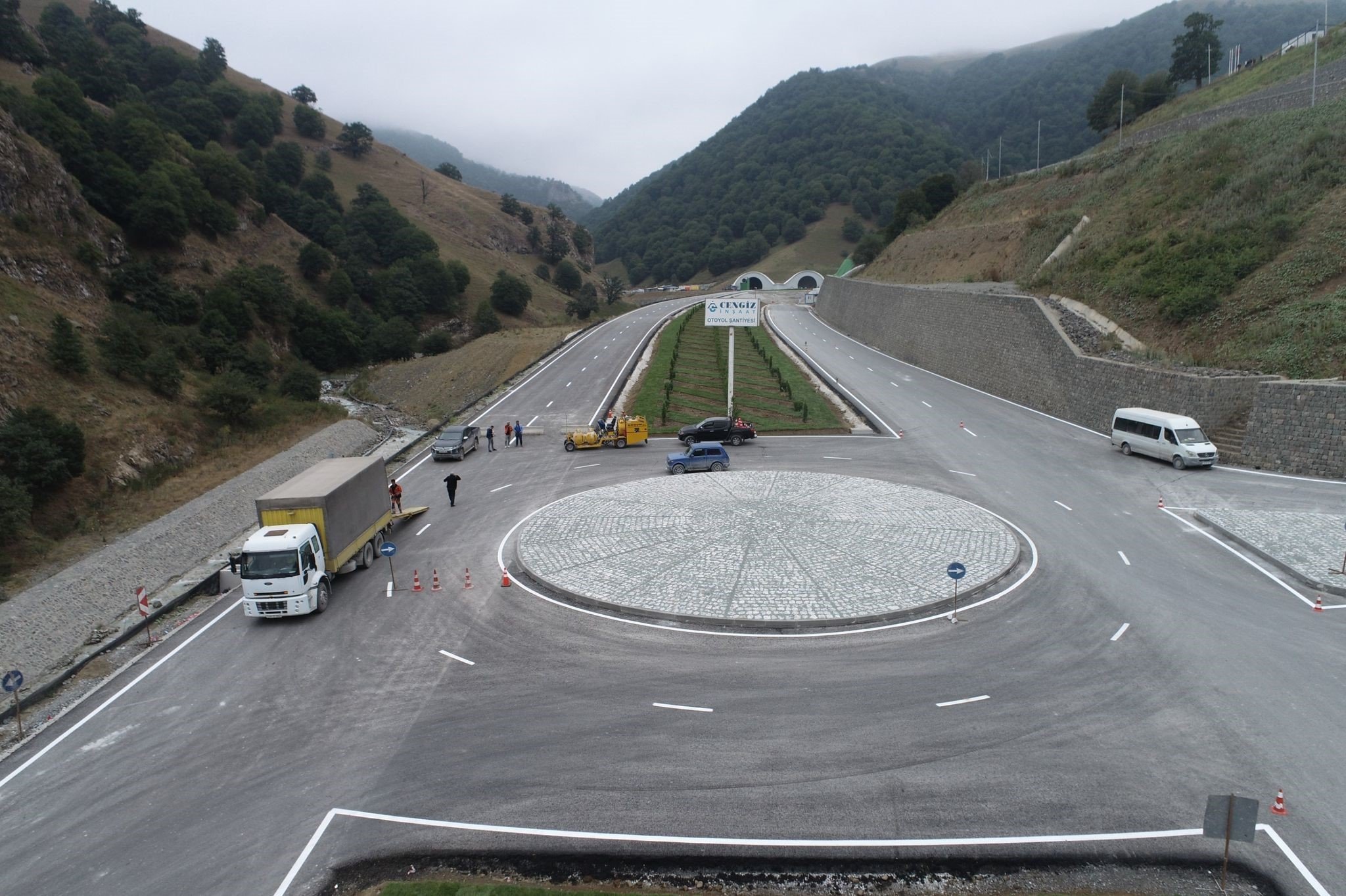
For Azerbaijan, the corridor is central to its vision of infrastructure-led development. Over the past few years, the government has poured resources into rebuilding and modernizing logistics infrastructure – especially in the liberated territories. The railway has now been extended right up to the Armenian border, with President Ilham Aliyev recently noting that the remaining 40-kilometer segment could be completed swiftly, once cross-border coordination is secured.
But this project doesn’t stand alone. It’s part of a larger push to transform Azerbaijan into a logistics powerhouse. From upgrades at the Port of Baku to digitized customs platforms and multimodal transport hubs, the country is betting on connectivity as a core pillar of its economic future. These initiatives not only diversify the economy beyond oil but also reinforce Azerbaijan’s role as a bridge between continents.
While the corridor’s economic potential is clear, it also carries strategic weight. In an era where control over transport routes can translate into influence, Azerbaijan’s efforts are drawing attention. As President Aliyev put it, the corridor isn’t just about trade; it’s also about political leverage.
Unlike many global trade routes, the Zangezur Corridor offers a path that is largely free from sanctions, naval chokepoints, or active conflict zones. This gives it a unique edge. There’s also talk of a multilateral governance model, where corridor development is shared among stakeholders. If realized, it could become a platform for durable cooperation rather than competition.
At its core, the Zangezur Corridor is a story of the reconnection of routes once closed and now reopening to support regional prosperity. It reflects a vision of inclusive growth, where infrastructure serves not just national goals, but regional stability and cooperation.
For Azerbaijan, the corridor is a chance to turn geography into opportunity. For the wider region, from Eastern Türkiye to the heart of Central Asia, it offers a new chapter in trade, transit and collaboration. The full benefits will take time to unfold, but the groundwork has already been laid for a more connected and economically integrated future.